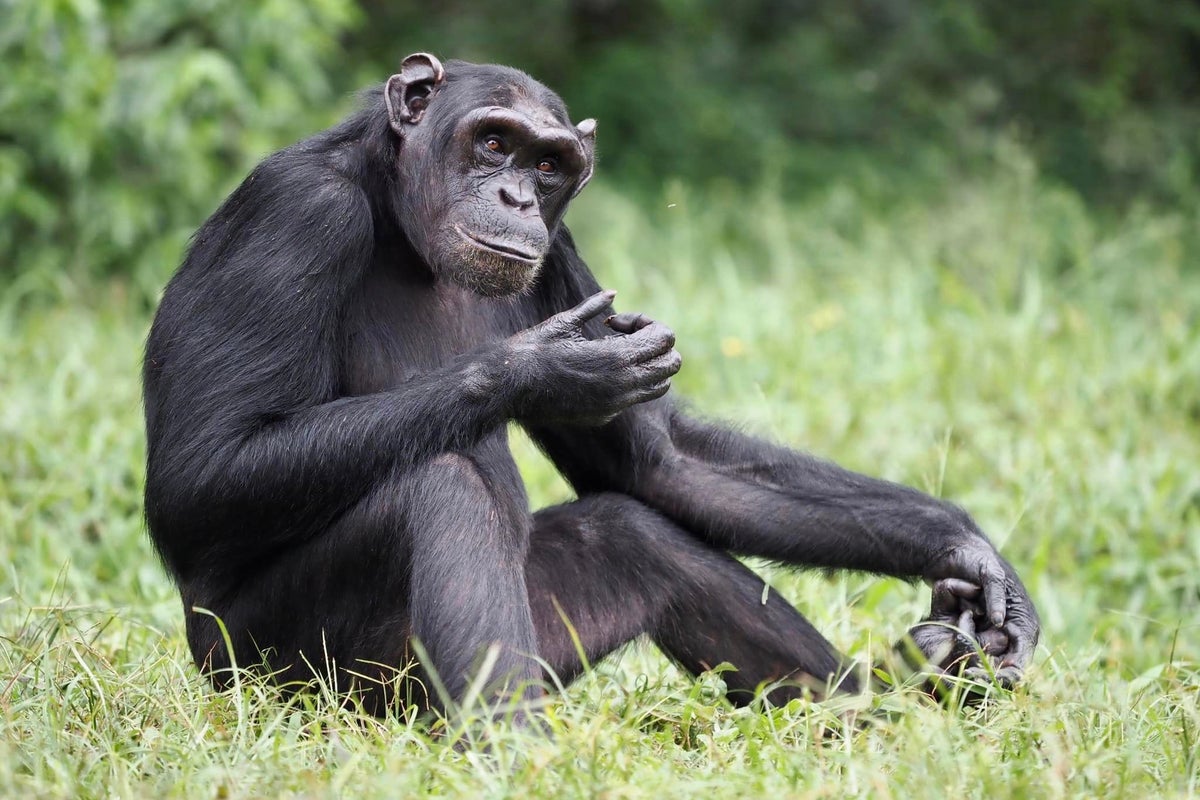
- Humans and great apes laugh in similar ways, according to a recent study that analyzed laughter patterns in both groups.
- The study found that the chuckles of both humans and great apes exhibit comparable rhythms and consistent timing between laughs.
- Study author Chiara De Gregorio stated that humans and great apes have been laughing in a similar way for 15 million years.
- The laughter of great apes is isochronous, meaning it involves regular timing between vocal bursts, which has been observed for at least 15 million years.
- The study published in Communications Biology highlights that laughter's rhythm reveals a progressive increase in vocal rhythmic plasticity in humans.
- Laughter is an important, universal form of human non-linguistic vocal expression and is shared by all extant great apes, providing insights into the evolution of vocal control.
- The study indicates that laughter evolved to suit different social lives of animals, suggesting a link between social behavior and vocalization.
A recent study published in Communications Biology highlights the similarities in laughter between humans and great apes, suggesting a shared evolutionary trait dating back 15 million years. Researchers analyzed recordings of laughter from 13 captive apes, including orangutans, chimpanzees, and bonobos, alongside human children.1356
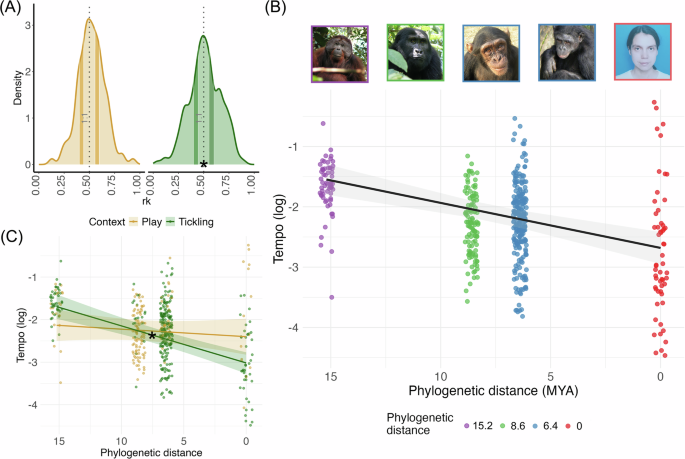
The study found that both humans and great apes exhibit consistent rhythmic patterns when laughing, particularly during tickling. “In a way, we are very similar to other great apes because we’ve been laughing in a similar way for 15 million years,” said Chiara De Gregorio, a primatologist at the University of Warwick.
The laughter of great apes was shown to be isochronous, meaning it involves regular timing between vocal bursts. This finding extends previous evidence of isochrony in orangutan vocalizations and suggests that laughter has evolved to suit different social contexts. “These giggles evolved to best suit animals’ different social lives,” noted Brittany Florkiewicz, an animal communication expert.47

The analysis included 140 sequences of laughter, revealing that while tickling laughter was highly regular, laughter during play was more variable. “While in play, laughter was a bit messy,” explained De Gregorio, highlighting the complexity of social interactions among primates. This research provides valuable insights into the evolution of vocal control that may have paved the way for the emergence of language.
“A recent study shows that both humans and great apes exhibit similar laughter rhythms, suggesting a shared evolutionary trait. This research highlights the vocal plasticity of primates and its implications for understanding the evolution of language.”
 The Independent
 NatureNature



