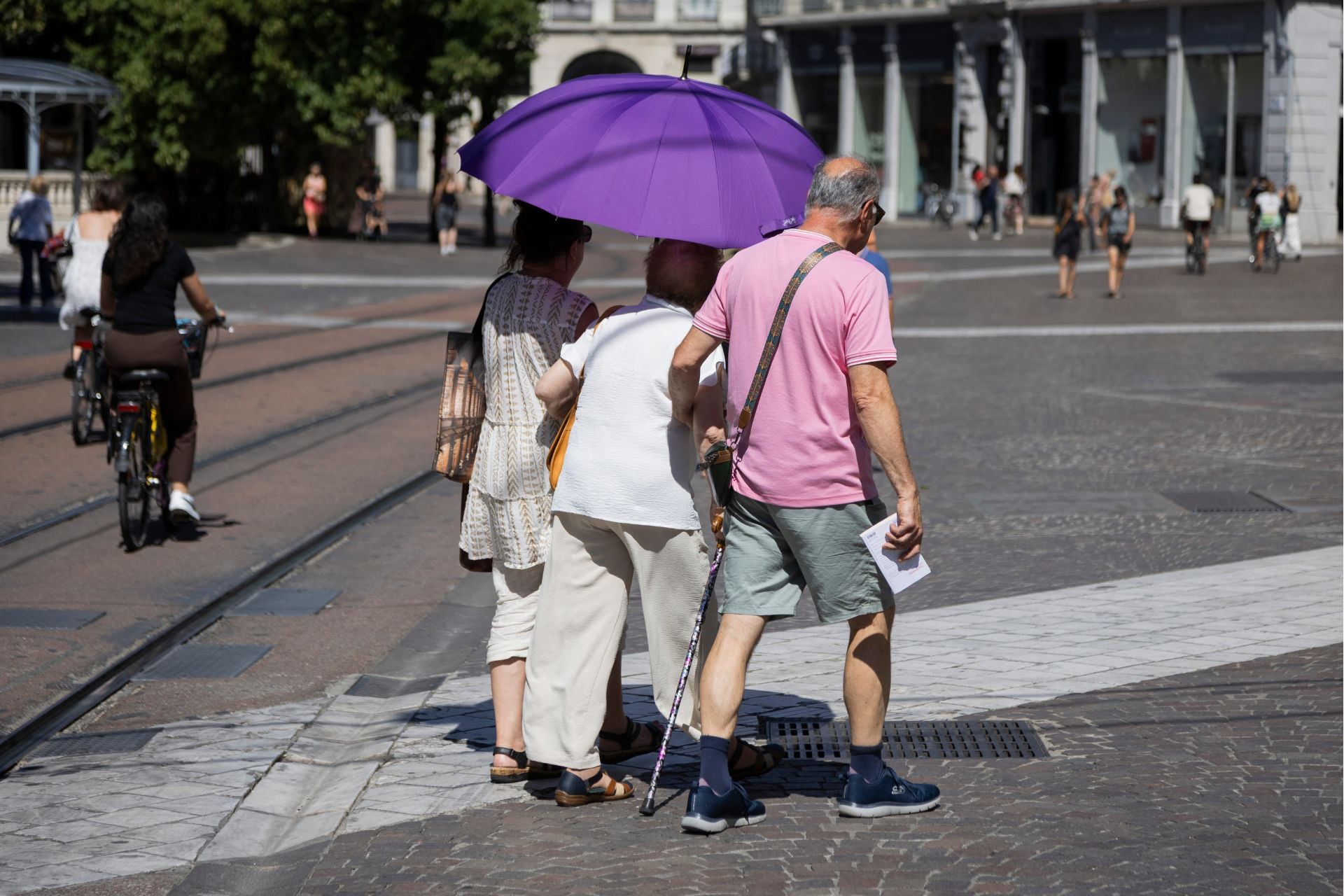
- New research published in The Lancet reveals the increasing health impact of heatwaves on older adults.
- The results suggest that 'intolerable heat will be experienced at much larger scales and for longer durations, affecting far more people than previously estimated'.
- Dr Kim van Daalen, an environmental epidemiologist, states that this is related to someone's 'adaptive capacity', which is usually lower in older people.
- 'We know that people who are older have less thermoregulatory efficiency [the ability to maintain a stable core body temperature],' she explains.
- Older populations are at greater risk of heat exhaustion and heat stroke, according to Professor Ron Maughan.
- 'In hot weather, the consequences of dehydration are increased,' says Professor Maughan.
- 'Your volume goes down when you’re dehydrated. If you have a lower blood volume, your heart needs to work harder to supply the blood to all the tissues that need it, so your heart rate goes up to compensate.'
- 'The other thing that happens is, because the blood volume is reduced, the blood becomes a little bit thicker and stickier, and the heart has to work harder to push that blood through its capillaries.'
- 'In heatwaves, we want to make sure we hydrate well and do not go outside or do intense physical activity during the hottest part of the day,' says Dr Van Daalen.
- 'Drink regularly throughout the day, rather than waiting until you feel thirsty,' Dr Patel advises.
The study highlights the increased vulnerability of older adults to extreme heat, emphasizing that their 'adaptive capacity' is often lower.13
Dr. Kim van Daalen notes that older individuals have less thermoregulatory efficiency, making them more susceptible to heat-related illnesses.4
Professor Ron Maughan adds that older populations face heightened risks of heat exhaustion and stroke, particularly due to dehydration.56
He explains, 'In hot weather, the consequences of dehydration are increased.'
As dehydration reduces blood volume, the heart must work harder, leading to increased heart rates and potential complications.
Dr. Van Daalen advises, 'In heatwaves, we want to make sure we hydrate well and do not go outside or do intense physical activity during the hottest part of the day.'
Additionally, Dr. Patel recommends, 'Drink regularly throughout the day, rather than waiting until you feel thirsty.'
The findings underscore the urgent need for public health strategies to protect older adults from the escalating risks of climate change-induced heat waves.
“The study published in *The Lancet* highlights that older adults have lower thermoregulatory efficiency, increasing their risk of heat exhaustion and stroke. Dr Kim van Daalen emphasizes the importance of hydration during heatwaves, advising to drink regularly throughout the day rather than waiting until thirsty.”
 The Independent