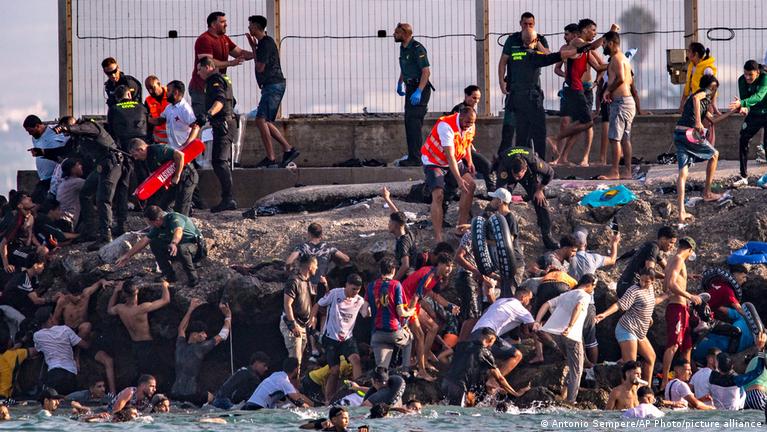
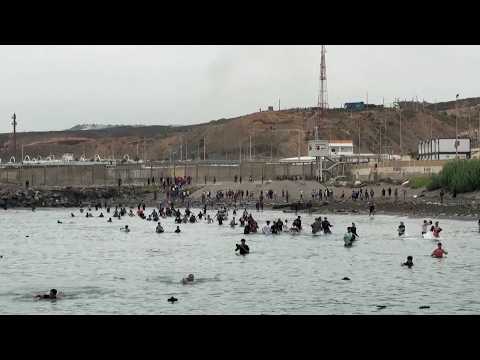
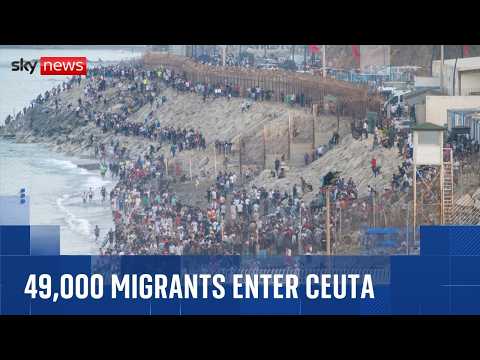
- Thousands of migrants have entered the Spanish enclave of Ceuta from Morocco, with estimates suggesting around 60,000 migrants breached the border.
- In response to the mass crossings, Spain's government has scrambled to manage the situation, with 48,300 migrants having returned to Morocco by 6 p.m. local time on Friday.
- Tragically, at least 57 people have died during the crossings, with authorities recovering 57 bodies on the Spanish side of the border, some from drowning and others crushed in a stampede.
- Spanish Prime Minister Pedro Sanchez described the mass crossings as a "violation of Spain's territorial integrity" and attributed the surge to rumors spread by traffickers.
- Italy has suspended its Schengen agreement with Spain for one month to protect citizens and defend Europe's borders, according to Foreign Minister Antonio Tajani.
- Germany's Interior Minister Alexander Dobrindt announced plans to reinforce and extend border checks in light of the situation in Ceuta, highlighting the ongoing illegal migration crisis.
- Danish Prime Minister Mette Frederiksen called for the EU to consider suspending Schengen cooperation to prevent a repeat of the 2015 refugee crisis.
- U.S. State Department officials stated that the incident was a result of the Spanish government's efforts to facilitate mass illegal migration into Europe.
- European Commission President von der Leyen condemned the situation, stating that dangerous crossings must stop and smuggling networks need to be dismantled.
Spain is facing a significant migrant crisis as around 60,000 individuals breached the border into the Spanish enclave of Ceuta, leading to a humanitarian emergency. By Friday evening, 48,300 migrants had been returned to Morocco, but the situation remains dire with at least 57 fatalities reported, many due to drowning or stampedes.125
Spanish Prime Minister Pedro Sanchez condemned the mass crossings as a "violation of Spain's territorial integrity", attributing the surge to misinformation spread by human traffickers regarding a recent Supreme Court ruling. He emphasized the need for swift returns and dismantling of smuggling networks, stating, "Dangerous crossings must stop immediately".
The crisis has drawn international attention, prompting Italy to suspend its Schengen agreement with Spain for a month, with Foreign Minister Antonio Tajani asserting it was necessary to protect citizens and defend Europe’s borders. Germany is also reinforcing border checks, with Interior Minister Alexander Dobrindt highlighting the volatile nature of the illegal migration crisis.6
Danish Prime Minister Mette Frederiksen called for immediate EU action, rejecting a repeat of the 2015 refugee crisis. The US State Department criticized Spain's handling of the situation, stating it was a direct result of the government's efforts to facilitate illegal migration into Europe.7
As the crisis unfolds, European leaders are urged to collaborate on solutions to manage the influx and ensure border security.
“Spain's government estimated 60,000 migrants breached the border, with 57 bodies recovered and 48,300 returned to Morocco by Friday evening. Italy suspended its Schengen agreement with Spain for one month, and Germany's interior minister Alexander Dobrindt said Berlin would extend internal border checks beyond September.”





 DW.com



