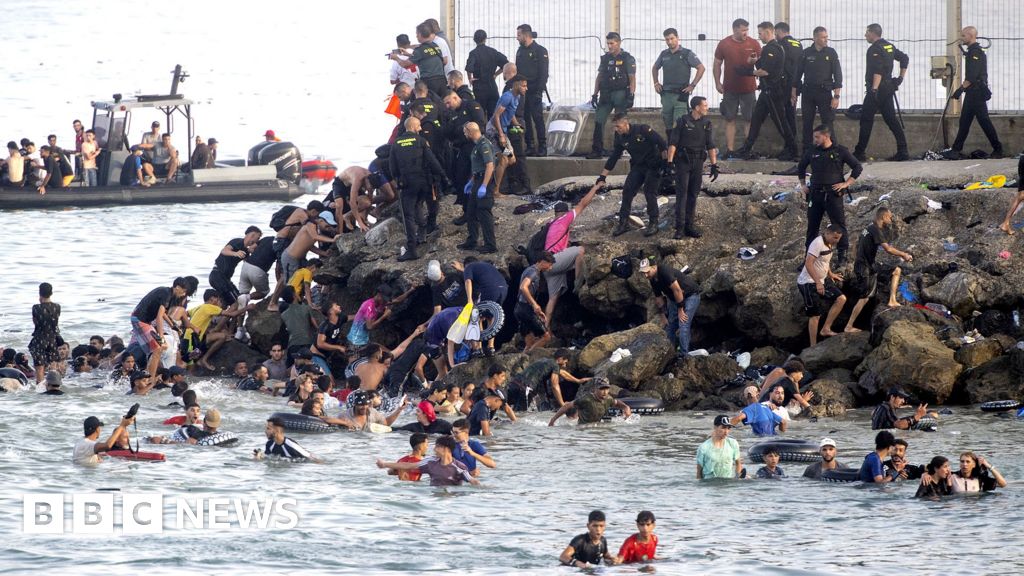
- About 60,000 migrants crossed into the Spanish North African enclave of Ceuta from Morocco, according to Spain's prime minister.
- At least 57 people died during the surge, as reported by local media.
- Spain's Prime Minister Pedro Sánchez attributed the surge to trafficking networks misinterpreting a recent Supreme Court ruling.
- Spain has reported that more than 48,000 migrants have voluntarily returned to Morocco as of Friday evening.
- Ceuta and Melilla are key flashpoints in diplomatic relations between Spain and Morocco, forming the EU's only land borders with Africa.
- Spain's Interior Ministry stated that around 50,000 people had crossed the border since Thursday morning.
- Moroccan forces attempted to control the situation by using batons and tear gas at the gates to Ceuta.
- Spain's government is expediting the repatriation of those who entered illegally, with cooperation from Morocco.
Spain's Prime Minister Pedro Sánchez has condemned the recent surge of migrants crossing into Ceuta, attributing the crisis to trafficking gangs exploiting a Supreme Court ruling. The influx, which saw 60,000 migrants enter the enclave, resulted in at least 57 fatalities during the chaotic border rush.3
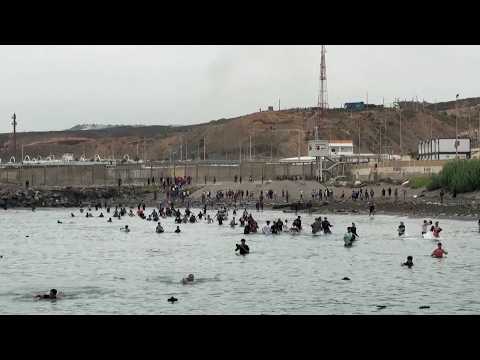
Local officials reported that the number of arrivals equated to around 70% of Ceuta's population of approximately 83,600. By Friday evening, over 48,000 migrants had voluntarily returned to Morocco, as Spanish authorities deployed armed forces to enhance security at the border.
Sánchez described the situation as a “violation of Spain's territorial integrity” and criticized the criminal networks for misinterpreting the Supreme Court's decision, which ruled that migrants intercepted at sea could not be summarily returned. He stated, “What has emerged from our talks with Moroccan authorities is that trafficking mafias took a self-serving interpretation of a Supreme Court ruling”.
The incident has sparked diplomatic tensions, particularly with Italy, which suspended the Schengen zone agreement with Spain, citing security concerns. Italy's Prime Minister described the scenes as “shocking”, while Spain's foreign minister called such remarks “improper” for a partner country.
As the situation unfolds, the Spanish government is accelerating the repatriation process, with full cooperation from Moroccan authorities. The crisis has raised questions about Spain's migration policies, with critics blaming the recent amnesty for unauthorized migrants for encouraging such mass crossings.
“More than 48,000 arrivals had voluntarily returned by Friday evening, and Spain has deployed armed forces to Ceuta and Melilla, where 300–400 more crossings were reported overnight. Ceuta's president said arrivals equaled roughly 70% of the city's population of about 83,600, and at least 7,000 of those who crossed were minors.”


 BBC
BBC



