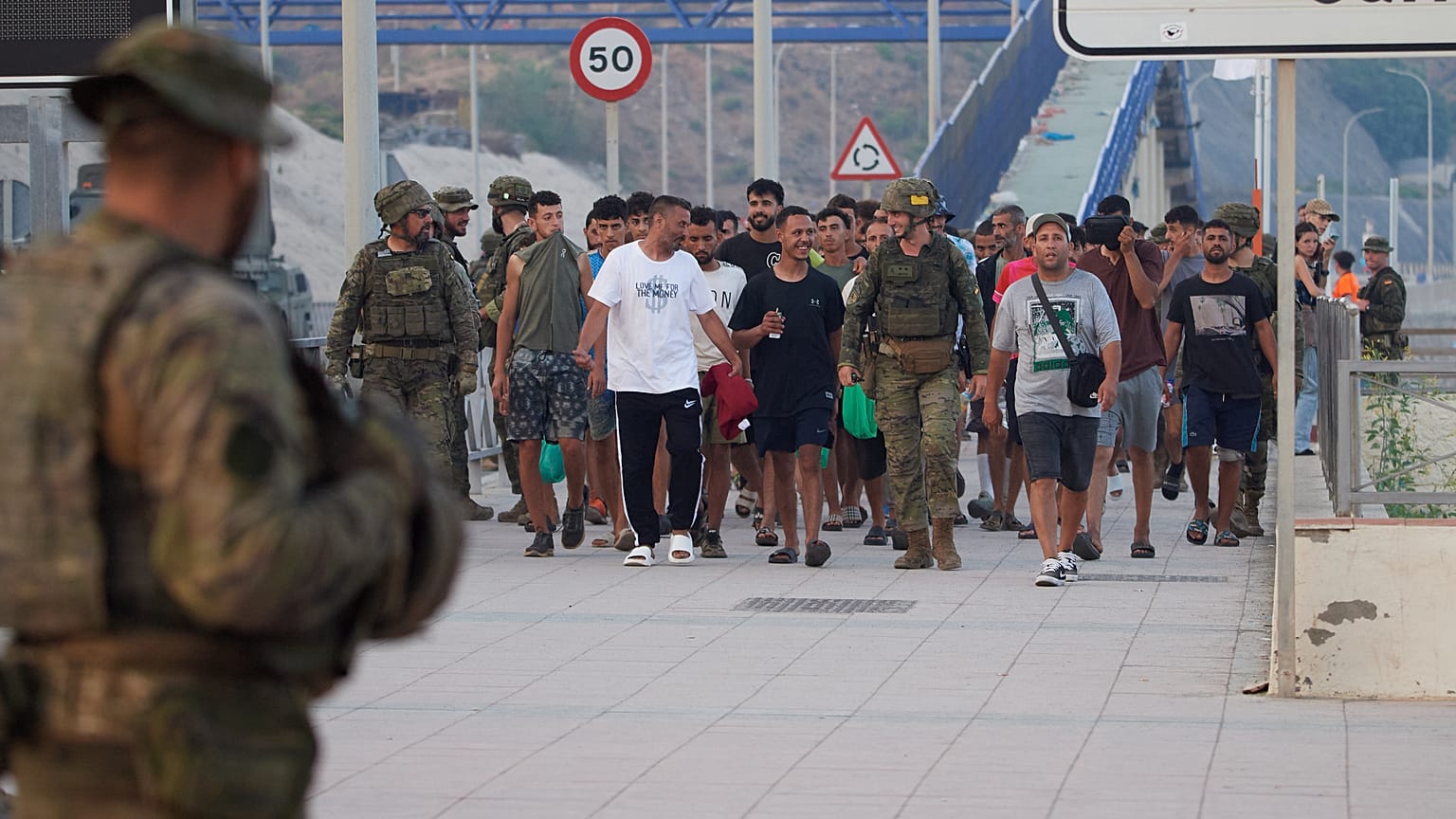
- The Spanish government received intelligence warnings of a possible mass arrival of migrants in Ceuta, with alerts issued over several days.
- Between 60,000 and 75,000 migrants crossed into Ceuta in the largest migration crisis in the city's history; Spain's Interior Ministry said about 53,000 people had returned to Morocco.
- Intelligence services warned that King Mohammed VI was likely to make a "gesture of magnanimity" at the border to coincide with Morocco's Throne Day; later reports said migrants were swimming across from Fnideq and buses were bringing people from other parts of Morocco.
- Before the main surge, nearly 1,000 people swam into Ceuta over about ten days, and intelligence officials reportedly saw the movement as a "test" by Moroccan authorities that they passed on to the government.
- At the Tarajal border crossing, the Civil Guard and National Police could not stop the influx and focused on helping the injured; sources criticized Madrid for not deploying the army immediately despite units on standby in Ceuta and Melilla.
- Deployed officers reported that the Moroccan gendarmerie stood "with their arms folded" while migrants attempted the crossing along the breakwater and access road.
- The episode differed from May 2021: the number of people swimming into Ceuta had been rising for weeks, partly because of a Spanish Supreme Court ruling prohibiting the immediate return of migrants who reach Spanish territory by swimming.
- Spanish Prime Minister Pedro Sánchez called the mass crossing a "violation of Spain's territorial integrity" and blamed people-smuggling networks, while the Interior Ministry called Moroccan cooperation "exemplary, loyal and permanent"; reinforcements were not ordered until late Thursday despite repeated intelligence warnings.
Intelligence alerts were issued over several days before the crisis, indicating a potential mass arrival of migrants coinciding with Morocco's Throne Day celebrations. Reports indicated that nearly 1,000 people swam into Ceuta over ten days, with the Civil Guard unable to manage the influx.125678910
Despite warnings, the Spanish government delayed military deployment, leading to criticism from intelligence officials who viewed the situation as a test by Moroccan authorities. The Interior Ministry later stated that cooperation with Morocco was "exemplary, loyal and permanent," while Prime Minister Pedro Sánchez called the mass crossing a "violation of Spain's territorial integrity."34141516
Following the crisis, about 53,000 people returned to Morocco, but the situation raised concerns about the effectiveness of Spain's border management and the role of people-smuggling networks. The Civil Guard and National Police focused on assisting the injured rather than stopping the migrants, as Moroccan gendarmerie reportedly stood by during the crossings. This incident marks a significant escalation in migration challenges for Spain, particularly in light of a Spanish Supreme Court ruling that complicates the immediate return of migrants who reach Spanish territory by swimming.111213
“Between 60,000 and 75,000 migrants crossed in the largest migration crisis in Ceuta's history, and Spain's Interior Ministry said about 53,000 people returned to Morocco. Prime Minister Pedro Sánchez called the crossing a "violation of Spain's territorial integrity" and blamed people-smuggling networks.”


 Euronews.com





