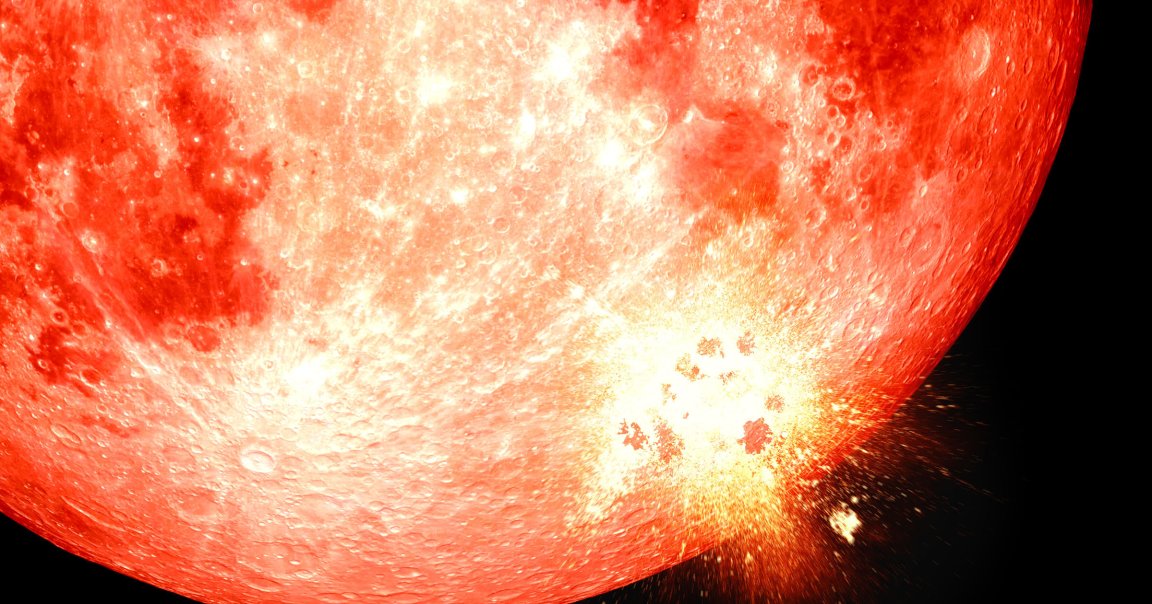
SpaceX rocket booster set to smash into the Moon at 1.51 miles per second on August 5, astronomer predicts.

An upper stage of a Falcon 9 rocket is predicted to collide with the Moon at high speed this summer. Bill Gray, who has accurately forecasted similar impacts before, highlights concerns over space debris.

Sources:
theregister.comScientific American+1
Trending 1h ago
Tab background
Sources: theregister.comFuturismScientific American
An astronomer predicts a Falcon 9 rocket stage will collide with the Moon at 5,400 miles per hour on August 5, specifically at 2:44 AM EDT. The impact location is expected to be near the Einstein crater, potentially creating a new crater.

The Falcon 9 upper stage, previously involved in launching lunar landers, has been in orbit for over a year. Gray's predictions come with a history of accuracy, as noted by his successful forecast of a prior Moon impact last year. He emphasizes that the event poses no threat: “There is very little risk from the impact – there are no humans on or around the Moon”.

The speed at which the rocket will hit translates to 1.51 miles per second or seven times the speed of sound on Earth. While it will likely remain invisible to Earth watchers due to the impact's location on the Moon's western limb, it raises issues regarding space debris management. “It highlights a certain carelessness about how leftover space hardware is disposed of,” Gray remarked, reflecting a growing concern shared by experts globally.

John Crassidis, from the University at Buffalo, warns that the future could see an escalating debris field around the Moon due to increasing human-made objects in orbit. This incident underscores the urgency for proper space junk removal methods as lunar exploration expands.
Sources: Futurismtheregister.com
An astronomer predicts that a discarded Falcon 9 rocket booster will crash into the Moon at a velocity of 1.51 miles per second on August 5, striking near the Einstein crater. The impact will occur at 2:44 AM EDT, likely creating a new lunar crater without posing any threat to Earth or nearby spacecraft.
Section 1 background
The Headline

SpaceX booster aimed for Moon impact on August 5

Key Facts
  • A SpaceX rocket booster is set to smash into the Moon at 1.51 miles per second.Futurism1
  • Astronomer Bill Gray has predicted with high confidence that the impact will occur at 2:44 AM EDT on August 5, near the Einstein crater on the Moon.Futurism1
  • The Falcon 9 upper stage is expected to be traveling at 1.51 miles per second, which is seven times the speed of sound on Earth.Futurism1
  • This rocket stage has been loitering in orbit for more than a year after launching the Blue Ghost and Hakuto-R lunar lander.theregister.com
  • Amateur astronomers can detect the rocket's trajectory, although it is too high for the US military's tracking services to accurately monitor.
Section 2 background
Other Updates

Concerns over lunar space debris

Key Facts
  • Space debris poses ongoing challenges as more human-made objects enter lunar orbit, potentially creating a debris field.
Section 3 background
Background Context

Context on the predicted Moon impact

Key Facts
  • Bill Gray's software has projected the August 5 impact, marking the second time he has accurately forecasted a human-made object striking the Moon.Futurism1
  • Gray also noted that the impact does not present any danger to humans, as there are none on or around the Moon, and debris is unlikely to hit nearby probes.theregister.com
  • John Crassidis, a professor, warns that the occurrence of such collisions increases the risk of space debris for future lunar missions.
Article not found
CuriousCats.ai

Article

Source Citations