- Starship launched on July 24 from Starbase, Texas, for its 13th test flight.
- The upper stage (Ship 40) made a controlled splashdown in the Indian Ocean and remained intact.
- SpaceX dispatched teams to recover the spacecraft, but faced challenging conditions and rough seas.
- Elon Musk posted on Aug. 7 that recovery was 'not looking good.'
- After 24 days at sea, SpaceX revealed on Aug. 18 that the Starship had been towed to shore near Christmas Island, Australia.
- The recovered vehicle will be returned to Texas for analysis to improve future Starship designs.
- The recovery mission was initially thought to be failing due to rough seas, according to CEO Elon Musk.
- Silence followed for more than 10 days after the discouraging Aug. 7 update.
- Then, on Aug. 18, SpaceX revealed that it had accomplished what it thought rough seas had made impossible: the Starship had been towed to shore near Australia.
- The feat is the latest victory to come of the 407-feet-tall Starship's mission, which saw the world's largest rocket fly halfway around the world before the upper section landed intact in the ocean.
- Never before had an upper stage survived a flight test, and now SpaceX has nabbed one that it can return to its Texas headquarters to analyze further.
SpaceX's recovery of the Starship upper stage, designated Ship 40, marks a significant achievement in aerospace engineering.12
After launching on July 24, the 171-foot-tall spacecraft made a controlled splashdown in the Indian Ocean, remaining intact despite initial fears of failure due to rough seas.
CEO Elon Musk expressed doubts about the recovery, stating, "recovery is not looking good right now." However, on August 18, SpaceX announced the successful towing of the spacecraft to Christmas Island, overcoming challenging conditions.345
The vehicle will be returned to Texas for analysis, with SpaceX aiming to improve future designs.6
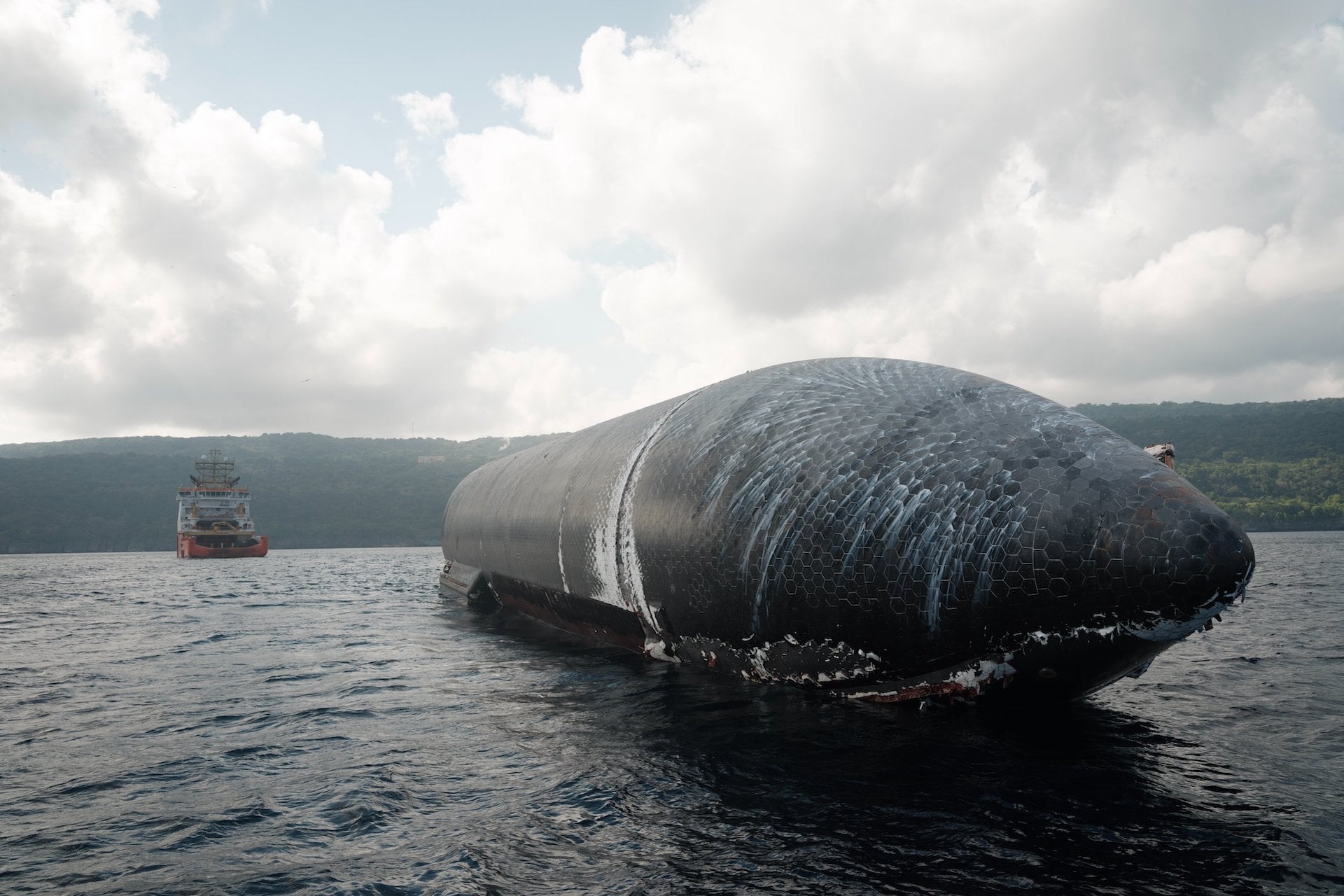
"A team of SpaceX engineers is on their way to conduct additional analysis on the vehicle in calmer waters before attempting to return it to Starbase," the company stated.
This mission is pivotal as it is the first time an upper stage has survived a flight test, providing valuable data for future iterations.
SpaceX is targeting a late August to early September launch date for Starship Flight 14, which will attempt the first full orbital test for Starship.
“The 171-foot-tall Ship 40 survived a controlled splashdown in the Indian Ocean, a first for an upper stage, and will be returned to Starbase in Texas for analysis. SpaceX is targeting late August to early September for Flight 14, its first full orbital test.”
 Gizmodo



