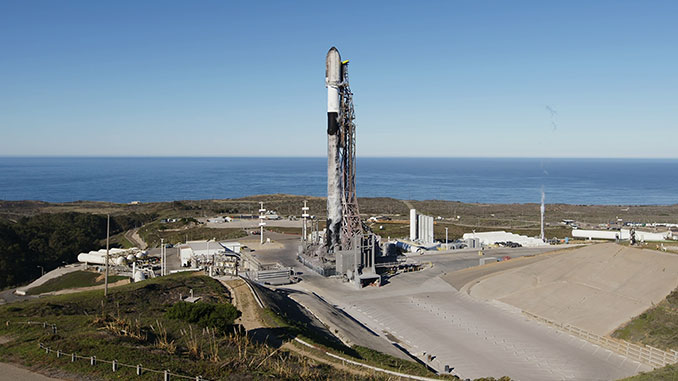
- SpaceX is preparing to launch its first Falcon 9 rocket since making its public trading debut on the Nasdaq on Friday.
- The Starlink 17-54 mission, launching from Vandenberg Space Force Base on Monday morning, will add 24 broadband internet satellites to the company’s low Earth orbit constellation.
- Liftoff from Space Launch Complex 4 East is scheduled during a window that opens at 7 a.m. PDT (10 a.m. EDT / 1400 UTC).
- SpaceX will launch the Starlink 17-54 mission using the Falcon 9 first stage booster with the tail number B1093.
- This will be its 14th flight after launching missions, Transporter-14, SDA T1TL-B, SDA T1TL-C, and ten batches of Starlink satellites.
- A little more than eight minutes after liftoff, B1093 will target a landing on the drone ship, ‘Of Course I Still Love You’, positioned in the Pacific Ocean.
- If successful, this would be the 203rd landing on this vessel and the 624th booster landing for SpaceX.
SpaceX is gearing up for the Starlink 17-54 mission, which will launch from Vandenberg Space Force Base on Monday morning. This mission aims to deploy 24 new broadband internet satellites into the company's expanding low Earth orbit constellation.124
Liftoff is scheduled for 7 a.m. PDT (10 a.m. EDT / 1400 UTC) from Space Launch Complex 4 East. The Falcon 9 rocket will utilize the first stage booster B1093, marking its 14th flight after previous missions including Transporter-14 and ten batches of Starlink satellites.35
Approximately eight minutes post-launch, the booster is expected to land on the drone ship, ‘Of Course I Still Love You’, stationed in the Pacific Ocean. If successful, this will be the 203rd landing on this vessel and the 624th booster landing for SpaceX, showcasing the company's ongoing advancements in reusable rocket technology.67
Live coverage of the launch will commence about 30 minutes before liftoff, providing real-time updates for enthusiasts and stakeholders alike.
“SpaceX is set to launch its first Falcon 9 rocket since its Nasdaq debut. The Starlink 17-54 mission will add 24 broadband internet satellites to its low Earth orbit constellation.”
