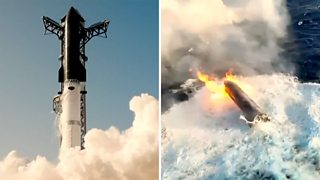
- SpaceX has completed a test flight of its Starship megarocket, followed by a successful soft splashdown in the Indian Ocean an hour after launch.
- The Starship Flight 13 launched Friday evening from its company town and launch facility in Starbase, Texas, marking the first test flight since the company's record IPO last month.
- The Super Heavy booster detached from the Starship spacecraft about two minutes into the flight and made a controlled splashdown in the Gulf.
- About 18 minutes into the flight, SpaceX successfully deployed 20 of its new Starlink V3 satellites into orbit, marking a significant milestone for the company.
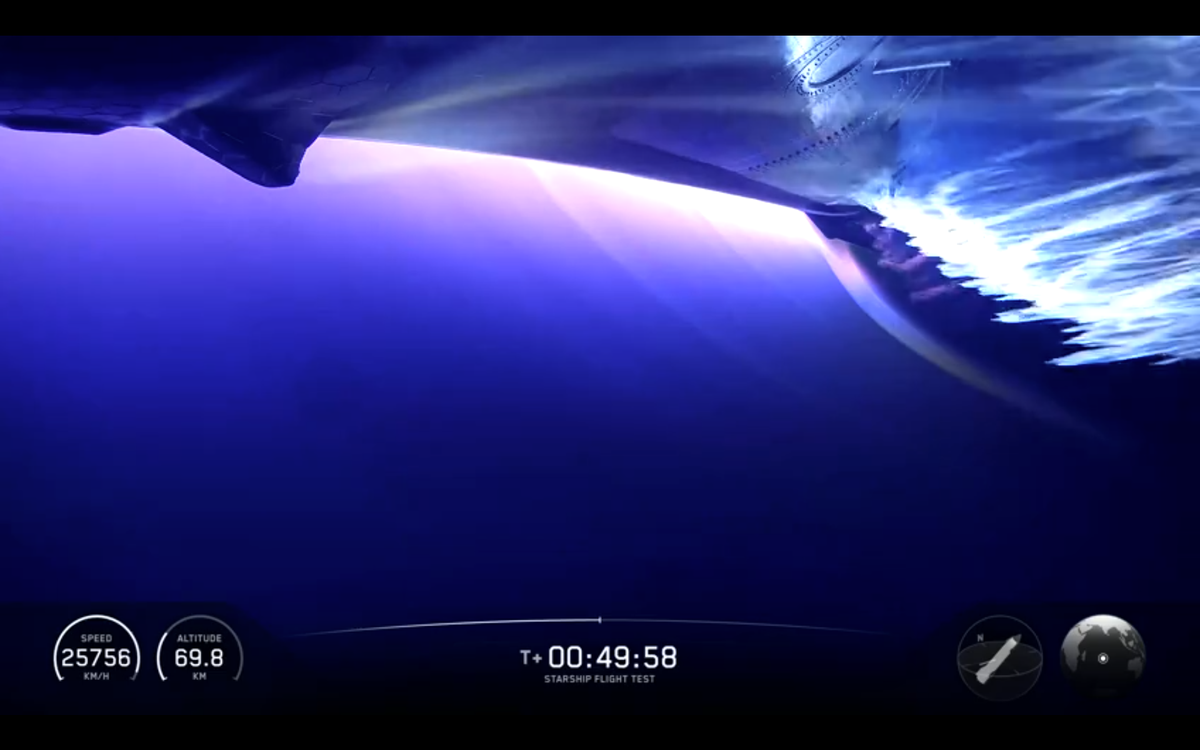
- The Starship upper stage made a soft splashdown in the Indian Ocean, coming to rest intact and providing critical views of an intact heatshield for the first time.
- SpaceX employees referred to the test flight as 'lucky number 13' during a livestream of the event.
- The test flight was initially scrubbed on July 16 due to a booster hold, which shut down the engines right as they were starting to ignite.
- A test flight planned for Thursday was delayed due to weather conditions, as reported by SpaceX.
SpaceX's Starship Flight 13 successfully completed its mission with a soft splashdown in the Indian Ocean, marking a significant milestone for the company. This flight, which took place on Friday evening, was the 13th test flight of the Starship and the first since SpaceX's record IPO last month.12358
The mission began with a launch from SpaceX's facility in Starbase, Texas, where the Super Heavy booster detached from the Starship spacecraft approximately two minutes into the flight. Although the booster experienced issues relighting its engines for a controlled landing, the upper stage achieved a soft splashdown in the Indian Ocean, providing critical data on the heatshield's performance.

During the flight, SpaceX successfully deployed 20 new Starlink V3 satellites into orbit, which are designed to be larger and more powerful than previous models. These satellites are equipped with solar arrays that generate twice the power of earlier generations, showcasing SpaceX's advancements in satellite technology.4
Despite the success, experts like Tim Farrar from TMF Associates noted that while progress has been made, SpaceX still has a long way to go in achieving rapid reusability of the entire Starship system. Dan Huot from SpaceX expressed excitement, stating, "I'm a little over the moon right now. Wow. Lucky number 13. Hell of a great day for Starship."
Overall, the mission demonstrated SpaceX's ongoing commitment to innovation and its ability to push the boundaries of space exploration.
“The Super Heavy booster made a hard splashdown in the Gulf of Mexico after only a subset of its engines ignited for the landing burn. Separately, SpaceX's stock has slumped 43% from its peak close on June 16, its first test flight as a publicly traded company.”


 CNBC
CNBC



