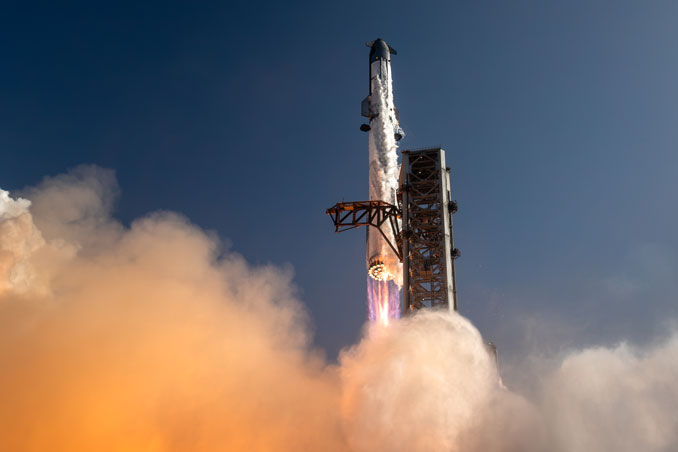
- Starship V3 launched on its 13th test flight, successfully deploying 20 of the most advanced Starlink satellites into orbit.
- The mission concluded with the best reentry yet, featuring a soft splashdown in the Indian Ocean, where the spacecraft remained afloat.
- The booster experienced a hard splashdown off the Texas Gulf Coast, as only 10 of its 13 engines restarted during descent.
- SpaceX's Starship is crucial for NASA's Artemis program, serving as a lunar lander for astronauts.
- SpaceX currently operates the world's largest satellite constellation with over 10,000 Starlinks providing internet.
SpaceX launched its Starship V3 on its 13th test flight on Friday, successfully deploying 20 of the most advanced Starlink satellites and achieving a remarkable re-entry. The mission, which lasted an hour, ended with a splashdown so soft that the spacecraft remained afloat in the Indian Ocean.12
Powered by 33 methane-fueled Raptor engines, the 407-foot-tall rocket lifted off from SpaceX’s Starbase in Texas at 5:51 p.m. EDT, showcasing a spectacular ascent with over 16 million pounds of thrust. While the upper stage performed flawlessly, the booster faced challenges during its return, with only 10 of 13 engines restarting and a hard splashdown in the Gulf of Mexico.
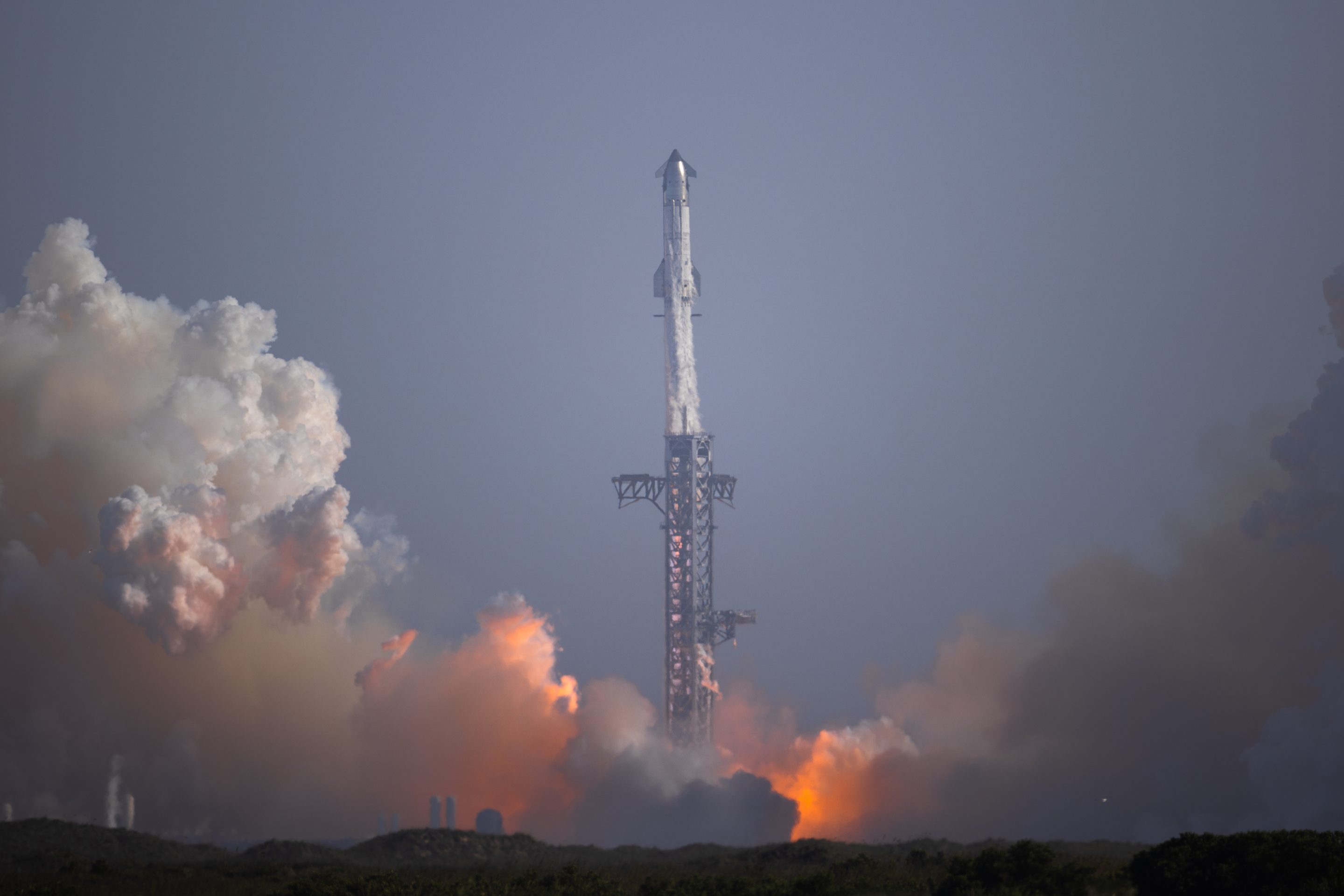
Despite the booster’s issues, the mission was a significant success for SpaceX and NASA, which relies on the Starship variant for its Artemis program. “We got all the heat shield data we needed and then some!” said Elon Musk on X, highlighting the successful data transmission from the newly launched Starlinks, six of which carried cameras to capture images of the heat shield during re-entry.
NASA Administrator Jared Isaacman expressed excitement for the mission's outcomes, stating, “Excited for what will be learned from this mission.” With over 10,000 Starlinks currently in orbit, SpaceX continues to lead in satellite internet provision, while also pursuing ambitious plans for Mars colonization.
“The booster experienced a hard splashdown after only 10 of 13 engines restarted, with only five running at touchdown. The deployed Starlinks, ejected 124 miles up, communicated via lasers for 20 minutes, and six carried cameras that captured crisp images of Starship's heat shield.”




