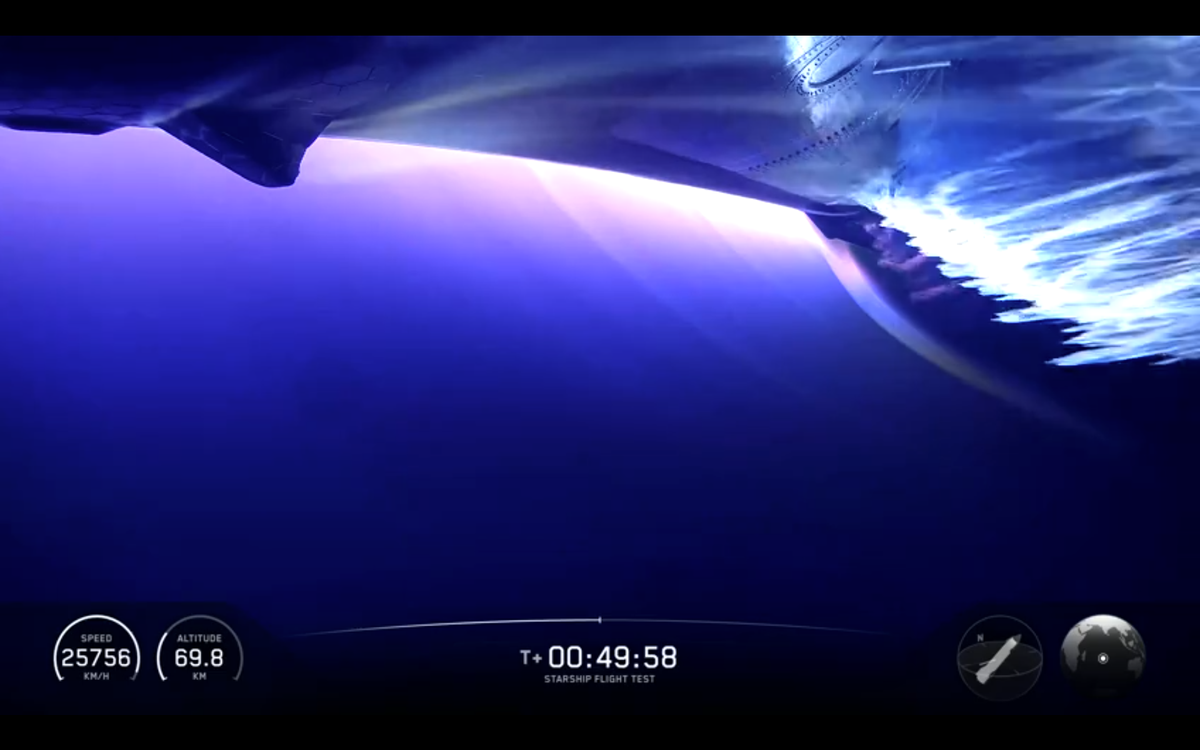
- SpaceX successfully launched Starship Flight 13, marking a significant milestone in its testing program.
- Dan Huot expressed pure elation after the launch, stating, "I'm a little over the moon right now," and "Lucky number 13. Hell of a great day for Starship."
- The rocket lifted off with 33 first-stage engines on a suborbital trajectory, with neither vehicle to be recovered.
- Stage separation was a success with the booster performing a hot-staging flip and 5-engine burn, a milestone after Flight 12's failure.
- The upper stage successfully relit a single Raptor engine in space, a critical maneuver for future orbital flights.
SpaceX's Starship Flight 13 achieved a remarkable feat during its latest test flight, successfully launching and deploying 20 Starlink V3 satellites, the first of their kind in space.1
The mission showcased significant advancements, including a successful hot-staging separation of the Super Heavy booster, which had previously failed in Flight 12.
"This is just the first time we've put a Starship into the water," said SpaceX's Dan Huot, highlighting the mission's success in gathering crucial heat shield data.2
Despite some challenges, including the booster not lighting all 13 engines for its landing burn, Huot expressed his enthusiasm: "I'm a little over the moon right now. Wow. Lucky number 13. Hell of a great day for Starship."
The towering 407-foot rocket fired up its 33 first-stage engines, embarking on a suborbital trajectory, while the upper stage's single-Raptor engine relight was also deemed a success.3
This test flight marks a pivotal moment for SpaceX as it continues to refine its technology and approach towards future missions.
“The Super Heavy booster achieved a successful hot-staging flip and 5-engine burn, overcoming the failure that doomed Flight 12. The upper stage also relit a single Raptor engine in space, a critical step for future orbital missions.”




