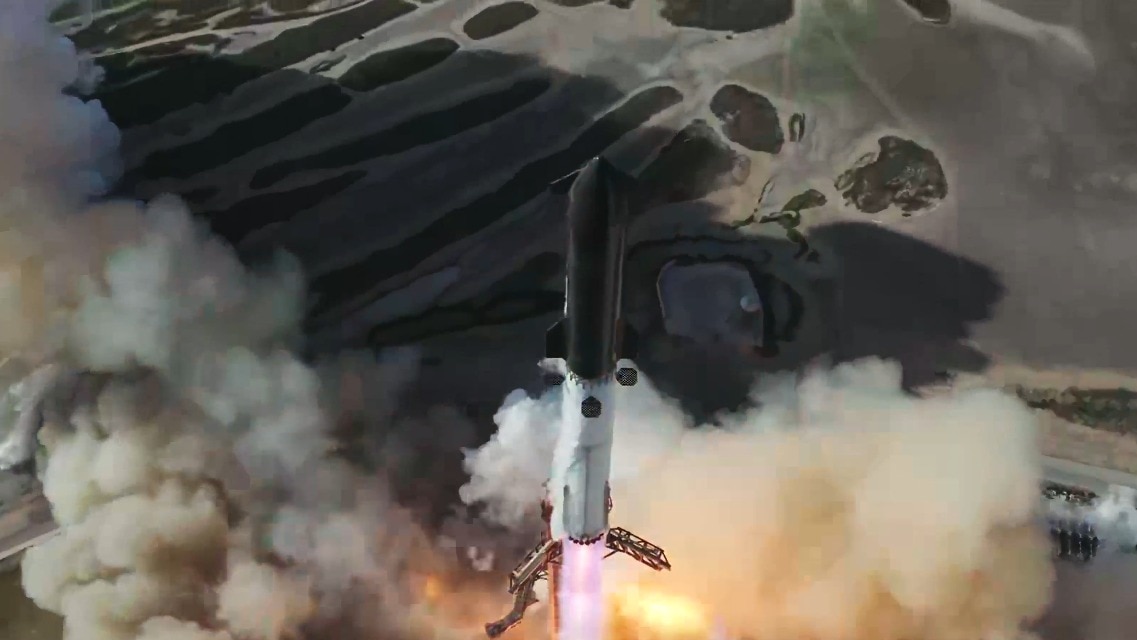
- SpaceX launched its Starship from Texas on July 25, 2026, marking its 13th test flight and the first since the company's record IPO last month.
- The Super Heavy booster encountered a partial engine ignition issue during the landing burn, resulting in a hard splashdown in the Gulf of Mexico.
- 20 Starlink V3 satellites were successfully deployed into orbit about 18 minutes into the flight, marking a significant milestone for the company.
- The Starship spacecraft achieved a soft splashdown in the Indian Ocean, coming to rest intact and providing critical views of an intact heatshield for the first time.
- The previous launch attempt was aborted due to an engine startup issue just before liftoff.
SpaceX's Starship Flight 13 successfully launched from Boca Chica, Texas, at 4:21 am IST, marking a significant milestone for the company following its IPO. The world's tallest rocket achieved a soft splashdown in the Indian Ocean after deploying 20 next-generation Starlink satellites into orbit.1
The launch followed a previous attempt that was aborted due to an engine startup issue. The Super Heavy booster detached from the Starship about two minutes into the flight, but encountered a partial engine ignition issue during its landing burn, resulting in a hard splashdown in the Gulf of Mexico.25

Despite the challenges, the upper stage of the rocket successfully completed its mission, providing critical views of an intact heatshield for the first time. Tim Farrar, a satellite services industry expert, noted that while the test flight showed progress, SpaceX is still a long way from achieving rapid reusability of the entire ship.
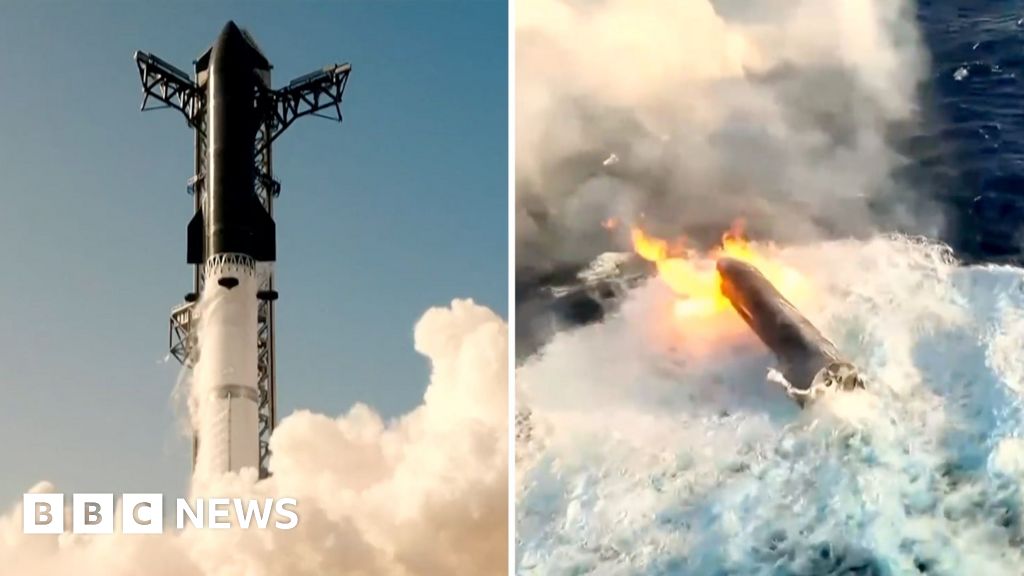
This flight was also significant as it was the second for the Starship V3 version and the first since SpaceX became a publicly traded company. The company aims to expand its Starlink satellite network significantly, with the new satellites being larger and more powerful than previous versions.
SpaceX's stock has seen a decline of 43% from its peak close on June 16, reflecting the challenges faced by the company in the competitive space industry.
“The flight deployed 20 next-generation Starlink V3 satellites into orbit, marking their first in-space test. However, the Super Heavy booster experienced a partial engine failure during landing, and industry expert Tim Farrar noted that SpaceX remains far from achieving rapid reusability.”


 CNBC
CNBC BBC
BBC



