
- SpaceX launched its massive Starship rocket on Friday evening from its company town and launch facility in Starbase, Texas, marking the first test flight since the company's record IPO last month.
- The rocket's Super Heavy booster detached from the Starship spacecraft about two minutes into the flight and made a controlled splashdown in the Gulf.
- SpaceX reported that the landing was not perfect as the booster attempted to relight its engines for the landing burn, but only a subset successfully ignited before the "hard splashdown."
- The upper stage of the rocket made a soft splashdown in the Indian Ocean, coming to rest intact and providing critical views of an intact heatshield for the first time.
- SpaceX successfully deployed 20 of its new Starlink V3 satellites into orbit about 18 minutes into the test flight, marking a first chance to see how they performed in flight.
- Employees referred to the test flight as "lucky number 13" during a livestream of the event.
- Huot, a SpaceX official, expressed excitement saying, "I'm a little over the moon right now. Wow. Lucky number 13. Hell of a great day for Starship."
- The new Starlink V3 satellites are larger and more powerful than earlier versions, equipped with solar arrays that generate twice as much power.
- Tim Farrar, a satellite services industry expert, noted that while SpaceX has made progress with Starship, it remains a long way from achieving rapid reusability of the entire ship.
- Farrar also pointed out issues with relighting the Raptor engines, stating that any similar failure during a landing attempt could cause severe damage to the launchpad.
- SpaceX's stock has slumped 43% from its peak close on June 16, reflecting market challenges.
SpaceX's Starship rocket successfully launched from its Starbase facility in Texas on Friday evening, marking the 13th test flight and the first since the company's record IPO last month. The flight featured the deployment of 20 new Starlink V3 satellites, showcasing advancements in satellite technology.
The Super Heavy booster detached from the Starship spacecraft approximately two minutes into the flight, leading to a controlled splashdown in the Gulf of Mexico. However, the landing was not without issues; SpaceX noted that the booster attempted to relight its engines for a landing burn, but only a subset ignited, resulting in a 'hard splashdown.'23
The upper stage of the rocket achieved a 'soft splashdown' in the Indian Ocean, providing critical views of an intact heat shield for the first time. Employees celebrated the flight as 'lucky number 13', with one employee expressing, 'I'm a little over the moon right now.'4
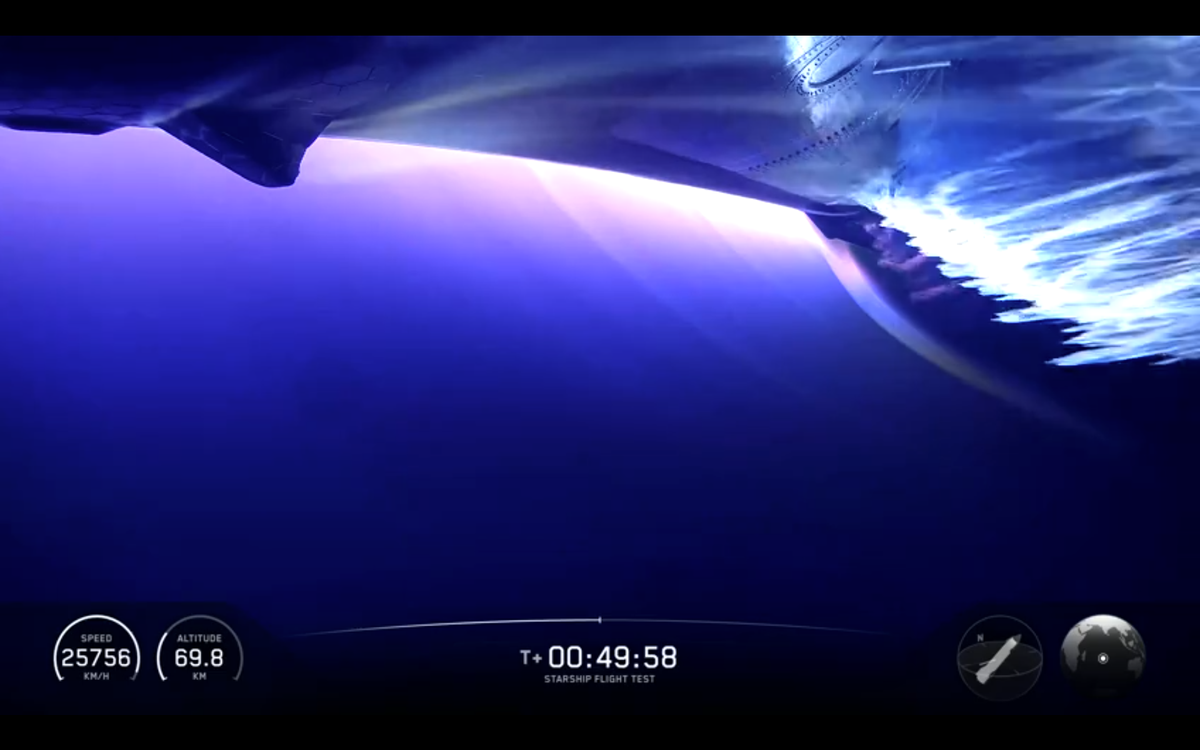
Despite the success, experts like Tim Farrar from TMF Associates cautioned that while progress has been made, SpaceX is still 'a long way from achieving rapid reusability' of the entire ship. He highlighted the relighting issues with the Raptor engines, warning that similar failures during landing could cause significant damage to the launchpad.9
Overall, the test flight demonstrated SpaceX's ongoing efforts to refine its technology and expand its satellite capabilities, even as the company faces challenges in its ambitious goals.
“SpaceX successfully deployed 20 first-of-their-kind Starlink V3 satellites during the flight, which are built to generate twice the power of prior generations. However, TMF Associates analyst Tim Farrar noted that the company remains 'a long way from achieving rapid reusability' after the booster's hard splashdown.”
 CNBC
CNBC



