
- SpaceX launched its massive Starship rocket on Friday evening from its company town and launch facility in Starbase, Texas, marking the 13th test flight and the first since the company's record IPO last month.
- The rocket's Super Heavy booster successfully detached from the Starship spacecraft about two minutes into the flight and made a controlled splashdown in the Gulf.
- SpaceX reported that the landing was not perfect as the booster attempted to relight its engines for the landing burn, but only a subset successfully ignited before the hard splashdown.
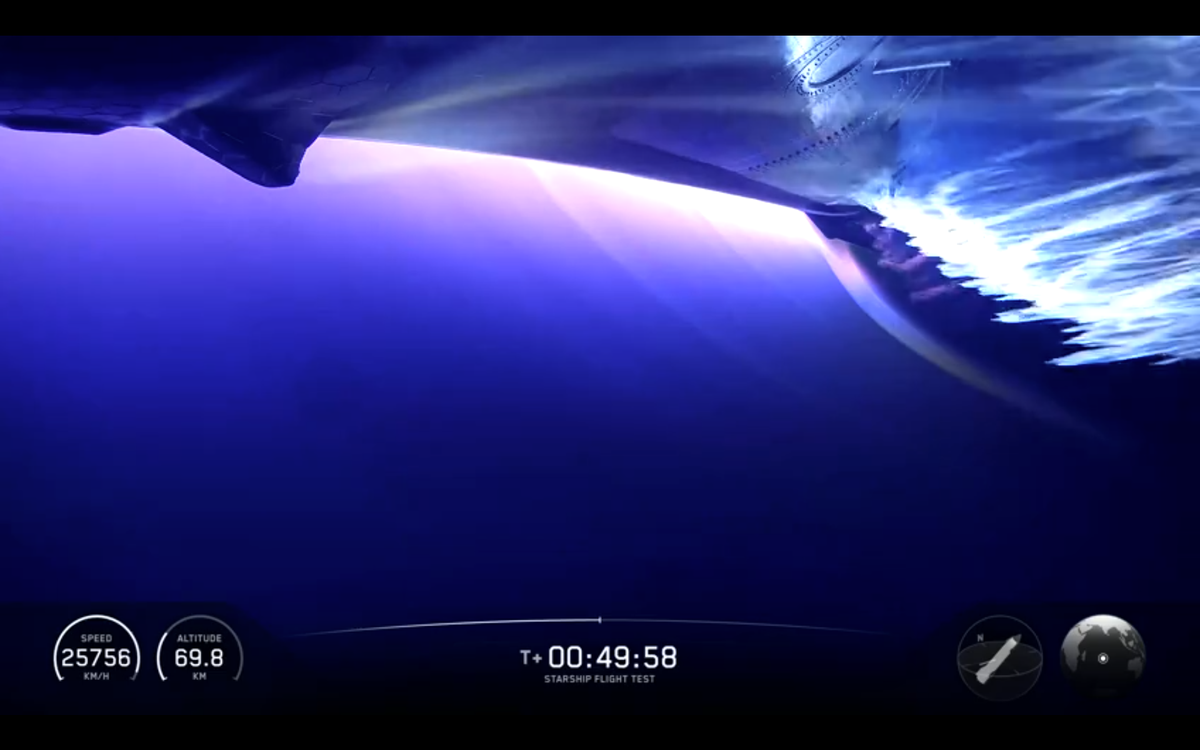
- The upper stage of the rocket made a soft splashdown in the Indian Ocean, coming to rest intact and providing critical views of an intact heatshield for the first time.
- SpaceX successfully deployed 20 of its new Starlink V3 satellites into orbit about 18 minutes into the test flight, marking a first chance for the company to see how they performed in flight.
- SpaceX's Dan Huot expressed excitement, stating, "I'm a little over the moon right now. Wow. Lucky number 13. Hell of a great day for Starship."
SpaceX's 13th test flight of its Starship rocket, launched from Starbase, Texas, was a significant success, especially following the company's record IPO.1
The Super Heavy booster achieved a controlled splashdown in the Gulf, while the upper stage made a "soft splashdown" in the Indian Ocean, marking a milestone for the program.24
"I'm a little over the moon right now," said SpaceX's Dan Huot, celebrating the successful deployment of 20 Starlink V3 satellites into orbit. This flight allowed SpaceX to assess the performance of these satellites, with six equipped with cameras to provide live views of the Starship.6
However, challenges remain; the booster experienced issues relighting its engines for landing, which could pose risks during future launches.
"Any similar failure during an attempted landing at the company's launch site could cause severe damage to the launchpad," noted Tim Farrar, a satellite services industry expert.
Despite these hurdles, the flight demonstrated progress towards achieving rapid reusability, a key goal for SpaceX's future missions.
The successful relight of the upper stage's single-Raptor engine was also a critical maneuver for future orbital operations, showcasing the ongoing advancements in SpaceX's ambitious space exploration plans.
“The Super Heavy booster experienced a hard splashdown after only a subset of its engines relit, while the upper stage achieved a soft splashdown and deployed 20 Starlink V3 satellites. Industry expert Tim Farrar noted that despite progress, SpaceX remains far from achieving rapid reusability of the entire ship.”


 CNBC
CNBC



