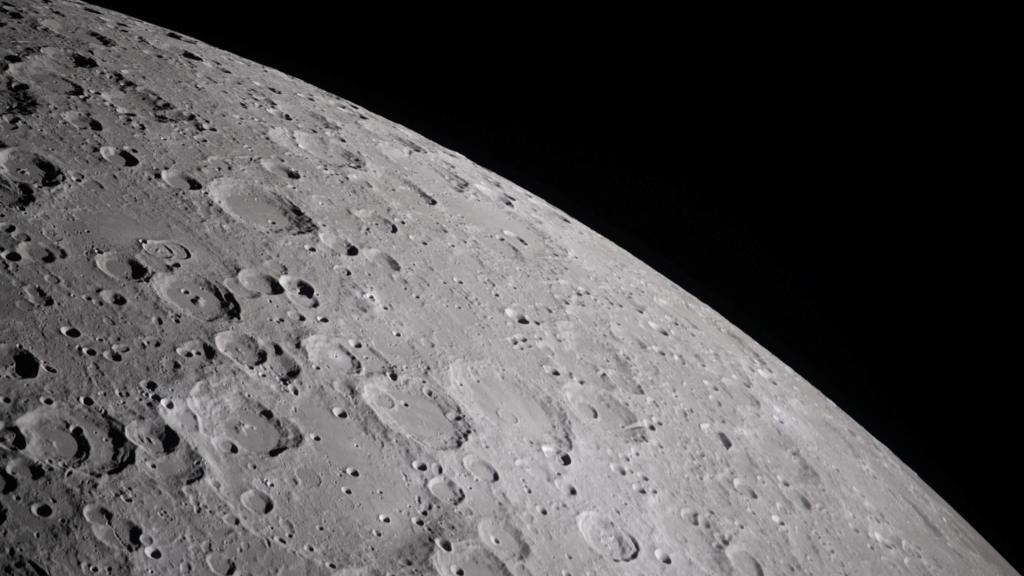
- The SpaceX Falcon 9 rocket stage is set to crash into the Moon, with the collision predicted to happen at about 07:35 BST.
- No orbiting spacecraft captured the collision live; however, South Korea's Danuri orbiter had passed near the site and NASA's Lunar Reconnaissance Orbiter was due to photograph it in the coming days.
- Scientists expressed excitement over the collision, noting that the rocket's speed and mass were known, and studying reflected light could reveal insights into how the Moon and planetary systems formed; the big pay off is expected in about a week.
A SpaceX Falcon 9 rocket stage, left in a long, looping orbit since its launch in January 2022, is set to crash into the Moon, with the impact expected around 07:35 BST. The upper stage, weighing at least 4,000kg and traveling at 5,400mph, will land near the Einstein crater.123
Telescopes in the Americas, along with NASA's Lunar Reconnaissance Orbiter and South Korea's Danuri probe, will monitor the event. Astronomer Bill Gray noted that the impact will create a flash visible from Earth, although no spacecraft are positioned to capture the collision live.456
The event is significant for scientists, as it provides an opportunity to study the composition of the rocket stage and its implications for lunar development. NASA and SpaceX have raised concerns about the increasing risk of collision with future missions due to the growing number of human-made objects on the Moon, now totaling around 3,000 and weighing approximately 190 tonnes combined.
Despite the excitement surrounding the impact, Nasa spokesperson Jimi Russel reassured that there is "no danger to Earth," emphasizing the event as a scientific opportunity rather than a threat.
As Dr. Matt Bothwell from the University of Cambridge stated, "It's something really huge smashing into the Moon. It's not remotely dangerous, we can just watch the show."
“No spacecraft was positioned to capture the collision live, so scientists will compare before-and-after images; South Korea's Danuri orbiter passed near the site and NASA's Lunar Reconnaissance Orbiter will photograph it in coming days. The "big pay off" from studying reflected light is expected in about a week.”

 BBC
BBC





