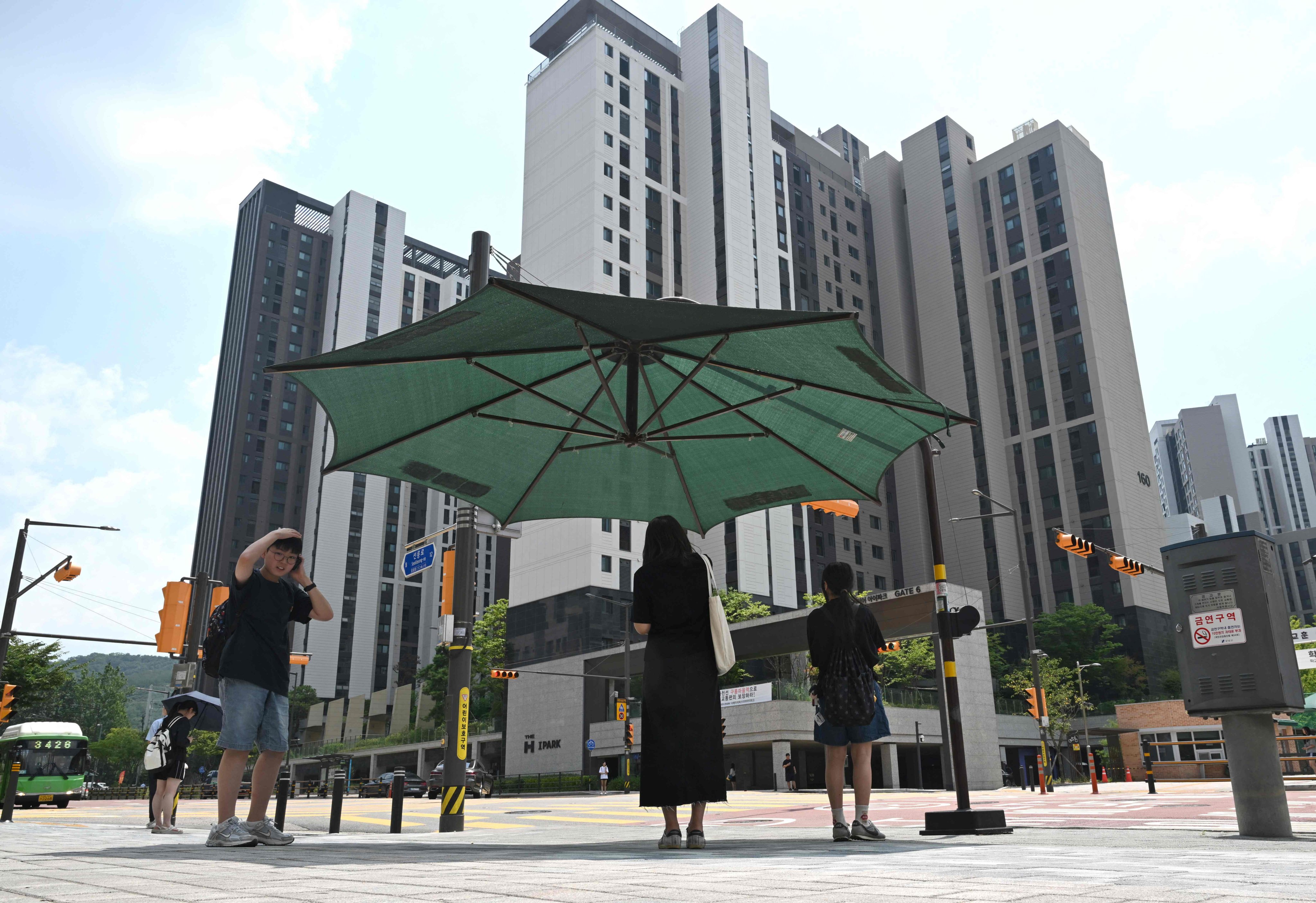
- Seoul is currently facing a severe heatwave, with the death toll rising to 19 as of Tuesday.
- The Korea Meteorological Administration issued a heatwave warning for all of Seoul on Tuesday, following a record temperature of 42.5 degrees Celsius in Yangsan.
- President Lee Jae Myung has called the heatwave a national disaster and urged officials to take necessary measures to protect citizens.
- Seoul is bracing for its first-ever severe heatwave warning, with temperatures expected to reach 38°C on Tuesday.
- Since May, South Korea has recorded 16 fatalities linked to the heat, with over 2,000 people treated for heat-related illnesses.
- Emergency measures have been initiated in Seoul, including checks on vulnerable residents and spraying roads with water to combat rising urban heat.
- Extreme weather events like this heatwave are becoming more frequent due to human-induced climate change.
South Korea is grappling with a severe heatwave that has led President Lee Jae Myung to label it a national disaster, with 19 fatalities reported.4
The Korea Meteorological Administration issued its first-ever heatwave warning for all of Seoul, as temperatures soared to 42.5 degrees Celsius in Yangsan, marking the highest in 122 years of records.1235
President Lee emphasized the need for urgent measures to protect citizens, stating, “We need to make efforts for a fundamental overhaul of the national crisis system, since this extreme weather is becoming normal.”9
The heatwave has resulted in over 2,000 heat-related illnesses since May, prompting emergency meetings and initiatives from local authorities.
In response, Seoul is deploying 200 trucks to spray water on roads to mitigate urban heat, while nurses are checking on 63,000 vulnerable residents.
The extreme weather is attributed to overlapping high-pressure systems and climate change, with scientists warning that such events are becoming more frequent.
As the heat shifts towards the densely populated capital, forecasts predict temperatures of 38°C on Tuesday, followed by three days of 37°C heat.
A construction worker described the conditions as brutal, stating, “We take a 10-minute break every hour, but there isn’t even a fan here.”
The government is also utilizing drones to broadcast safety messages in affected areas, highlighting the urgency of the situation.
“Yangsan hit 42.5°C on Sunday, the highest reading in 122 years, and Seoul is forecast to reach 38°C as the heat shifts west. Authorities are spraying 2,000 km of roads with 200 water trucks and checking on up to 63,000 vulnerable residents.”
 South China Morning Post
 The Guardian



