
- Skeleton 150, a man in his 20s, was buried at Stirling Castle chapel alongside seven others in 1997.
- Researchers initially assumed all fractures were postmortem, possibly from trampling.
- Using micro-CT and 3D scanning, Buckberry determined fractures occurred around the time of death.
- Skeleton 150 dated to about 1300, during Edward I's siege of Stirling Castle in 1304.
- Edward I commissioned the largest trebuchet, the 'War Wolf', which reportedly sent a missile through two walls.
- Buckberry concluded the man likely died instantly from a high-velocity projectile, possibly from a trebuchet like the War Wolf.
- All eight medieval skeletons buried in the castle had evidence of trauma inflicted on them around the time of death, including wounds from blunt objects, projectiles and a sharp blade, likely from a sword or knife.
- Buckberry and colleagues meticulously studied all 167 fractures in the bones of Skeleton 150.
- They discovered that he had sustained 61 separate fractures to his skull and 57 rib fractures, in addition to breaks in his vertebrae, arms and right shoulder.
- Most of the damage was to the upper half of the man's body, and the fractures had an unusual zigzag pattern not usually seen in archaeological skeletons.
- Getting hit by a high-velocity projectile shot from a siege engine could possibly explain Skeleton 150's copious fractures.
- The fractures also revealed that the young man was likely standing when he was hit by the high-velocity impact.
A 14th-century skeleton, dubbed Skeleton 150, discovered in Stirling Castle, exhibits 167 fractures, potentially the earliest evidence of a death caused by a trebuchet. Researchers believe he may have been struck by the 'War Wolf,' a massive siege engine commissioned by Edward I during the First War of Independence.18
The remains, found in 1997 alongside seven other medieval burials, show that Skeleton 150 sustained 61 skull fractures and 57 rib fractures, with additional breaks in his vertebrae, arms, and shoulder. Notably, the fractures displayed a zigzag pattern, typically associated with high-velocity impacts.910
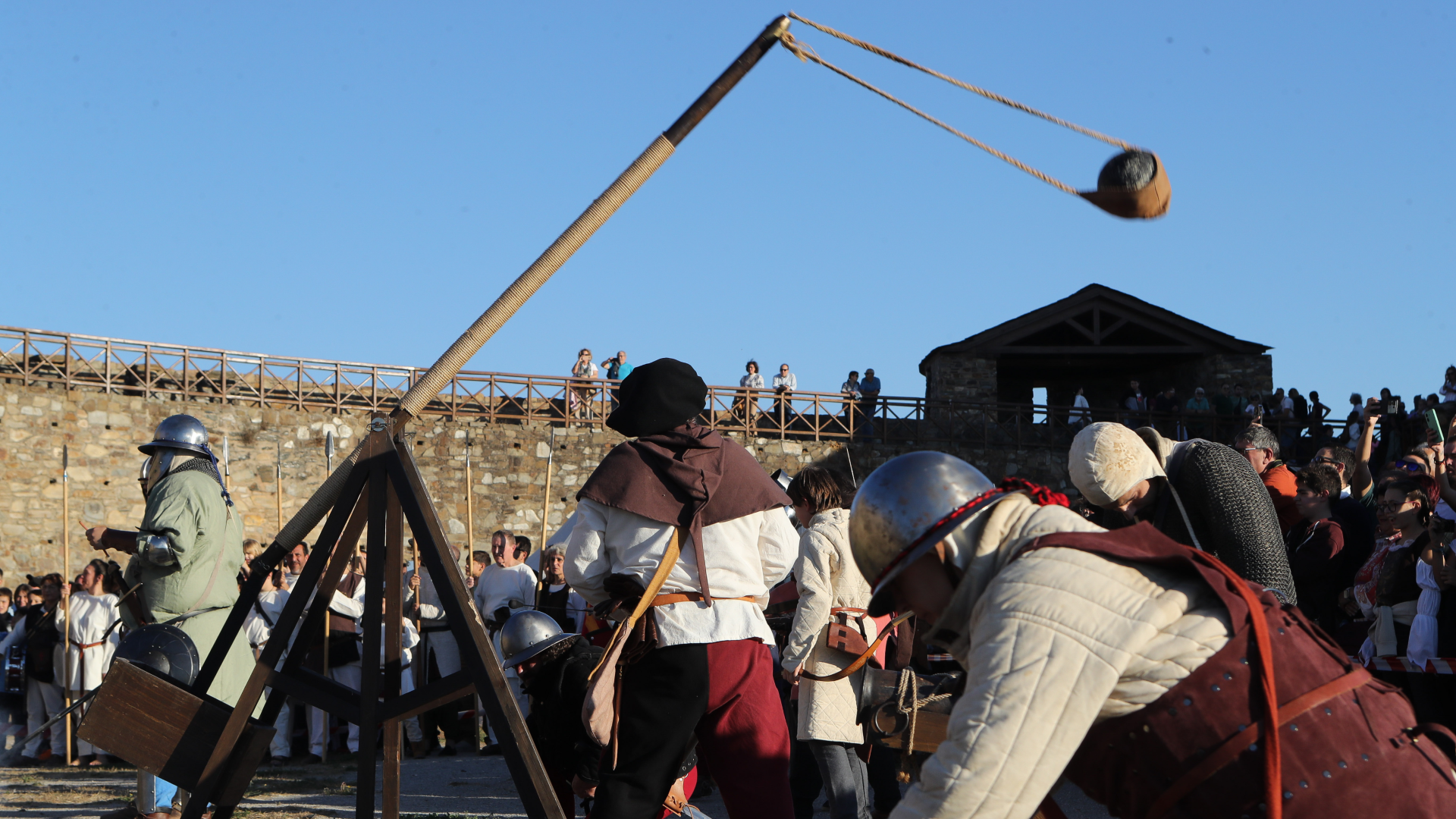
According to researcher Buckberry, the damage suggests he was likely standing when struck, leading to an instantaneous death. “He certainly had his back to whatever was going on,” Buckberry stated, indicating a rapid transition from standing to the ground.12
The analysis places Skeleton 150's death around 1300, coinciding with Edward I's siege of Stirling Castle in 1304, where he deployed numerous siege engines, including the 'War Wolf.' This trebuchet was noted for its ability to breach castle walls with ease, raising the possibility that it was responsible for the young man's demise. “The trebuchet is the most likely,” Buckberry concluded, emphasizing the connection between the skeleton's injuries and the historical context of warfare at the time.4
“The skeleton, dubbed Skeleton 150, sustained 61 skull fractures and 57 rib fractures, with a zigzag pattern matching modern road-traffic victims. Buckberry used micro-CT and 3D scanning to confirm the injuries occurred at death, not after, overturning earlier assumptions of postmortem damage.”




