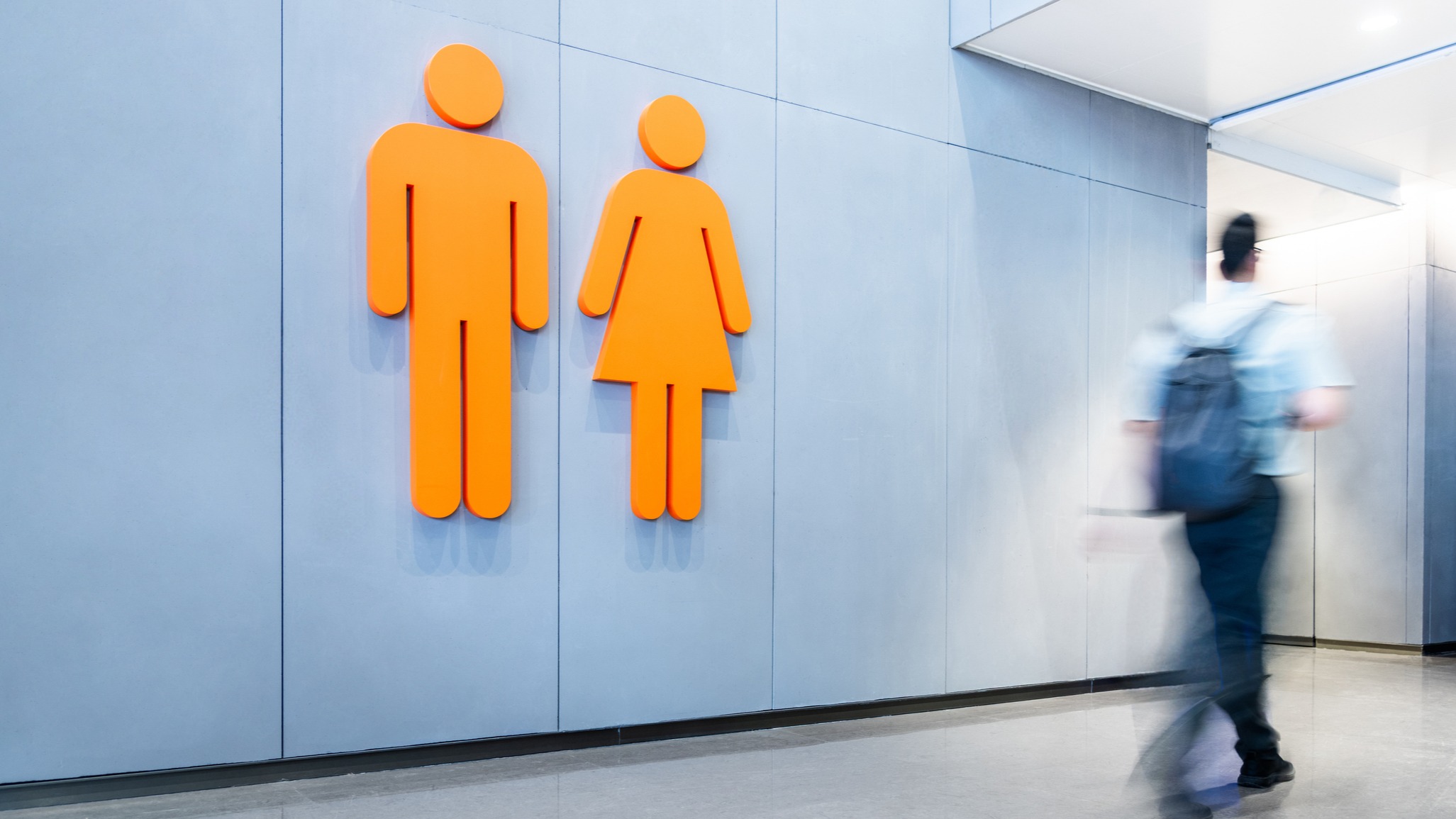
- The single-sex spaces code comes into force on Wednesday, almost a year-and-a-half after the Supreme Court ruling, and can be relied on in court if there are legal challenges.
- The code confirmed a service must be based on biological sex to be classed as single-sex under the Equality Act, so toilets, changing rooms, hospital wards and refuges must be used by birth sex; the April 2025 Supreme Court ruling was called a victory for that view.
- The Equality and Human Rights Commission (EHRC) stressed the updated code does not make new law, provides services such as cafes and leisure centres with legally accurate guidance, and covers England, Scotland and Wales; its chairwoman described the May draft as a “major milestone”, and the guidance affects service providers, public functions and local sports clubs.
- Analysis suggests nearly 13,000 toilets and more than 5,000 changing rooms may need revamping at gyms, hospitals and leisure centres, and at least 18,000 signs might need changing.
- Public-sector bodies face estimated £320.6 million in cleaning costs and £314.2 million per year for building work; the government said it was “taking the time to get this right” and many businesses may already be largely compliant.
- Further legal challenges are expected in this “very contested space”; Equalities Minister Bridget Phillipson said she expects further debate, challenge, scrutiny and legal challenge, and that this would be the case whatever the draft code said.
- Former Home Secretary Suella Braverman, now Reform UK’s equalities spokeswoman, said the government had been “dragged kicking and screaming” into protecting women’s-only spaces and that the government and EHRC now have no excuse not to enforce and uphold the law.
New guidance on single-sex spaces in the UK comes into effect, following a Supreme Court ruling that mandates facilities be designated by biological sex. This code, which applies to England, Scotland, and Wales, aims to clarify the Equality Act and is expected to impact numerous public facilities.12345
The Equality and Human Rights Commission (EHRC) chairwoman Mary-Ann Stephenson called the updated code a “major milestone”, providing essential guidance for service providers like restaurants and leisure centres. The code stipulates that single-sex toilets, changing rooms, and hospital wards must be used based on a person’s birth sex, not their gender identity.
The April 2025 Supreme Court ruling was seen as a victory for some, affirming that “women are women and men are men”, while raising concerns within the trans community. The guidance suggests that unisex options, such as self-contained lockable cubicles, could be a solution to accommodate all users.
However, the implementation of this code is expected to incur significant costs, with estimates indicating that nearly 13,000 toilets and over 5,000 changing rooms may need renovations, costing millions. Public-sector bodies could face £20.6 million in cleaning costs and £14.2 million annually for construction work.910
Equalities Minister Bridget Phillipson anticipates ongoing debates and legal challenges in this “very contested space”, while former Home Secretary Suella Braverman criticized the government for its delayed response, stating they were “dragged kicking and screaming” into adopting necessary protections for women’s spaces.1314151617
“Analysis suggests nearly 13,000 toilets and more than 5,000 changing rooms may need revamping at gyms, hospitals and leisure centres across Britain. Public-sector bodies face estimated £320.6m in cleaning costs and £314.2m a year for building work, and further legal challenges are expected in what the equalities minister calls 'a very contested space'.”




