
- Secretary of State Marco Rubio warned that Iranian control of the Strait of Hormuz sets a “dangerous precedent” for the world.
- A memorandum of understanding signed in mid-June between the U.S. and Iran, which aimed to lift shipping restrictions and the U.S. blockade, collapsed two weeks prior to Rubio's remarks.
- Since July 6, Iranian forces have attacked at least a dozen ships in the strait, disrupting global energy as nearly 34 percent of the world’s crude oil passed through the waterway.
- After U.S. Central Command (CENTCOM) finished an 11th straight night of strikes, the targeting included military operations centers and maritime capabilities to degrade Iran’s ability to threaten commercial shipping in the Strait.
- Rubio emphasized the issue is about the “very fundamental principle about freedom of navigation” and if threatened, the global economy and 150 years of trade rules are also threatened.
- Iran created the Persian Gulf Strait Authority to oversee shipping, but Rubio stated Iran lacks authority “under any existing legal mechanism” to control transit.
- While President Trump renewed maximalist rhetoric after Iranian attacks on U.S. ships, Rubio said the administration is “open-minded and always willing to engage” in diplomacy, stating “If they’re serious, we’re serious.”
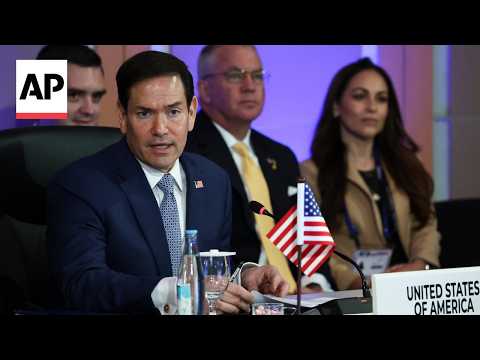
Secretary of State Marco Rubio expressed grave concerns over Iran's military control of the Strait of Hormuz, stating it sets a “dangerous precedent” for international waterways. Speaking at the ASEAN summit in Manila, he warned that such actions could threaten global trade and navigation rights.123
Rubio emphasized, “If we create a precedent in the Middle East where a nation-state can decide that they are going to control an international waterway, charge a toll, and if you don’t pay them, blow up your ships, we have created a very dangerous precedent”. He highlighted that nearly 34 percent of the world’s crude oil passes through the strait, making its security vital for the global economy.910
The U.S. and Iran recently abandoned a memorandum of understanding aimed at easing tensions in the strait, with Iranian forces reportedly attacking at least a dozen ships since July 6. Rubio reiterated that Iran lacks legal authority to control transit in the strait, stating, “If that is threatened, then I think the global economy is threatened”.456
Despite the escalating tensions, Rubio noted that the U.S. remains “open-minded and always willing to engage” in diplomacy, asserting, “If they’re serious, we’re serious”. This comes as U.S. Central Command continues military operations against Iranian assets to protect commercial shipping in the region.1314
“Iranian forces have attacked at least a dozen ships in the Strait of Hormuz since July 6, disrupting nearly 34 percent of global crude oil transit. Rubio stated Iran lacks authority under any legal mechanism to control the waterway, and U.S. Central Command has conducted 11 straight nights of strikes against Iranian assets.”

 AP News



