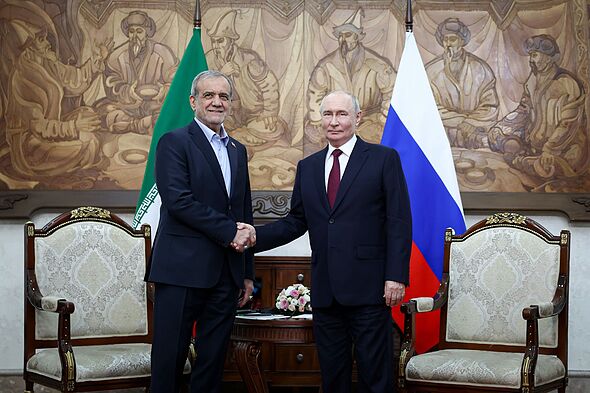
- Document approved on the Russian side on Sept. 2, 2024, outlines plans for a new alliance with Iran.
- In February 2025, Russian Deputy Prime Minister Alexei Overchuk announced that settlements had shifted to national currencies, while the Iranian ambassador stated there was no need for SWIFT.
- Three Iranian companies were approved in February 2025 to perform maintenance on Russian-operated aircraft.
- In May 2025, Russia and Iran launched engineering surveys for a proposed railway stretching from Iran's border with Azerbaijan.
- On February 13, 2026, Interfax reported that Russian state-owned ZN-Vostok was developing Iran's Shadegan oil field.
- March 31, 2026 is set as the deadline for a localization agreement on aircraft parts production in Iran.
- On September 2, 2026, Russian specialists returned to Bushehr for maintenance and partial fuel replacement at Iran's nuclear power plant.
- December 31, 2026 is the target for launching prototype production of aircraft parts in Iran.
- A secret Russian document reveals plans for a new alliance with Iran, detailing cooperation in nuclear, financial, aviation, energy, and transportation sectors.
- The document is titled 'Plan for Cooperation Between the Russian Federation and the Islamic Republic of Iran for 2024-2026' and is marked for 'official use'.
- Rosatom, Russia's state nuclear corporation, is assigned to maintain responsibility at Iran's Bushehr nuclear power plant, including fuel and maintenance support.
- The roadmap aims to increase the share of trade conducted in national currencies from 68% in 2024 to 71% by 2026.
A secret Russian document reveals plans for a new alliance with Iran, focusing on nuclear energy, finance, aviation, and transportation. The 44-page roadmap, titled 'Plan for Cooperation Between the Russian Federation and the Islamic Republic of Iran for 2024-2026', aims to enhance bilateral trade and establish alternative financial systems amid Western sanctions.1112
The document, marked 'For official use', outlines a strategy to increase the share of trade conducted in national currencies from 68% in 2024 to 71% by 2026. It also proposes the development of central bank digital currencies for cross-border settlements, aiming to ease financial transactions between the two nations.13
Keti Korkiya, a research analyst, noted that the document's significance lies not in individual projects but in the architecture of the relationship being forged. She stated, "The roadmap is not revelatory... what is more revealing is the architecture of the relationship Moscow is trying to build."15
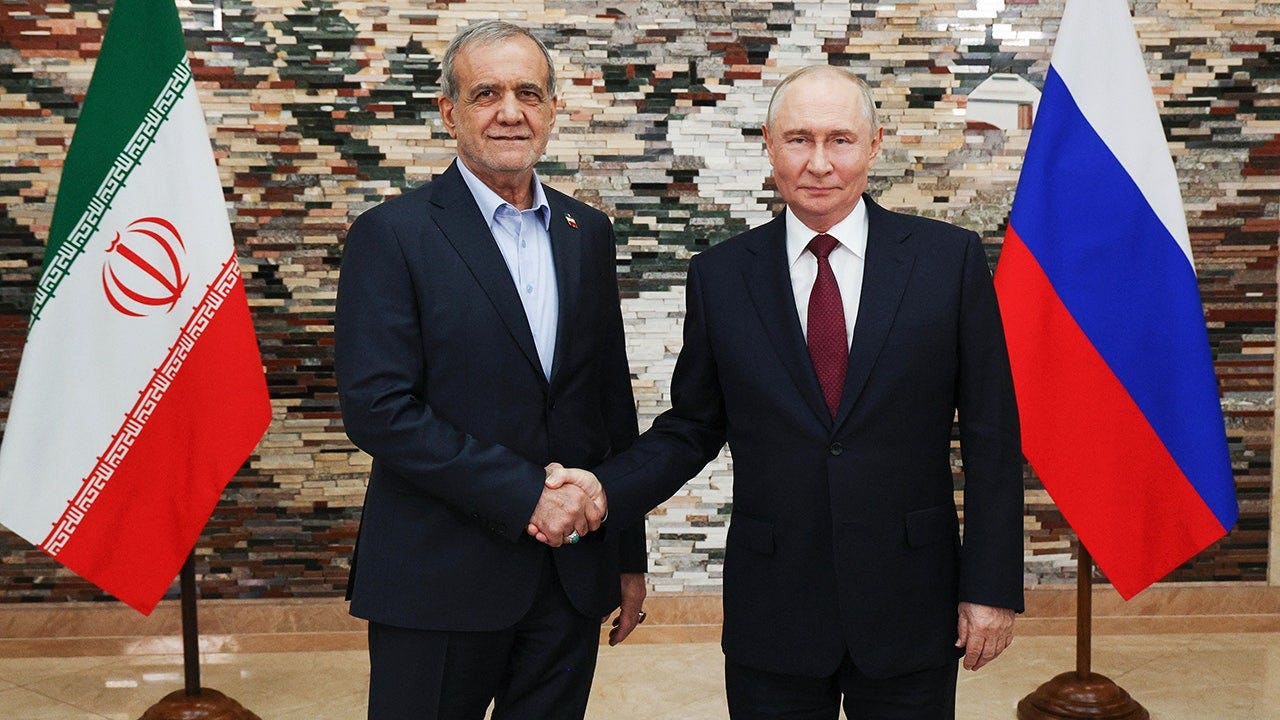
The roadmap assigns Russia's state nuclear corporation, Rosatom, continued responsibility at Iran's Bushehr nuclear power plant, including fuel and maintenance support. It also details specific Iranian oil and gas fields, such as Shadegan, Kish, and North Pars, where Moscow seeks involvement.14
Additionally, the plan emphasizes strengthening transportation networks, proposing a railway from Iran's border with Azerbaijan to Persian Gulf ports. This comprehensive approach aims to mitigate the impact of Western sanctions and enhance cooperation between the two nations.
“The 44-page plan, approved Sept. 2, 2024, sets a target of raising national-currency trade from 68% to 71% by 2026 and assigns Rosatom to Bushehr. Analyst Keti Korkiya says the architecture—central banks, ministries, regulators—matters more than any single project.”
 AOL.com
 foxnews.com



