- European airlines suffered a second wave of bomb threats on Thursday, indiscriminately targeting companies from low-cost operators to the Finnish flag carrier, throwing air travel into disarray.
- More than 10 flights were forced to divert or were searched by authorities after touching down, some escorted by fighter jets during descent.
- At least 21 flights have been reportedly impacted by suspected hoax bomb threats across Europe on Thursday, following earlier disruption where at least seven flights were searched.
- London Heathrow and Birmingham airports both received "threats" on Thursday; Heathrow deemed its threat "not credible" and Birmingham initiated processes with emergency services.
- A UK government spokesperson said the threats reported in the "early hours" of Thursday have been "resolved", and that the UK has "one of the most robust aviation security systems in the world"; the Met’s Aviation Policing Command continues to monitor the situation.
- The International Air Transport Association (IATA) has condemned the hoax threats and urged authorities to "find the origins" of them, with senior vice president for operations safety and security Nick Careen stating that "safety is a number one priority for the industry".
- As of mid-afternoon on Thursday, no hard evidence had emerged linking the airline hoaxes to Moscow or any proxy groups controlled by the Kremlin.
- Several airlines reported bomb threats on Thursday: Air Serbia received a threat on a Belgrade-to-Bucharest flight, Iberia had two aircraft with "explosive threats" that were "false alarms", Aegean Airlines had two flights targeted, and EasyJet had two flights met by police in Prague as a precaution.
- So far today there have been at least 18 flights reportedly impacted by bomb threats across Europe, and Spain's airport authority received threats affecting three flights at Madrid airport, but any threat was ruled out following inspections.
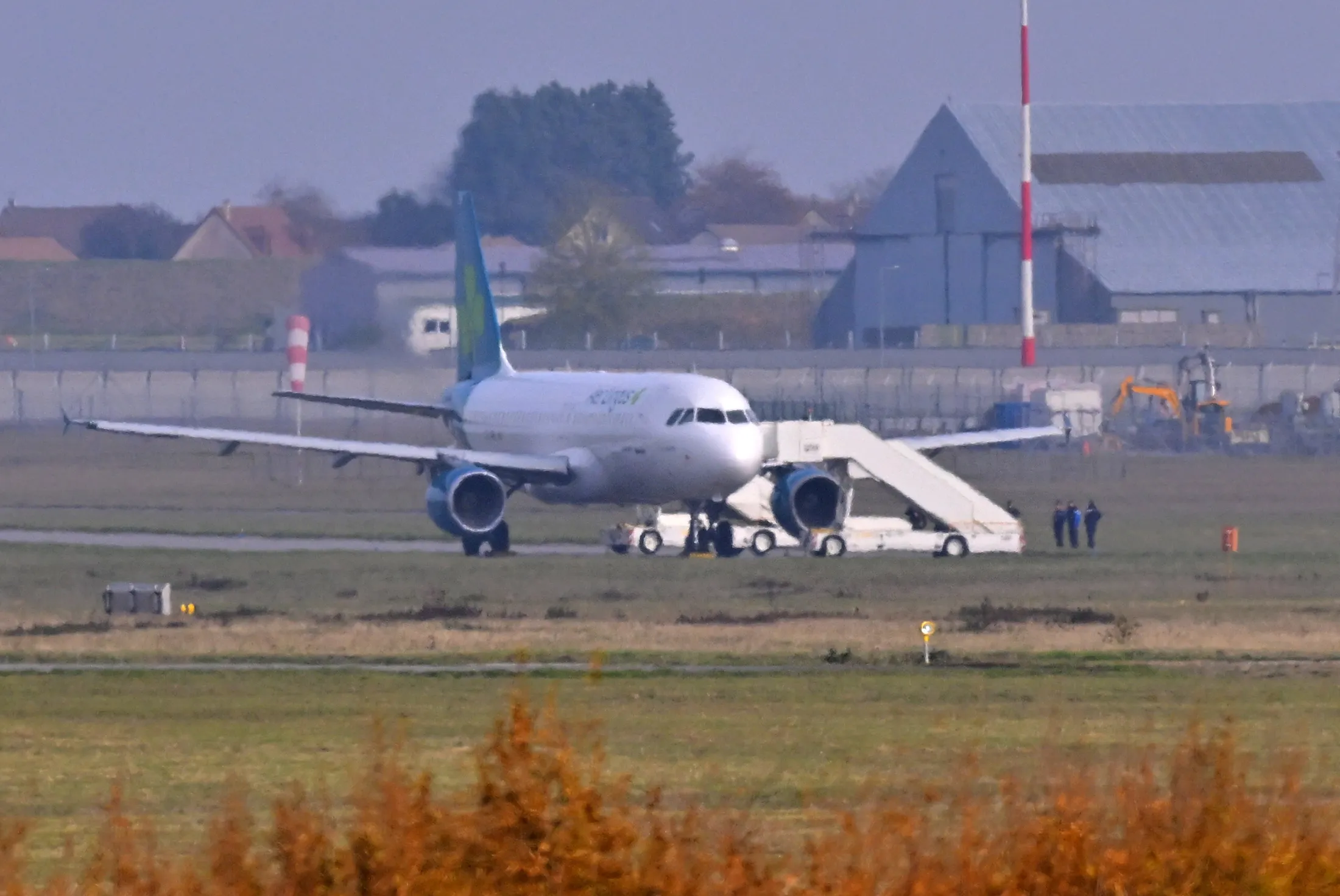
- A LOT Polish Airlines flight from Warsaw to Paris was stopped while taxiing due to a "potential security threat", underwent a security screening with no hazardous items found; the airline also confirmed that its Warsaw-to-Brussels flight was impacted. Additionally, an Aer Lingus flight from Dublin to Rome was diverted to Normandy, where French bomb disposal teams intervened after landing safely.
A second wave of bomb threats on Thursday caused significant disruptions to air travel across Europe, impacting at least 21 flights and forcing over 10 diversions. The threats, which targeted various airlines including low-cost carriers and major flag carriers, led to heightened security measures and military escorts for some flights.3
The International Air Transport Association (IATA) condemned the hoaxes, urging authorities to "find the origins" of these threats. IATA's senior vice president for operations safety and security, Nick Careen, emphasized that "safety is a number one priority for the industry".9
Among the affected flights, an Air Serbia plane from Belgrade to Bucharest received a bomb threat but landed safely. Additionally, two Aegean Airlines flights were targeted, and Iberia Airlines reported two aircraft received "explosive threats" that were later deemed false alarms.111213

UK airports, including London Heathrow and Birmingham, reported receiving threats, with Heathrow stating that the threat was "deemed not credible". A spokesperson for Birmingham Airport confirmed that processes were initiated in conjunction with emergency services.456
Despite the chaos, no hard evidence has linked the threats to any specific group, including Moscow or its proxies. The UK government reassured the public that it maintains "one of the most robust aviation security systems in the world".10
“At least 18 flights were impacted across the continent, with carriers from Air Serbia to LOT Polish Airlines reporting incidents; Spain's airport authority ruled out threats after inspecting three flights at Madrid, while a Dublin-to-Rome flight was diverted to a military airfield in France under government orders.”