Sources: 

Researchers have revealed thousands of previously hidden proteins in the human proteome by exploring noncoding DNA. This breakthrough includes the discovery of over 1,700 new proteins, termed peptideins, which may influence crucial biological processes, especially in cancer.
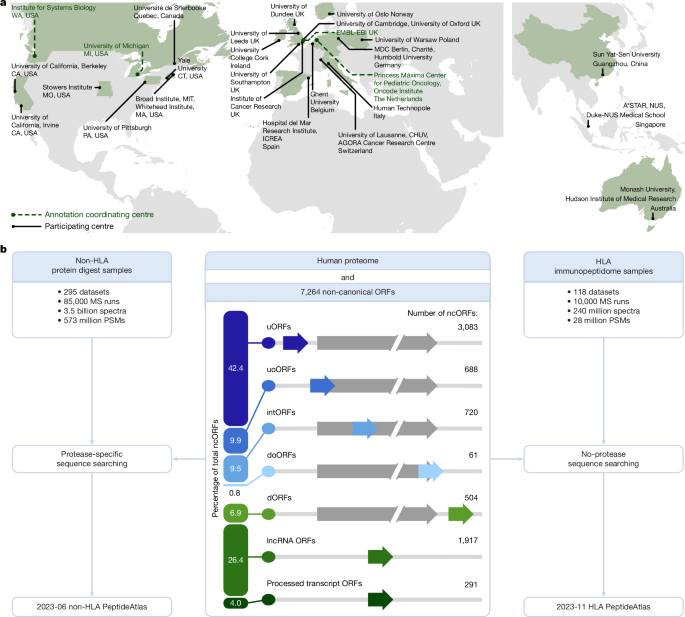
The study analyzed
7,264 non-canonical Open Reading Frames (ncORFs), finding that around
25% produce small, protein-like molecules. These findings challenge traditional views of gene function, as many proteins previously considered insignificant are turning out to have noteworthy roles.
Dr. Sebastiaan van Heesch, a key researcher, noted,
“All of a sudden we could look at all of these noncoding RNAs getting translated… we didn’t know were happening before suddenly became visible.” Most identified peptideins, comprising
94.3% of studied peptides, were associated with intracellular protein translation, raising their potential importance in cellular functions.
The findings bolster the notion that
microproteins and peptideins could be future formats for drug development, especially against cancer, where specific peptideins like that from the gene OLMALINC enhanced the survival impairment of
85% of tested cancer cell lines when made inactive.
This groundbreaking work is part of the international
TransCODE Consortium, which aims to redefine the landscape of proteomics and identify critical noncoding segments of DNA important for biological function.
“We develop a pathway for microproteins to be annotated as reference human proteins,” researchers stated, highlighting their aim for more accurate biotechnology applications.
Sources: 
Researchers have unveiled over 1,700 new proteins from noncoding DNA, significantly expanding the human proteome. The study identified microproteins and peptideins, with nearly 25% of analyzed non-canonical Open Reading Frames producing small, protein-like molecules, suggesting potential targets for cancer immunotherapy.