Sources: 
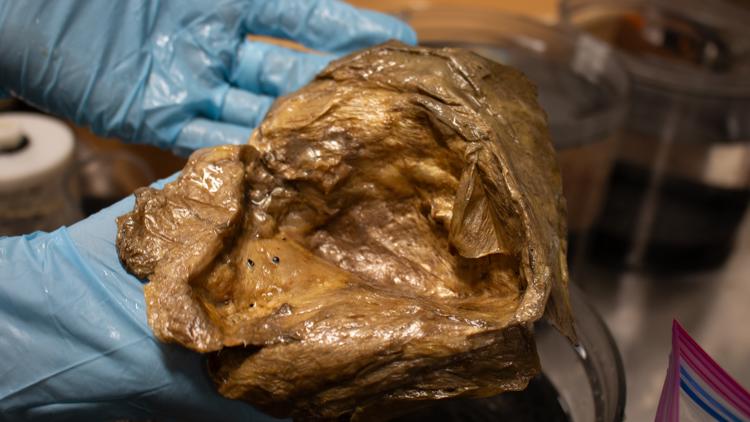
In a remarkable find, scientists operating NOAA's remote deep-sea vehicle Deep Discoverer discovered a 'golden orb' on August 30, 2023, over 10,800 feet deep in the Gulf of Alaska.
Examining the orb's structure, they concluded it was made of fibrous material and covered with
stinging cells known as spirocysts.
These spirocysts, a distinctive feature of cnidarians, are specialized to capture prey.
"Both were genetically almost identical to a kind of cnidarian called _Relicanthus daphneae_". The orb represented remnants from the base of this anemone, typically hidden beneath the body and securing it to the seabed. The full anemone spans a substantial pink-colored cylindrical body that can grow up to
three feet across, with tentacles reaching up to
six feet long.
"So often in deep ocean exploration, we find these captivating mysteries, like the 'golden orb'" said Dr. Allen Collins of NOAA Fisheries. He emphasized the critical need for specialized expertise to analyze such findings further. What remains uncertain is the fate of the rest of the anemone; NOAA speculated that it might have died or relocated. Such discoveries illuminate the unexplored secrets of the deep sea, drawing scientists deeper into its mysteries.
Sources: 
Scientists have identified a mysterious 'golden orb' discovered in the Gulf of Alaska in 2023 as a remnant of the giant sea anemone _Relicanthus daphneae_. The orb, found by NOAA researchers more than 10,800 feet underwater, is made of fibrous material and stinging cells known as spirocysts.