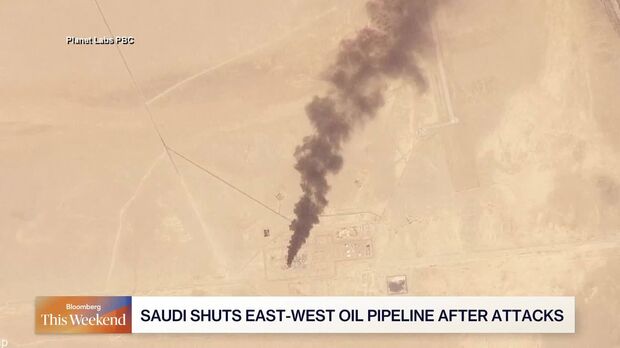
- Saudi Arabia shut its East-West Pipeline as a precaution after multiple attacks, threatening a crucial route for moving crude to the Red Sea.
- Oil prices rose after the pipeline shutdown, with Brent crude near $107 and West Texas Intermediate near $102.
- Saudi Arabia stated it halted the pipeline as a precaution after attacks the previous day.
- Saudi oil buyers and traders indicated that the outage could lead to a loss of up to 4% of global supply if not restarted within days.
- No indication has been given regarding when operations will resume, with damage estimates ranging from five to six weeks to partial resumption during repairs.
- The world's biggest exporter has used the pipeline to reroute around 4 million barrels per day, which is about 4% of global supply, to the port of Yanbu on the Red Sea.
- With the pipeline out of service, Yanbu now has stocks to maintain exports for just five to seven days, according to industry sources.
- Saudi oil supply has already fallen significantly, with the International Energy Agency reporting a drop to just 6.2 million barrels per day in August from 10.9 million barrels per day in February.
Saudi Arabia's East-West Pipeline shutdown poses a significant threat to global oil supply, potentially cutting off 4% of the world's crude. The pipeline, which typically transports around 4 million barrels per day to the Red Sea, was halted as a precaution after drone attacks.
With the pipeline offline, Yanbu has only enough stocks to maintain exports for five to seven days, according to industry sources. Bloomberg Economics analyst Ziad Daoud warns that prolonged disruptions could tighten global energy supplies further, exacerbating the existing energy crisis that has already driven fuel prices to record highs.
Brent crude prices surged toward $107 a barrel, reflecting a nearly 9% increase last week, while West Texas Intermediate hovered around $102. The situation is dire, as Saudi Arabia may run out of oil stocks for exports if the pipeline does not resume operations soon. Estimates on repair times vary, with some sources suggesting it could take five to six weeks to fix, while others believe partial operations could resume sooner.
The shutdown has raised concerns about inflation and economic stability globally, as the energy crunch continues to impact markets and consumer prices.
“Brent crude rose toward $107 a barrel after rallying almost 9% last week, while West Texas Intermediate traded near $102. Saudi oil buyers and traders warn that without a restart within days, export stocks at Yanbu could run out in five to seven days, potentially worsening the global supply crunch that has already pushed fuel prices to record highs.”