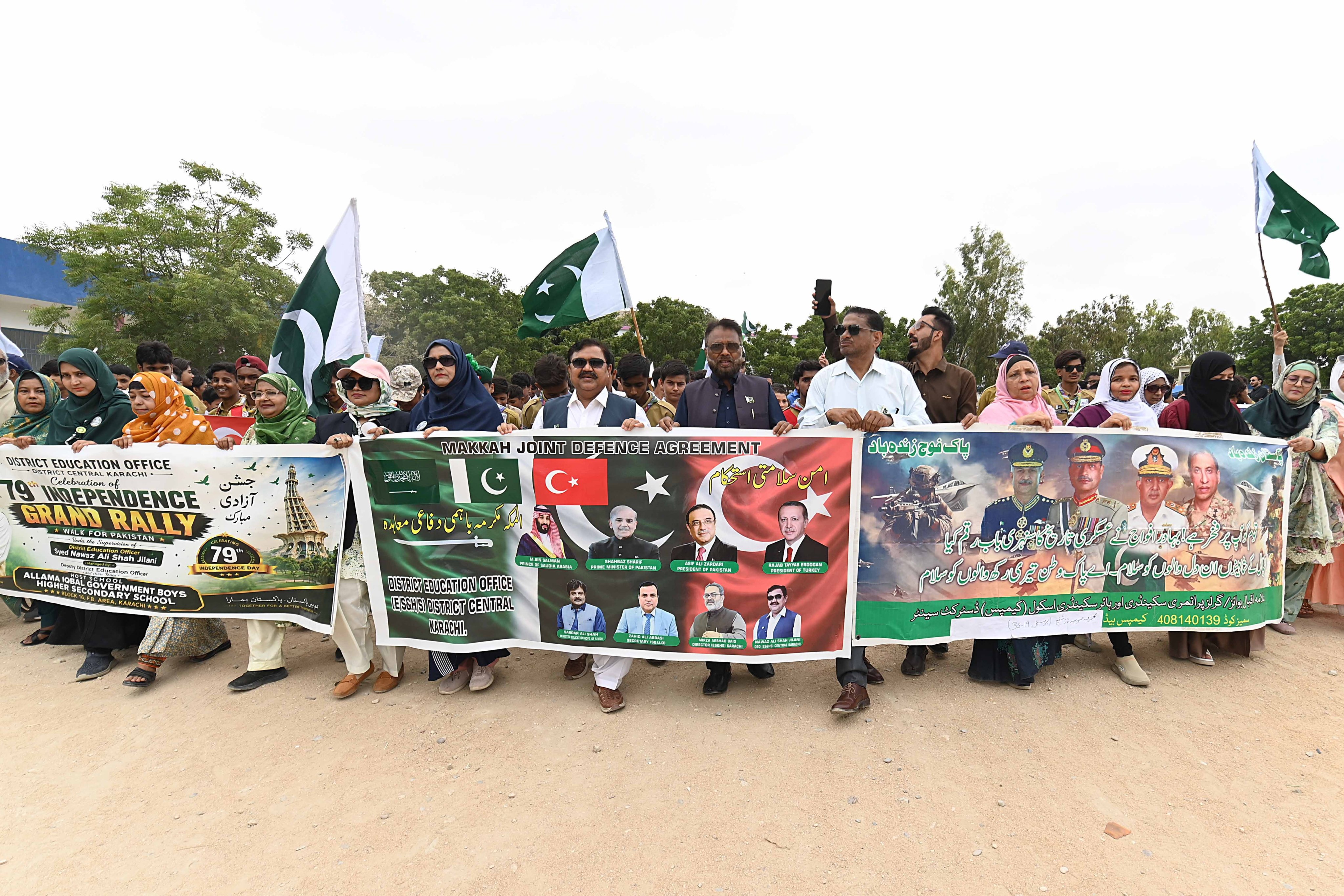
- Saudi Arabia, Tükiye, and Pakistan have signed a Mecca defense pact, which includes a core clause aimed at strengthening collective deterrence against aggression, but lacks a definite commitment.
- Pakistan and Saudi Arabia have a long history of defense cooperation, including the 1982 Joint Defense Protocol establishing SPAFO and over 20,000 soldiers stationed in the Kingdom.
- Pakistan's nuclear spending rose 18% in 2025 to a record USD 1.5 billion, with an estimated 170 nuclear weapons and fissile material from Kahuta and a suspected new facility at Gadwal.
- Prince Sultan bin Abdul Aziz toured Pakistan's secret nuclear facilities at Kahuta in May 1999, remaining the only foreigner to have done so.
- Saudi Arabia seeks deterrence due to vulnerabilities from Iran and the Houthis, including attacks on oil flows in the Strait of Hormuz and the Bab el-Mandeb Strait.
- The US and Saudi Arabia recently reached a civil nuclear deal (the '123 Agreement') but it was made conditional on Saudi signing the Abraham Accords, which Riyadh cannot do while Israel bombs Palestine, Gaza, and Lebanon.
Saudi Arabia, Türkiye, and Pakistan have formalized a defense pact in Mecca, aimed at bolstering collective deterrence against aggression. The agreement, however, lacks a definitive commitment, reflecting Pakistan's cautious approach as the only nuclear-armed state among the three.78
The pact's core clause states it is "intended to strengthen collective deterrence against any act of aggression, and stipulates that any armed attack against one of the three States shall be regarded as an attack against them all." Yet, it notably omits a firm deterrent commitment, indicating Pakistan's wariness.
Pakistan's nuclear capabilities are a focal point, with speculation that Saudi Arabia may finance their expansion, reminiscent of past support in the 1990s. The US Department of Energy recently announced a civil nuclear deal with Saudi Arabia, but conditions tied to the Abraham Accords complicate matters.
The agreement also emphasizes enhancing defense cooperation, building on Pakistan's historical military support to Saudi Arabia, which includes the deployment of over 20,000 troops during the Gulf War. As regional tensions rise, particularly with Iran, the need for a clear deterrent strategy is paramount for Riyadh.3
Pakistan's nuclear spending has surged, with a reported 18% increase in 2025, reaching USD 1.5 billion, while its arsenal is estimated at 170 nuclear weapons. The expansion of Pakistan's nuclear capabilities could significantly impact regional security dynamics, especially with Saudi assistance.45
“The pact's text remains classified, and its implementation could evolve. Pakistan's nuclear spending rose 18% in 2025 to a record $1.5 billion, and Saudi Arabia may finance an expansion of Pakistan's nuclear capabilities, as it did in the 1990s when Prince Sultan toured Kahuta.”