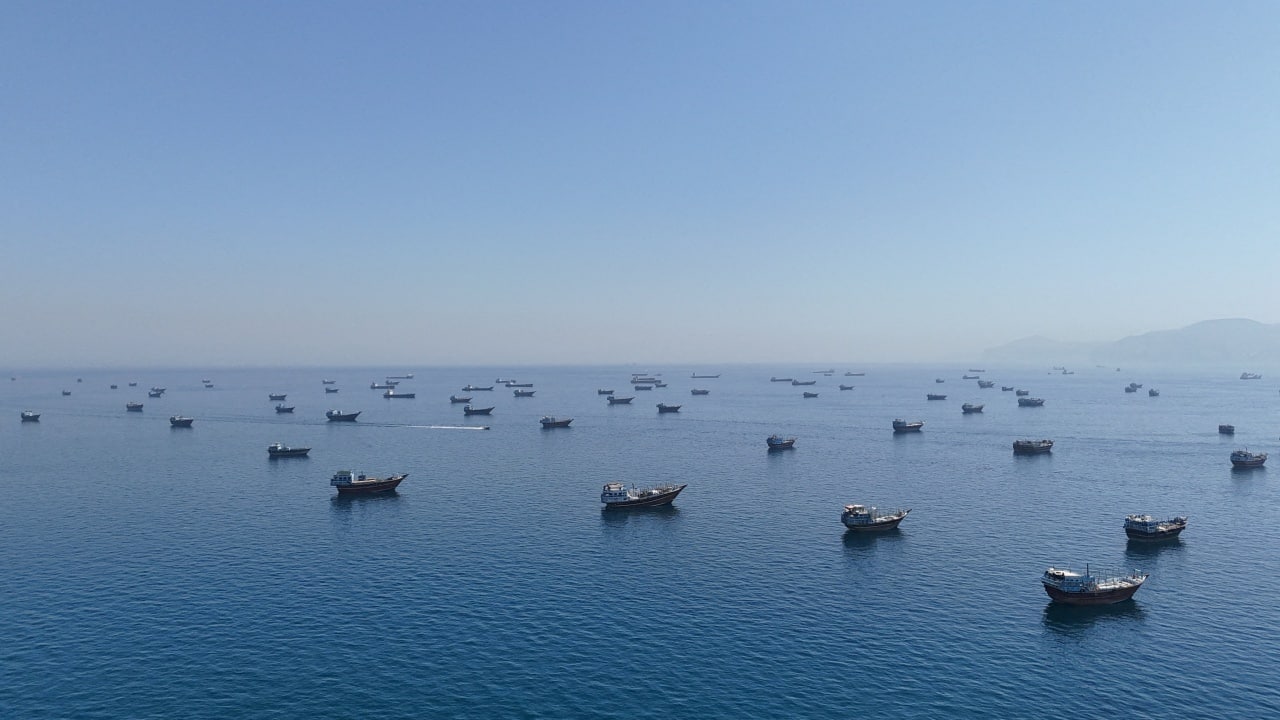
- Saudi Arabia is offering Arab Medium and Heavy cargoes through ship-to-ship transfers off Fujairah, allowing Asian refiners to collect September cargoes without sending tankers into the strait as Riyadh adopts a bypass strategy.
- Saudi Aramco loaded at least three VLCCs in the Gulf last week, all owned by Sinokor, offering them to Asian buyers via ship-to-ship transfers off Fujairah.
- VLCC prices are ballooning out of control, pushing assessed earnings for a Middle East-to-China voyage beyond $500,000 per day as the flow of vessels moving out of the Gulf trickled down to a mere couple per day.
Saudi Arabia has resumed oil loadings and sales from the Strait of Hormuz, with VLCC prices skyrocketing beyond $500,000 per day. This surge is attributed to the country's strategic bypassing of the Strait, the world's largest oil chokepoint, which poses new risks for Gulf oil producers.13
Last week, Saudi Aramco successfully loaded at least three Very Large Crude Carriers (VLCCs)—Malaysia Prosperity, Algeria Prosperity, and Singapore Prosperity—owned by Sinokor. These vessels were offered to Asian buyers through ship-to-ship transfers off Fujairah in the UAE, allowing for prompt deliveries without navigating the Strait.2
“For shipping companies, surreptitious transits through the Strait of Hormuz became the most lucrative freight trade of the day,” as several more Saudi-origin VLCCs were booked without broker involvement. This shift in strategy enables Asian refiners to secure September cargoes while avoiding the risks associated with the Strait.
As the flow of vessels from the Gulf dwindles to just a couple per day, the oil market is witnessing unprecedented price hikes, with VLCC earnings reaching alarming levels. The ongoing geopolitical tensions and the need for alternative routes are reshaping the dynamics of oil transportation in the region.
“Saudi Aramco loaded at least three VLCCs last week, offering them to Asian buyers via ship-to-ship transfers off Fujairah. Meanwhile, surreptitious transits through the Strait of Hormuz have become the most lucrative freight trade, with several more Saudi-origin VLCCs booked without broker involvement.”
 Crude Oil Prices Today | OilPrice.com