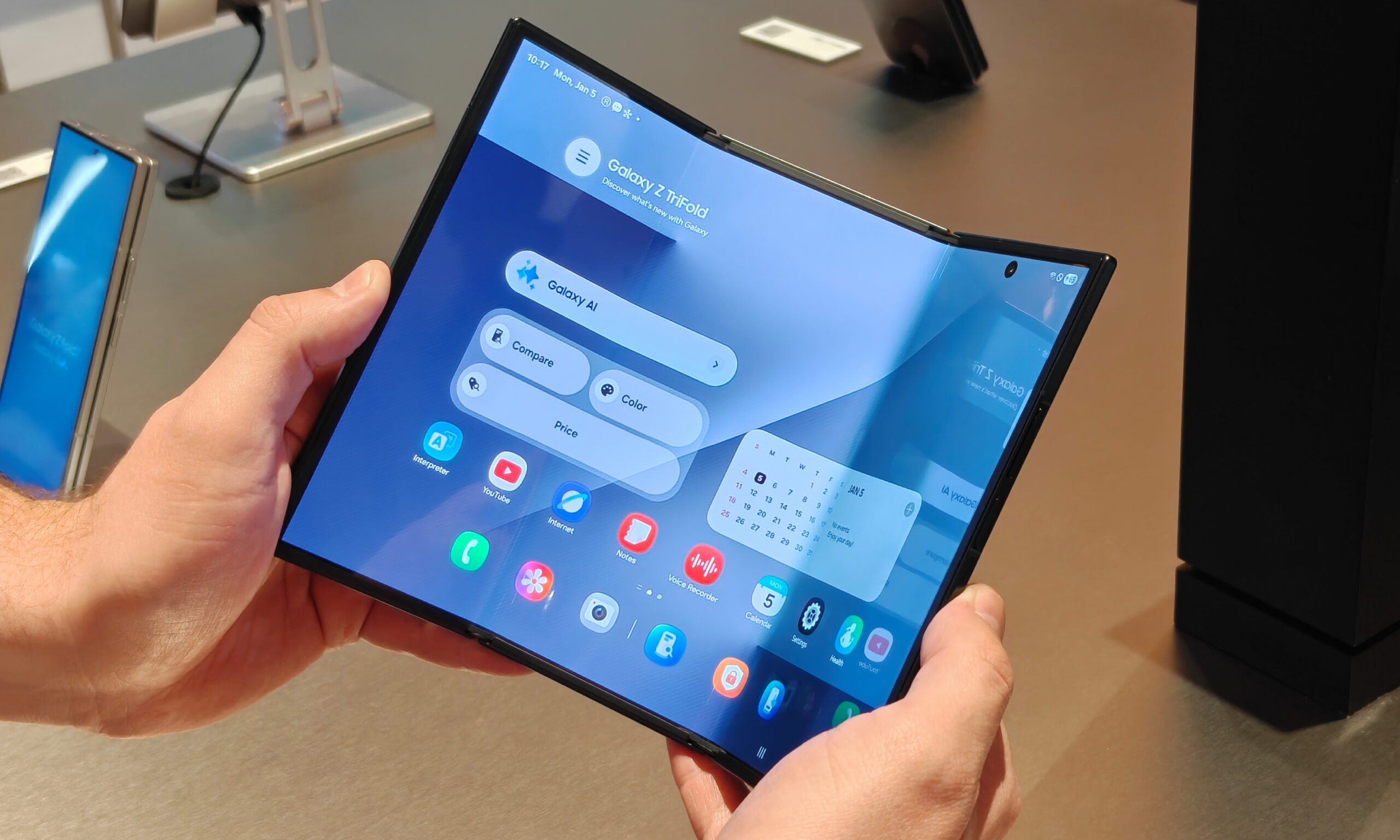
- Samsung reportedly delays the launch of the Galaxy Z TriFold 2 due to cost-related issues and ongoing redesign of its hinge.
- Samsung's next big-screen phone may feature a slidable design that allows the display to extend outward from inside the body.
- A new slidable phone from Samsung could launch before the delayed Galaxy Z TriFold 2, with development reportedly accelerating.
- Samsung's first Galaxy Z TriFold transformed a regular-looking phone into a 10-inch tablet using two hinges.
- Samsung Display has been working on rollable and sliding OLED concepts for years, including the Flex Hybrid and Rollable Flex.
- Samsung's first commercial slidable phone is rumored to arrive during the first half of 2028.
Samsung has delayed the Galaxy Z TriFold 2 launch due to unspecified cost-related issues, according to leaks from the supply chain.12
The delay means that the TriFold 2 will arrive even later than anticipated, pushing back the timeline for both products.
Sources indicate that Samsung is committed to redesigning the hinge of the Galaxy Z TriFold, aiming for a slimmer and lighter device with consistent thickness across its three sections.
The original Galaxy Z TriFold, which launched in the US for $2,899, transformed a standard phone into a 10-inch tablet using two hinges.7
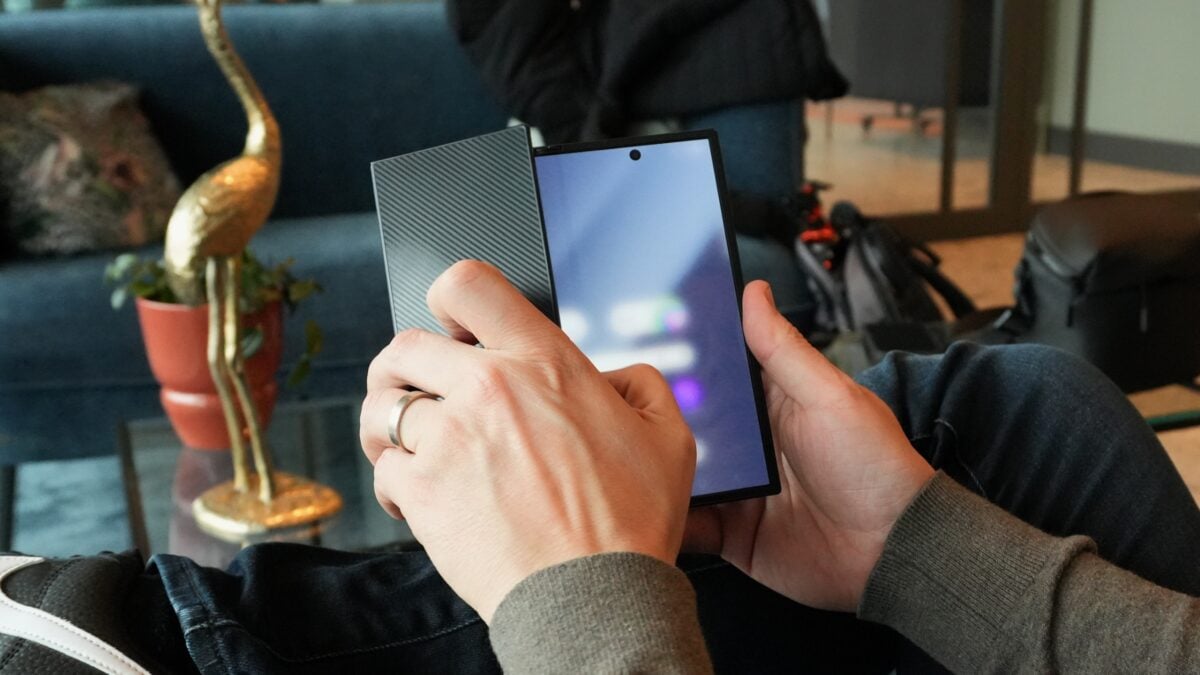
Meanwhile, a new slidable phone, utilizing Samsung Display's rollable OLED panel, is rumored to be in development and could launch as early as 2027, ahead of the TriFold 2.568
This device would allow users to expand the display for videos, games, and multitasking, then retract it into a conventional phone size.
Samsung Display has demonstrated rollable and sliding OLED concepts for years, but none have reached consumers yet. The latest leaks provide no specific release date for either device, leaving consumers eager for updates.
“The Galaxy Z TriFold 2's hinge is reportedly being redesigned to be slimmer and lighter, with cost-related problems delaying its launch. Meanwhile, the rumored slideable phone uses a flexible OLED panel that extends sideways, a concept Samsung Display has demonstrated for years.”
 Digital Trends
 SamMobile



