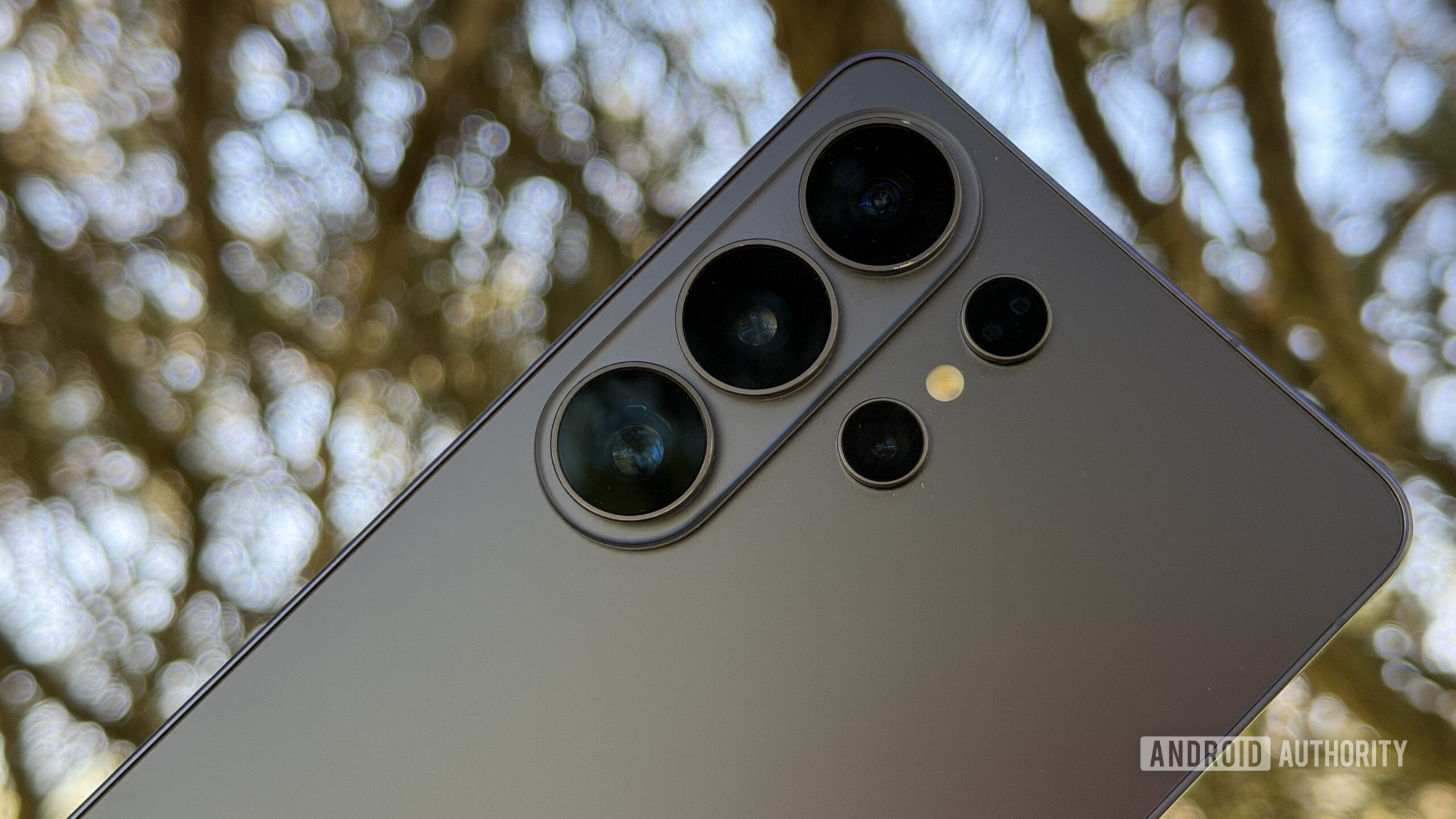
- A new report indicates that the Galaxy S27 Ultra may get a slimmer camera thanks to a hidden upgrade involving an inkjet lens printing process.
- Samsung reportedly plans to expand an inkjet lens printing process across three rear camera modules on the Galaxy S27 Ultra.
- The reported technology could help reduce the thickness of the camera module and free up internal space for future upgrades.
- Removing physical film layers and adhesive reportedly shaves valuable micrometers off the overall camera stack height.
- Freed-up space could let Samsung reduce the size of the camera bump or give engineers more breathing room to pack in heavier hardware without the bump ballooning.
- Modern smartphone cameras stack six to eight lens elements; physical plastic films add thickness and can cause lens flare and ghosting in night shots or backlit scenes.
- Samsung would use precision inkjet equipment to spray a micro-thin layer of matte-black, light-absorbing ink directly onto the lens edges instead of relying solely on film, targeting layers such as L3 Tele, L3 Wide, and L6 Wide.
Samsung's Galaxy S27 Ultra may feature a slimmer camera module thanks to a new inkjet lens printing process. This technology aims to enhance camera performance by reducing internal reflections and freeing up space within the module.1257
The inkjet process will reportedly be applied to three rear camera modules, specifically targeting the L3 Tele, L3 Wide, and L6 Wide layers. By spraying a micro-thin layer of matte-black, light-absorbing ink directly onto the lens edges, Samsung hopes to eliminate the need for physical films that add thickness and can cause lens flare and ghosting in challenging lighting conditions.6
“Removing physical film layers and adhesive also reportedly shaves valuable micrometers off the overall camera stack height,” a tipster noted on X. This reduction in size could allow for a smaller camera bump or provide engineers with more flexibility to incorporate advanced features without compromising design.4
Currently, modern smartphone cameras typically stack six to eight lens elements within a single module, which can lead to increased thickness. The new approach not only addresses this issue but also opens the door for future camera upgrades, as more internal space can accommodate advanced hardware for improved dynamic range.
As Samsung continues to innovate, the Galaxy S27 Ultra's camera enhancements could set a new standard in smartphone photography.
“Samsung would use precision inkjet equipment to spray matte-black ink on lens edges, targeting L3 Tele, L3 Wide, and L6 Wide layers. Removing physical film and adhesive reportedly shaves micrometers off camera stack height, giving engineers room for future upgrades or a smaller camera bump.”




