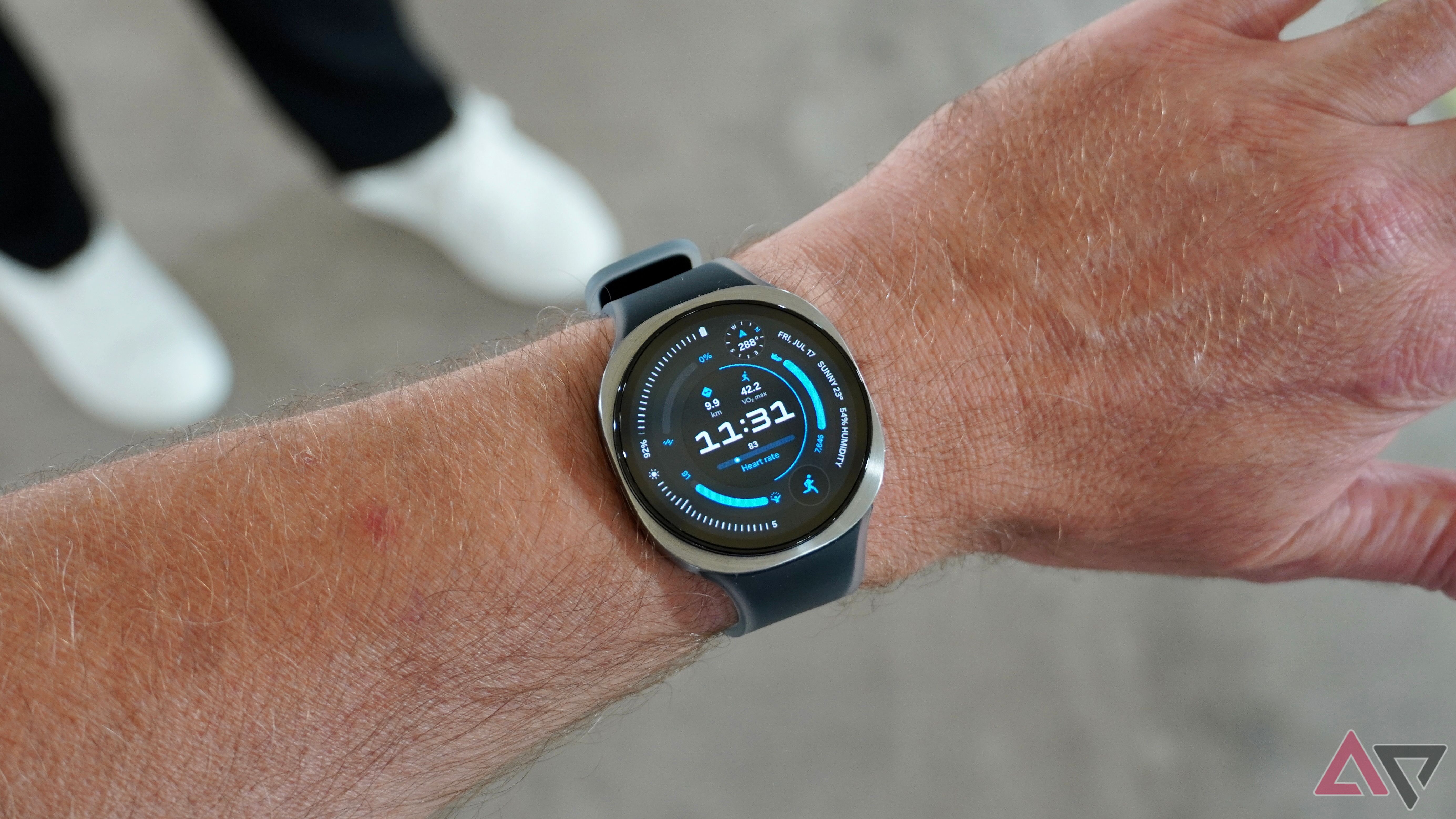
- Samsung has officially debuted the Galaxy Watch Ultra 2 and Galaxy Watch 9.
- The Galaxy Watch 9 retains the same exterior hardware and squircle design as its predecessor.
- The battery capacity sees only a small increase, and battery life is estimated to be 30 hours with always-on display—potentially no improvement over the last generation.
- The display brightness and durability ratings remain unchanged from the Galaxy Watch 8.
- The new software features are modest and may eventually come to the Galaxy Watch 8, reducing the incentive to upgrade.
Samsung's Galaxy Watch 9 debuted alongside the Galaxy Watch Ultra 2, but the Watch 9's design remains unchanged, retaining the controversial squircle shape.14
The focus this year is on internal upgrades, including a new chip and enhanced AI-powered health tools that monitor fitness.
However, the battery capacity sees only a slight increase, with Samsung estimating a 30-hour battery life with the always-on display enabled, raising concerns that the battery performance may not improve compared to the previous generation.
Critics argue that the new wellness features, while potentially useful, do not break new ground, and the Galaxy Watch 8 might eventually receive similar updates.5
The Watch 9 maintains the same impressive durability ratings as its predecessor, the Galaxy Watch 8, and reaches 3,000 nits of brightness, matching the previous model's display.
As Samsung has not confirmed whether these new features will be available for older models, users may feel hesitant to upgrade.
Overall, while the Galaxy Watch Ultra 2 may attract attention, the Galaxy Watch 9's incremental changes could leave potential buyers wanting more.
“The Galaxy Watch 9 retains the same squircle design and 3,000-nit display as its predecessor, with only a small battery increase and estimated 30 hours with always-on display. New software features are modest and may eventually come to the Galaxy Watch 8, reducing the incentive to upgrade.”