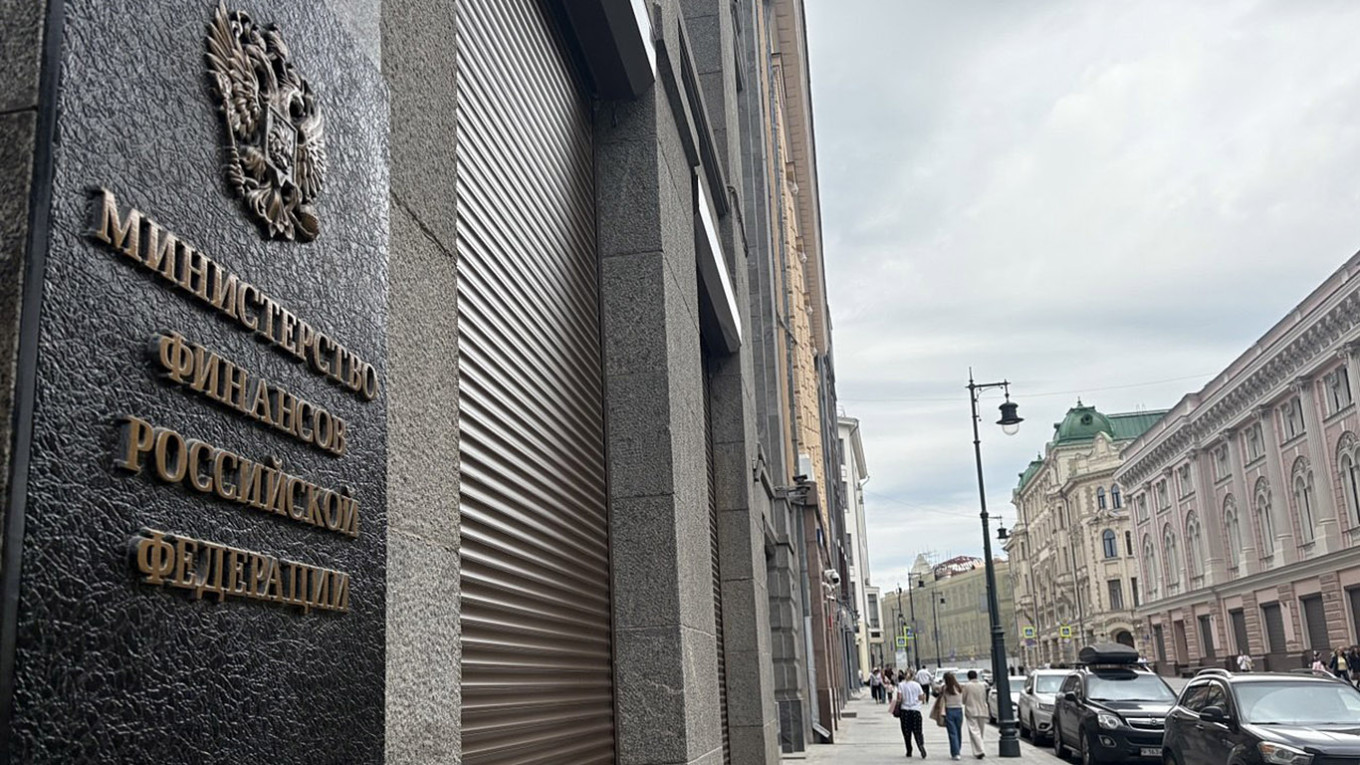
- Russia's Finance Ministry has unveiled its draft budget proposal for 2027, introducing a fresh round of tax increases on passive income, e-commerce, and corporate windfalls as the country struggles to fund soaring military spending.
- The 2027 budget draft projects a deficit of around 2% of GDP, with revenues estimated at 43.3 trillion roubles and expenditures at 48.8 trillion roubles.
- The government plans to send the draft budget to parliament before October 1.
- Despite having already increased taxes earlier this year, Russia's government has failed to ease the fiscal strain on the federal budget, which is projected to reach 3% of GDP by the end of 2026.
- The costs of the war in Ukraine have been increasing for Russia, leading the government to raise taxes and increase borrowing to finance the war effort.
Russia's Finance Ministry has introduced a draft budget for 2027 that includes significant tax increases aimed at addressing a projected 2% GDP deficit. The proposal features a new progressive tax scale of 13%-22% on passive personal income, impacting approximately 4 million high-income Russians.1
The budget outlines a 35% tax on dividend payouts to non-resident bank accounts and a 15% tax on mutual investment funds' passive earnings. Additionally, a 22% value-added tax (VAT) will be applied to cross-border online retail purchases, along with a flat customs fee of 100 rubles ($1.18) on international packages under 200 euros ($227).
The Finance Ministry emphasized that the budget addresses social obligations and supports defense needs, stating, “The planned resources will enable the equipping of the armed forces with necessary weapons and military equipment”. Despite previous tax increases, the government has struggled to alleviate fiscal pressures, with the federal budget projected to reach 3% of GDP by the end of 2026.4
Projected state revenues for 2027 stand at 43.3 trillion roubles ($509 billion), while expenditures are expected to hit 48.8 trillion roubles, resulting in a deficit of 2.2% of GDP. The ministry noted that the costs of the ongoing war in Ukraine have necessitated these financial adjustments, as the economy faces near-zero growth.2
“The new progressive tax scale of 13%-22% on passive income would affect roughly 4 million high-income Russians, while military personnel are exempt. The draft also proposes a 22% VAT on cross-border online purchases and a 30% tax on excess earnings for mining and metallurgical companies.”
 The Moscow Times