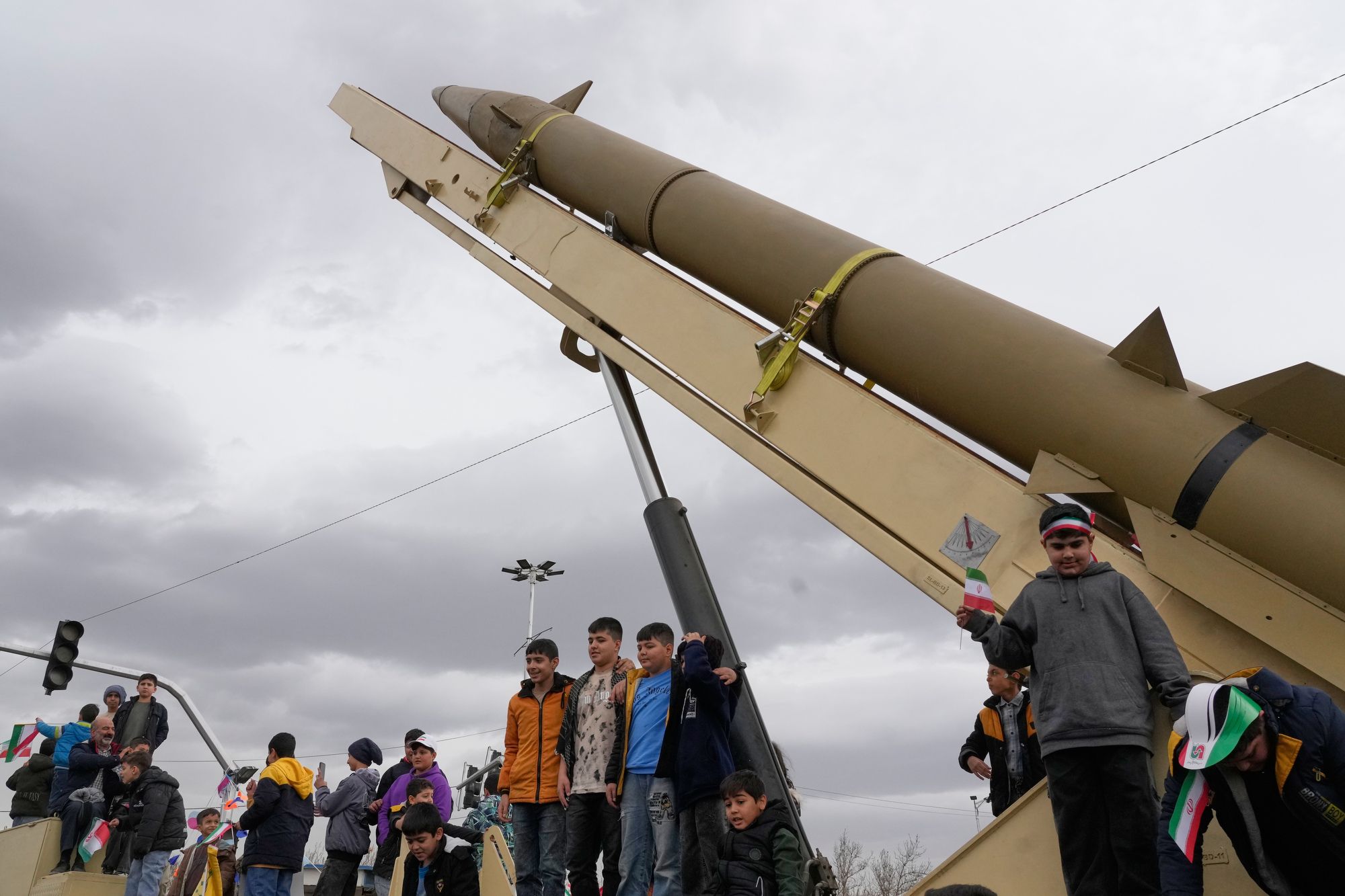
- Iran has built and flight-tested the ramjet propulsion system.
- Russia has been providing assistance to Iran for supersonic cruise missile development, continuing into the present.
- Experts warn that such missiles could threaten US warships in the region and add a new element to the months-long conflict.
- Jim Lamson, a former Iran-focused military analyst with the CIA, said: "For the Iranians, this would give them a qualitatively new strategic weapon system that could threaten US Navy vessels."
- Supersonic cruise missiles shorten the time available for air and missile defences to detect and engage them and would help Iran in the Gulf where the US operates advanced defensive systems.
- There is no evidence that a Russian-assisted supersonic cruise missile has been deployed yet.
- Fabian Hinz, an expert on Iranian missiles, stated that this is the transfer of a highly strategically sensitive military technology from Russia that the Iranians have wanted to acquire for decades.
Russia's covert assistance to Iran in developing supersonic cruise missiles poses a significant threat to US naval forces in the Gulf, according to a Financial Times investigation. The program, codenamed C430L, employs top Russian missile specialists to enhance Iran's military capabilities.5
The main goal of the initiative is to develop a ramjet propulsion system, enabling missiles to fly at several times the speed of sound. This technology, which Iran has sought for decades, would allow for quicker strikes against US warships, complicating defense efforts in the region.3
Fabian Hinz, a senior analyst with Conflict Armament Research, stated, “This is the transfer of a highly strategically sensitive military technology from Russia that the Iranians have wanted to acquire for decades.” Jim Lamson, a former CIA analyst, emphasized that such a program would provide Iran with a “qualitatively new strategic weapon system” capable of threatening US Navy vessels.47
While Iran has successfully built and tested the ramjet propulsion system, there is currently no evidence that a Russian-assisted supersonic cruise missile has been deployed. The implications of this collaboration could escalate tensions in the Gulf, where US forces operate advanced defensive systems.6
“Iran has already built and flight-tested the ramjet propulsion system, but no evidence of a deployed Russian-assisted missile exists. Experts say the transfer requires political clearance from Russia's top leadership, highlighting the strategic sensitivity.”
 The Mirror