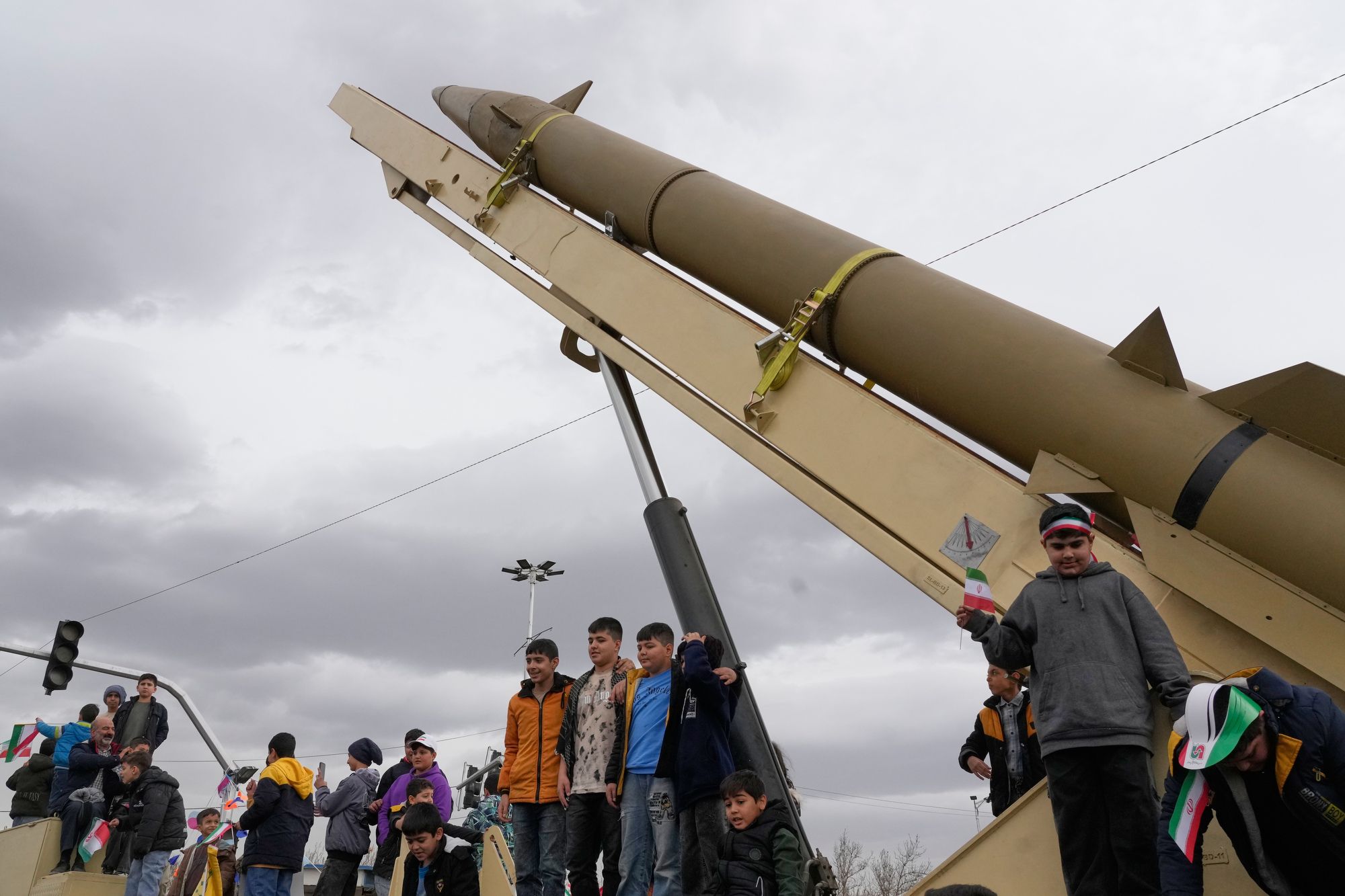
- Russia has secretly helped Iran develop supersonic cruise missiles that could menace American warships in the Middle East.
- The programme, codenamed C340L, began in 2023 and has continued, raising the possibility that American aircraft carriers and other warships could be targeted.
- NPO Mashinostroyenia received a cache of Iranian technical material on the ramjet propulsion system by 2025, and Russian engineers analysed data from an Iranian test flight and sent a detailed list of questions about how it performed.
- The programme was reportedly arranged by Rosoboronexport, Russia's state arms exporter, which co-ordinated the project with NPO Mashinostroyenia, a Russian rocket company which the US has sanctioned since 2014.
- Supersonic cruise missiles are extremely difficult to intercept because they fly at a low altitude, "hugging" the landscape to hide from radar, at speeds of up to 2,200mph.
- The Iranian regime has supplied Moscow with its "kamikaze" for its nightly bombardments of Ukrainian cities, while Russia has reportedly provided intelligence that allows Tehran to strike American bases in the Middle East.
Russia has secretly aided Iran in developing supersonic cruise missiles that pose a significant threat to U.S. naval forces in the Middle East. The initiative, known as C340L, began in 2023 and aims to enhance Iran's missile capabilities, potentially targeting American aircraft carriers and warships.12
The program focuses on creating a ramjet propulsion system, enabling missiles to exceed the speed of sound. These supersonic cruise missiles are particularly challenging to intercept due to their low-altitude flight paths, reaching speeds of up to 2,200 mph.
While Iran has constructed and tested this propulsion system, there is currently no evidence of its deployment in active combat. The project was orchestrated by Rosoboronexport, Russia's state arms exporter, in collaboration with NPO Mashinostroyenia, a sanctioned Russian rocket firm. By 2025, NPO Mashinostroyenia had received a cache of Iranian technical materials related to the ramjet system.345
Russian engineers have actively engaged in the program, analyzing data from Iranian test flights and providing feedback on performance. This collaboration underscores a broader military partnership, as Iran has supplied Russia with drones for its operations in Ukraine, while Russia has offered intelligence to assist Iran in targeting U.S. bases in the region.
“The program, arranged by Rosoboronexport and NPO Mashinostroyenia, which the US has sanctioned since 2014, involved Iran sharing ramjet propulsion material by 2025. These missiles fly at up to 2,200mph, hugging terrain to evade radar, and Russia has also provided intelligence for strikes on American bases.”