
- Russia's FSB has charged Pavel Durov, cofounder of Telegram, with facilitating terrorism and issued an international arrest warrant for him.
- The FSB stated that Telegram failed to take down channels and bots used by Ukrainian special services and terrorist organizations to coordinate attacks in Russia.
- The FSB claimed that these attacks included acts of sabotage and terrorism, as well as mass killings and cyber-fraud operations.
- Durov left Russia in 2014 after refusing to comply with government demands to shut down opposition communities on Telegram.
- Earlier this year, Durov announced that Russian authorities had opened a criminal investigation against him, accusing them of fabricating pretexts to restrict access to Telegram.
- In addition to the Russian investigation, Durov faces allegations that Telegram failed to adequately counter criminal activity on the platform and did not sufficiently cooperate with law enforcement requests.
- The FSB has accused Telegram of being used to prepare and coordinate acts of sabotage and terror inside Russia.
- Shortly after the charge was announced, Telegram's account on X posted an image showing Durov holding up his middle finger.
- Durov has previously accused Russian authorities of fabricating new pretexts to restrict Russians' access to Telegram.
- In 2024, Durov was arrested and placed under formal investigation in France over allegations of failure to properly moderate the app to reduce criminality.
Russian authorities have charged Pavel Durov, the founder of Telegram, with facilitating terrorism and issued an international arrest warrant. The FSB claims that Telegram has been used to coordinate attacks by Ukrainian secret services, failing to remove channels linked to these activities.15
The FSB stated that Telegram was involved in acts of sabotage, mass killings, and cyber-fraud operations. Durov, who has lived abroad since 2014 after resisting government demands to shut down opposition channels, has accused the Russian government of fabricating pretexts to restrict access to the platform and suppress free speech.3
In addition to the charges in Russia, Durov is facing scrutiny for allegedly not adequately moderating the app to counter criminal activity. The FSB's announcement has intensified scrutiny on Telegram, which has been criticized for its role in facilitating communication among extremist groups. Shortly after the charges were made public, Telegram's account on X shared an image of Durov holding up his middle finger, signaling defiance against the accusations.8
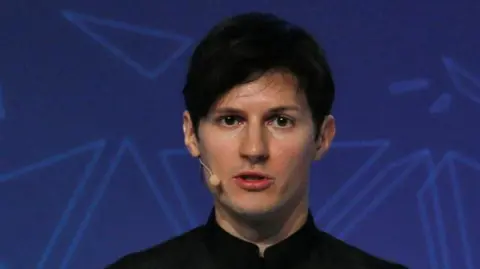
“The FSB said Telegram had been used to prepare and coordinate acts of sabotage and terror,” highlighting the severity of the allegations against Durov. The situation raises significant questions about the balance between privacy rights and national security in the digital age.7
Durov's legal troubles come amid a broader crackdown on digital platforms in Russia, where authorities are increasingly targeting services that they believe threaten state security.
“The FSB alleges that Telegram was used to coordinate acts of sabotage and terrorism, failing to remove channels linked to Ukrainian services. Durov, who has lived abroad since 2014, previously accused Russian authorities of using fabricated pretexts to restrict access to the platform.”
 BBC
BBC



