
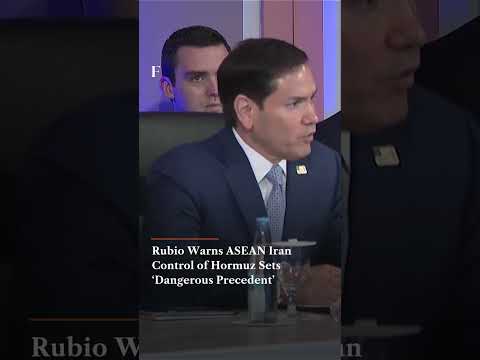
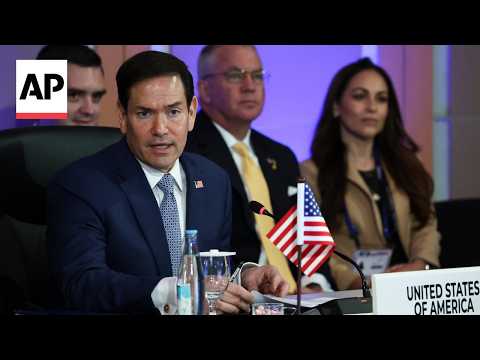
- U.S. Secretary of State Marco Rubio warned Asian leaders Wednesday (July 22, 2026) that Iran's demand to control and collect tolls in the Strait of Hormuz would threaten the world's economy and the principle of freedom of navigation.
- Rubio stated, "If we create a precedent in the Middle East where a nation-state can decide that they are going to control an international waterway, charge a toll and if you don't pay them, blow up your ships, we have created a very dangerous precedent which will repeat itself in other parts of the world, including in this region."
- Rubio's remarks were made at the start of an annual meeting in Manila with counterparts from the Association of Southeast Asian Nations, who have expressed alarm over the resurgent war in West Asia.
- Rubio emphasized that Iran has been reaching out to the United States to engage in talks about settling differences, but the U.S. will not allow attacks on ships.
- The International Energy Agency noted that overreliance on fossil fuel imports from the Middle East has made Southeast Asia particularly vulnerable to energy shocks triggered by the Iran war.
- Asian markets imported about 80% of the crude oil and almost 90% of the liquefied natural gas, or LNG, transiting through the Strait of Hormuz in 2025.
U.S. Secretary of State Marco Rubio cautioned that Iran's demand to control the Strait of Hormuz poses a significant threat to the global economy and freedom of navigation. Speaking in Manila on July 22, 2026, he emphasized the potential for a dangerous precedent if nations can control international waterways and impose tolls.13
Rubio stated, “If we create a precedent in the Middle East where a nation-state can decide that they are going to control an international waterway, charge a toll and if you don’t pay them, blow up your ships, we have created a very dangerous precedent which will repeat itself in other parts of the world, including in this region.” His remarks came during a meeting with Southeast Asian Foreign Ministers, who are increasingly alarmed by the ongoing conflict in West Asia.
The International Energy Agency highlighted that Southeast Asia's heavy reliance on fossil fuel imports from the Middle East makes the region particularly vulnerable to energy shocks, calling the situation a “stark wake-up call” for energy security. In 2025, Asian markets imported approximately 80% of crude oil and 90% of liquefied natural gas transiting through the Strait of Hormuz.56
Australian Foreign Minister Penny Wong echoed concerns, warning that the situation could deteriorate rapidly and calling for a ceasefire and negotiations to ensure the strait remains open.
“Iran has been reaching out to the U.S. for talks, Rubio said, while insisting the U.S. will not tolerate attacks on ships. Separately, the IEA noted Southeast Asia imports about 80% of its crude oil via the Strait, calling the crisis a stark wake-up call for energy security.”

 AP News



