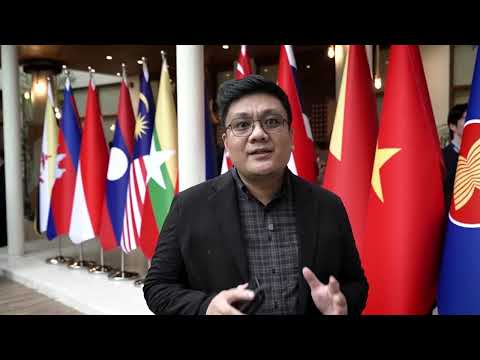
- U.S. Secretary of State Marco Rubio reassured Southeast Asian counterparts of Washington's '100% commitment' to the region during the ASEAN meeting in Manila.
- Rubio held talks with Chinese Foreign Minister Wang Yi amid concerns over tensions in the South China Sea and the Middle East.
- Secretary-General of ASEAN Dr. Kao Kim Hourn participated in the ASEAN Post-Ministerial Conference with the U.S. in Manila, reaffirming cooperation for regional peace and stability.
- Rubio's remarks come as ASEAN countries face new and coercive threats in the South China Sea, which he highlighted in a Philippine media opinion piece.
- Beijing claims sovereignty over almost the entire South China Sea, leading to disputes with several ASEAN nations.
- Australia's Foreign Minister Penny Wong expressed concern over recent altercations in the South China Sea, describing them as 'destabilising and risky'.
U.S. Secretary of State Marco Rubio emphasized Washington's unwavering commitment to Southeast Asia during a recent ASEAN meeting in Manila, where he held discussions with Chinese Foreign Minister Wang Yi. Rubio reassured regional leaders of the U.S.'s '100%' commitment, highlighting the importance of partnerships in the face of rising tensions.12
The meeting comes amid concerns over renewed hostilities in the Middle East and escalating tensions in the South China Sea. Rubio stated, "The problem we're having right now is that they're not serious about talks," referring to Iran's actions, and stressed that Iran must not control the Strait of Hormuz as it could set a dangerous precedent for Southeast Asia.
In a pointed opinion piece, Rubio warned that ASEAN countries face "new and coercive threats" in the South China Sea, asserting that if these waters fall under the control of a power willing to use commerce as a geopolitical weapon, it would pose dire threats to sovereignty and security.4
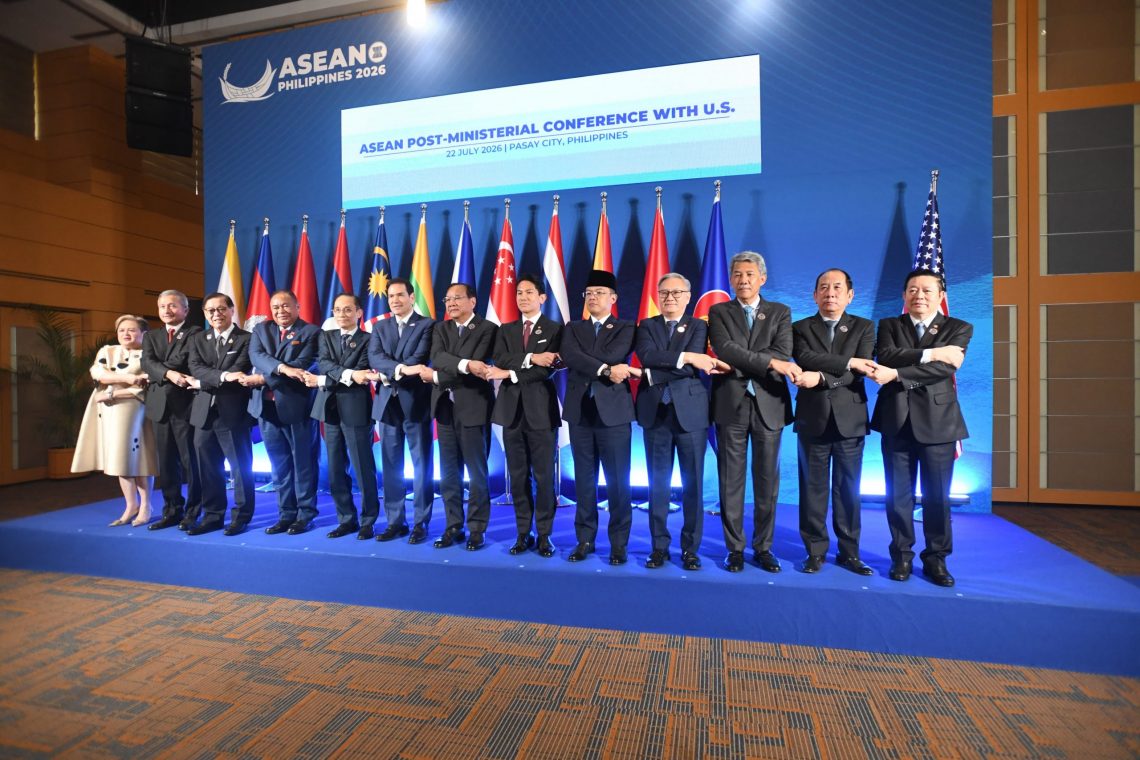
Rubio's discussions with ASEAN counterparts also included a joint statement with leaders from India, Australia, and Japan, reaffirming their commitment to a free and open Indo-Pacific. Australia's Foreign Minister expressed concern over recent altercations between China's coast guard and the Philippine navy, highlighting the need for stability in the region.
The ASEAN meeting also focused on strengthening cooperation and preparing to commemorate the 50th anniversary of ASEAN-U.S. Dialogue Relations in 2027, with plans to adopt a Comprehensive Work Plan to guide future collaboration.
“Australian Foreign Minister Penny Wong called a recent China coast guard-Philippine navy altercation 'destabilising and risky' ahead of the ASEAN meeting. The Quad grouping reaffirmed support for a free and open Indo-Pacific; Rubio warned against Iran controlling the Strait of Hormuz and said in a Philippine media opinion piece that ASEAN countries face 'dire new threats' in the South China Sea.”