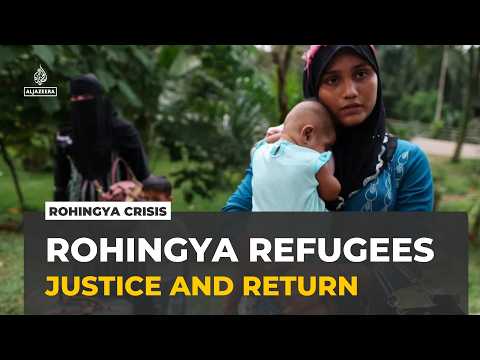
- Tens of thousands of Rohingya refugees from living in dozens of camps held a rally on August 25, 2026, to demand their safe return to their home state, nine years after they fled a government crackdown.
- The demonstrators urged the international community to ensure security in Rakhine State as they marked what they call the “Ninth Anniversary of Rohingya Genocide Day.”
- More than 1 million refugees from Myanmar's Rohingya ethnic and religious minority now live in the sprawling camps around the Cox's Bazar district of southeastern Bangladesh.
- In January 2026, the International Court of Justice held hearings in a genocide case against Myanmar.
- Earlier in August 2026, Myanmar's military government said it would accept the return of more than 300,000 refugees once security improves.
- In August 2017, a violent military crackdown forced more than 700,000 Rohingya refugees to flee across the border into Bangladesh.
- Since then, more than one million stateless Rohingya have remained stranded in tightly packed camps in Bangladesh’s coastal district of Cox’s Bazar, where living conditions are steadily deteriorating as international aid declines.
- Conditions in the refugee camps, where more than half the residents are children, have deteriorated due to funding cuts and reduced food rations, aid agencies say.
Rohingya refugees in Bangladesh marked the ninth anniversary of their exodus from Myanmar on August 25, 2026, with a rally demanding safe return to Rakhine State. Over 1.2 million Rohingya currently reside in overcrowded camps in Cox's Bazar, facing deteriorating living conditions due to funding cuts and reduced aid.13
The rally, organized by the United Council of Rohingya, aimed to remember the atrocities committed against them and highlight the ongoing humanitarian crisis. Refugee leader Sayed Ullah expressed frustration, stating, “Whether it is the Arakan Army or the Myanmar military, as long as they continue playing this double game, the situation in Arakan, or Rakhine, will not become safe.”

Since the military crackdown in 2017, which forced over 700,000 Rohingya to flee, the refugees have been denied citizenship in Myanmar, making them the world’s largest stateless group. The International Court of Justice is currently reviewing a genocide case against Myanmar, with hearings revealing evidence of mass killings and systematic violence.4

Despite previous attempts by the Bangladesh government to initiate repatriation, none of the refugees were willing to return due to security concerns. The situation remains dire, with reports indicating that one in three refugees may face crisis levels of hunger this fall, according to Save the Children.2
Nay San Lwin, cofounder of the Free Rohingya Coalition, emphasized the need for immediate action, stating, “The nine-year commemoration must spark immediate action, not just statements.”
“The rally coincides with the ninth Rohingya Genocide Remembrance Day, marked by 16 diplomatic missions in Dhaka issuing a joint statement calling for the right to return. Meanwhile, the 2026 Joint Response Plan has cut its appeal by 26% to $710.5m, and the World Food Programme has reduced monthly food vouchers from $12.50 to $6 per person.”