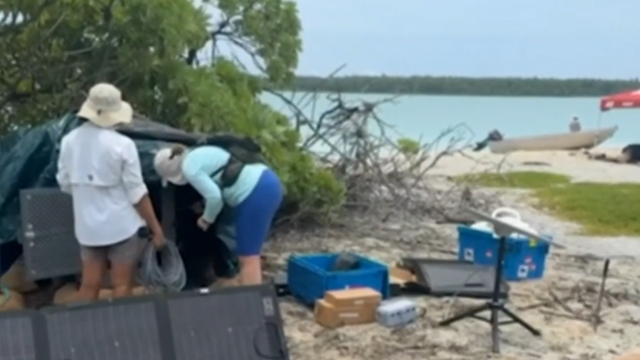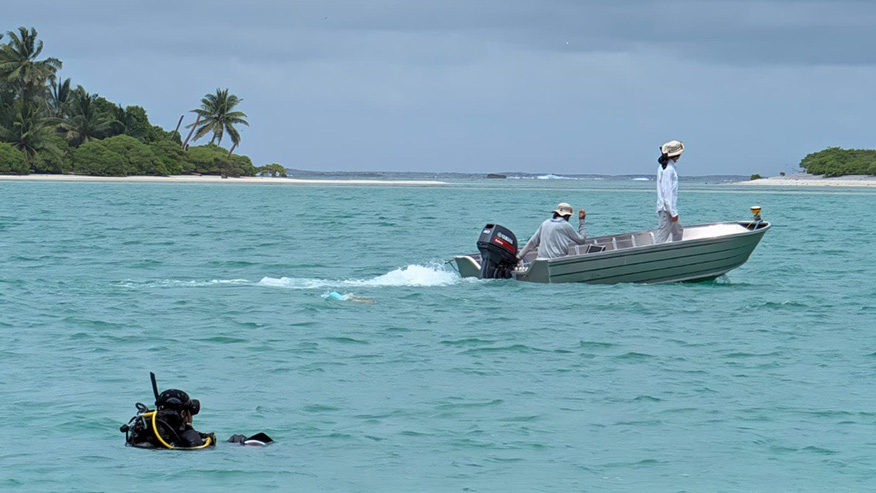
- The Archaeological Legacy Institute, Purdue Research Foundation, and Purdue University expedition team began its underwater survey of Nikumaroro’s lagoon on Wednesday (Oct. 14) using a magnetometer and side-scan sonar to gather data about the Taraia Object.
- Severe weather in the South Pacific prevented the Taraia Object expedition team from going ashore on Thursday (Oct. 15), temporarily pausing field operations in the search for what could be Amelia Earhart’s Lockheed Electra 10-E.
- Despite the weather delay, the expedition remains on schedule, with two more days of field operations planned, and an update on the identification of the Taraia Object expected before the team departs for Tarawa, Kiribati.
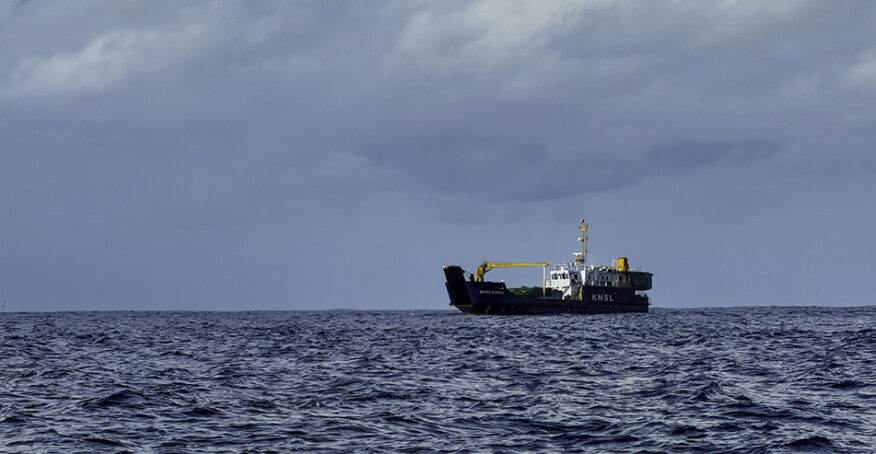
Severe weather conditions in the South Pacific have temporarily halted the Taraia Object expedition on Nikumaroro, which is investigating a visual anomaly that may be linked to Amelia Earhart's disappearance. The 17-member team was unable to go ashore on Thursday (Oct. 15) due to winds and rough seas that made conditions unsafe for transport boats from the Marin Mainiku vessel to the island.
Despite this setback, the expedition remains on schedule, with two more days of field operations planned. An update on the identification of the Taraia Object is expected within 48 hours, as the team continues its work before departing for Tarawa, Kiribati.
The expedition, organized by the Archaeological Legacy Institute, Purdue Research Foundation, and Purdue University, began its underwater survey of Nikumaroro's lagoon on Wednesday (Oct. 14). They are using a magnetometer and side-scan sonar to gather data about the Taraia Object, which is being investigated as part of the castaway hypothesis—the theory that Earhart and navigator Fred Noonan landed on Nikumaroro in July 1937 during her attempt to circumnavigate the globe.
Rick Pettigrew, executive director of the Archaeological Legacy Institute, emphasized the complexity of the scientific process, stating, “We understand the tremendous interest in what we’re doing at Nikumaroro, and we appreciate everyone’s patience. This is a complex scientific process. You don’t simply arrive at a site and immediately identify what’s there.” The team is committed to a multipronged approach to data gathering and analysis before reaching any conclusions about the nature of the Taraia Object.
The final two days of investigation will include the use of a hydroprobe and a water injection dredge to make contact with the object and remove sediment for visual assessment.
“The 17-person team, anchored by the Marin Mainiku vessel, began its lagoon survey Wednesday using magnetometer and side-scan sonar; final two days will employ a hydroprobe and water injection dredge to contact and assess the object.”
 Purdue University