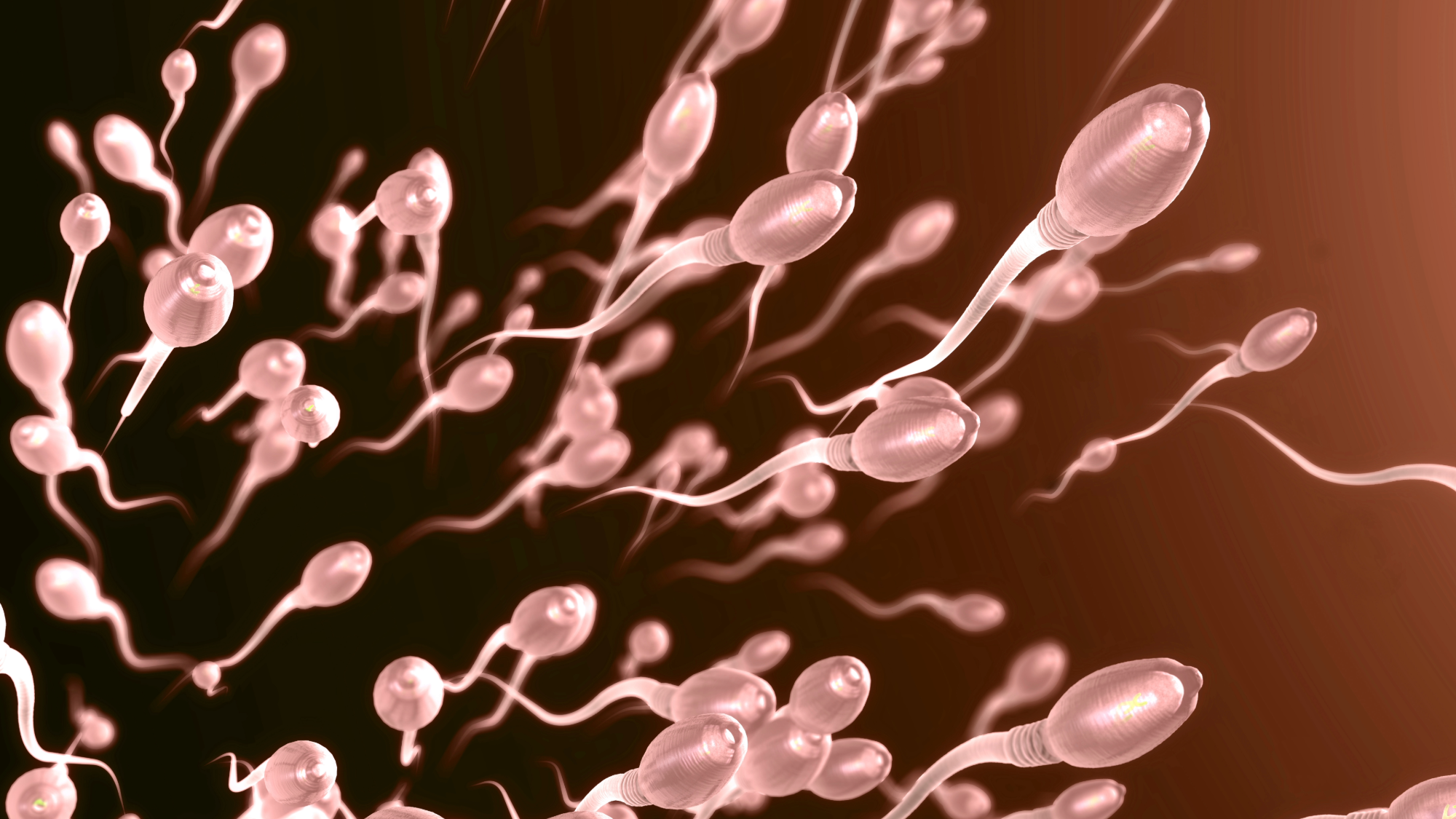
- Fruit fly sperm is enormous, measuring around 1,800 microns, which is significant relative to the size of the adult male Drosophila melanogaster, which is about two millimeters long.
- The seminal vesicle of the fruit fly is only about 200 micrometers in size, which is significantly smaller than the sperm cells.
- Researchers found that thousands of sperm can fit into a space measuring just 200 × 150 × 150 microns without getting tangled.
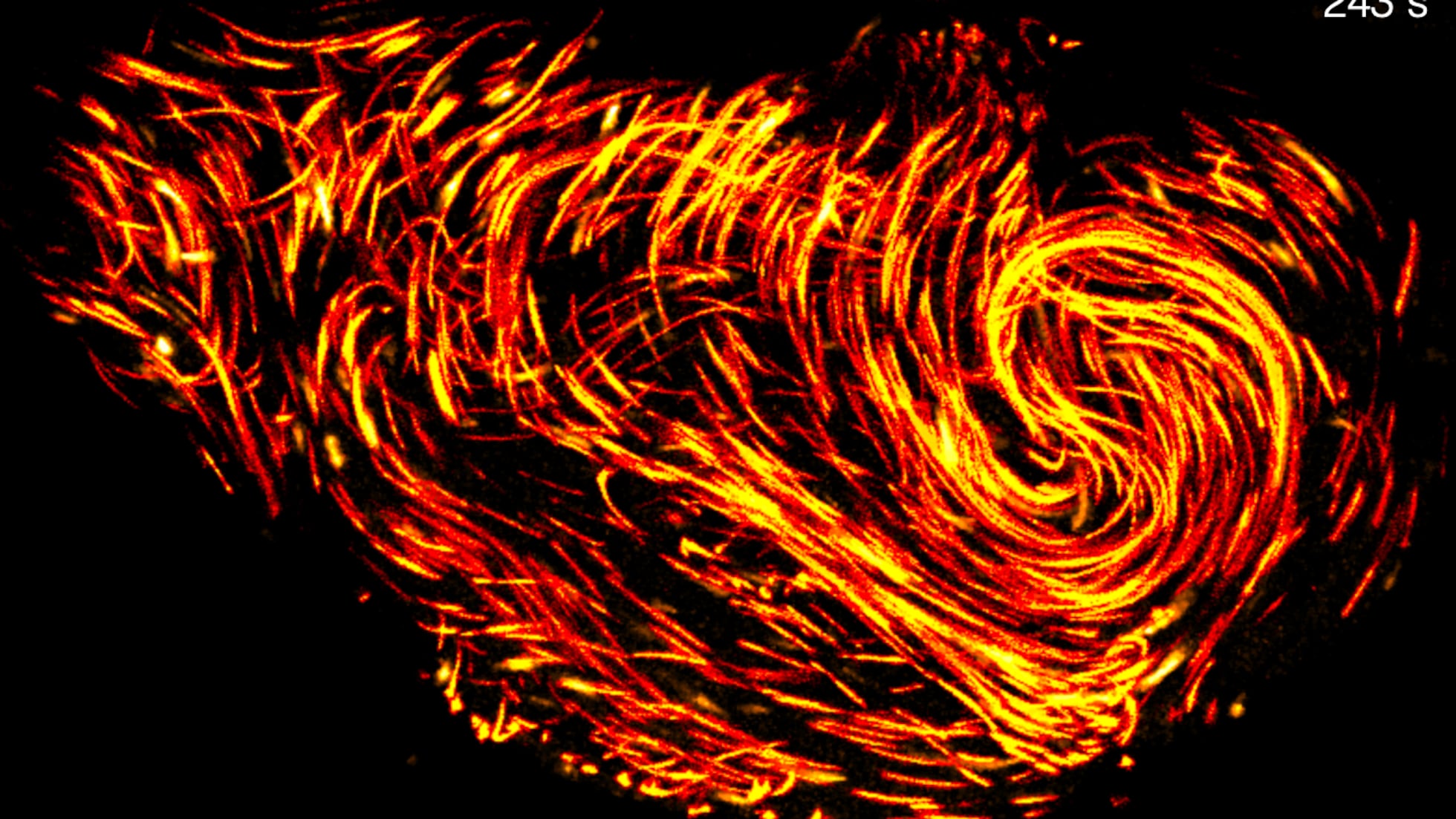
- The study revealed that sperm exhibit system-wide collective material flows and maintain their organization through mechanical interactions.
- The researchers conceptualized the motion of individual sperm as topologically confined to a reptation-like tube formed by their neighbors.
- The physical consequences of sperm gigantism in fruit flies have been unclear, despite previous investigations into the evolutionary pressures behind their extreme flagellar lengths.
- Unlike traditional views of sperm movement, fruit fly sperm pulse aimlessly and meander within their confines, challenging the textbook image of sperm as heat-seeking missiles.
Researchers have explored the unique collective behaviors of giant fruit fly sperm, which can reach lengths of 2,000 microns, within the confines of a 200-micrometer seminal vesicle.123
The study, conducted by a team of physicists, biologists, and mathematicians, reveals that these sperm exhibit system-wide collective material flows and maintain their organization through mechanical interactions.56
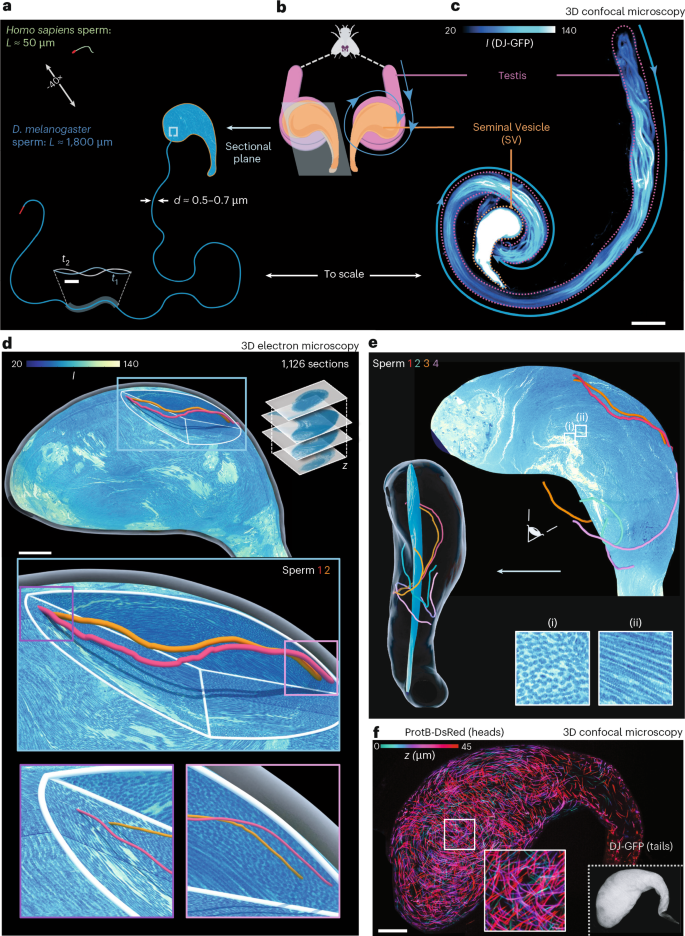
The seminal vesicle, a tiny space compared to the size of the sperm, poses a challenge for entanglement. “Our work suggests that active stresses in the flagellar material maintain the sperm unentangled in both male and female storage organs,” the researchers noted.

Unlike traditional views of sperm as solitary swimmers, the findings indicate that individual sperm pulse aimlessly and rely on their dense packing to navigate their environment. “Individual sperm, as far as we know, have no communication system beyond mechanical interactions arising from their extremely dense packing,” the study explains.9
The research challenges the conventional understanding of sperm movement, suggesting that “sperm can move in a way that’s very different from the textbook picture of a lone sperm swimming through fluid.” This work not only sheds light on the reproductive biology of fruit flies but also contributes to the broader understanding of active matter systems in biology.
The implications of this research extend beyond fruit flies, potentially influencing studies on other species with similarly large sperm relative to body size.
“Fruit fly sperm are among the longest in the animal kingdom, measuring up to 2,000 microns. Researchers have discovered how these sperm can fit into a seminal vesicle that is only 200 micrometers in size without getting tangled.”
 Popular Science
 Nature
 EL PAÍS English