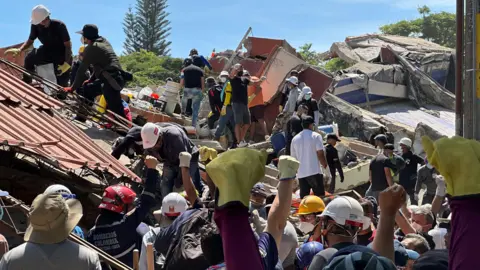
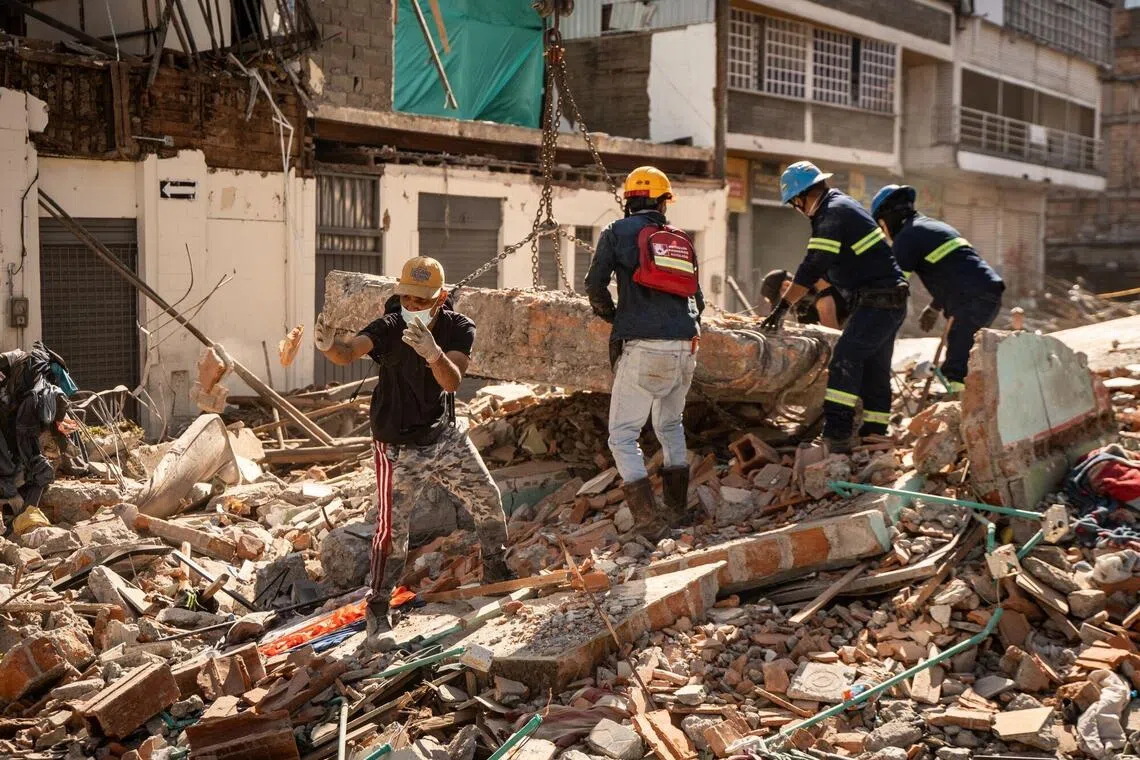
- A powerful earthquake struck western Colombia on Monday, causing widespread destruction and prompting a desperate search for survivors. PEREIRA, Colombia — Tons of aid from regional partners began to roll into Colombia on Wednesday (Aug 12), as the search for survivors in the rubble grew more desperate after the temblor razed buildings, buckled roads and crushed cars.
- In Pereira, rescuers pulled Daniela Largo alive from the rubble late Tuesday after a complex 12-hour rescue. Another moment was marked by mourning as a man was pulled from a building in the same city, lifeless and covered in a white blanket.
- Wednesday (Aug 12): President de la Espriella reported at least 265 deaths, nearly 500 missing, and over 25,800 families impacted.
- In Cali, Mayor Alejandro Eder said rescue teams continue to find signs of people alive under the rubble and are racing to save them. He stressed, "The next 20 hours are the most critical to find and rescue people alive. Every minute is vital."
- International aid has poured in: the US offered over US$15 million in aid and sent disaster response teams; Mexico sent two military aircraft carrying 19.5 tonnes of food and 19 security forces, with more aid planned; El Salvador offered two planes with 100 tonnes of aid; and Pope Leo XIV expressed solidarity and prayers.
- The earthquake has tested Colombia's new president, Abelardo de la Espriella, and his government as they scramble to respond. De la Espriella reported at least 265 deaths, nearly 500 missing (though civilian databases put the number at more than 4,100), and over 25,800 families impacted.
- Rescue efforts are focused on the disappeared, with teams picking through rubble in the hardest-hit cities of Cali, Pereira, Manizales and Quibdo. Aid agencies consider the first 48 to 72 hours crucial for retrieving survivors, though that threshold can be extended if those trapped have access to food and water.
- Across the coffee-growing region, authorities have converted sports arenas, schools and other public buildings into shelters for thousands of displaced Colombians. Families have been sleeping in parks, some fearing aftershocks or the collapse of their damaged homes. Colombia's geological service has documented 130 aftershocks since the quake.
- The official response has been complicated by ongoing crises of deep poverty and civil warfare in areas like Choco, the epicentre. The true impact remains largely unknown because cell service has been lost and many communities are remote, accessible only by river. Humanitarian organisations were already on the ground supporting a 2016 peace accord and were able to pivot to disaster relief.
Rescue teams in Colombia are racing against time as they search for survivors in the aftermath of a powerful earthquake that struck the country's west on Monday, resulting in at least 265 fatalities and nearly 500 individuals reported missing. President Abelardo de la Espriella acknowledged the challenges faced by his administration in responding to the disaster, with civilian databases indicating that the number of missing could exceed 4,100.131415
As of Wednesday, over 25,800 families have been affected, with many displaced and seeking shelter in converted public buildings. The urgency of the situation is underscored by the mayor of Cali, Alejandro Eder, who stated, "The next 20 hours are the most critical to find and rescue people alive. Every minute is vital."78
Rescue operations have yielded both hope and despair; while some survivors, like Daniela Largo, have been pulled from the rubble, others have been found lifeless. The Colombian geological service has recorded 130 aftershocks since the quake, complicating rescue efforts and instilling fear among the displaced.23192021
International aid is pouring in, with the US offering over US$15 million and Mexico dispatching military aircraft loaded with food supplies. The true extent of the earthquake's impact remains uncertain, particularly in remote areas where communication has been disrupted.9101112
Pope Leo XIV has expressed his condolences and support for recovery efforts, highlighting the global solidarity in the face of this tragedy.
“Cali's mayor warns the next 20 hours are most critical, with teams still finding signs of life. International aid includes US$15 million from the US, 19.5 tonnes from Mexico, and 100 tonnes from El Salvador, while 130 aftershocks complicate efforts.”


 AsiaOne