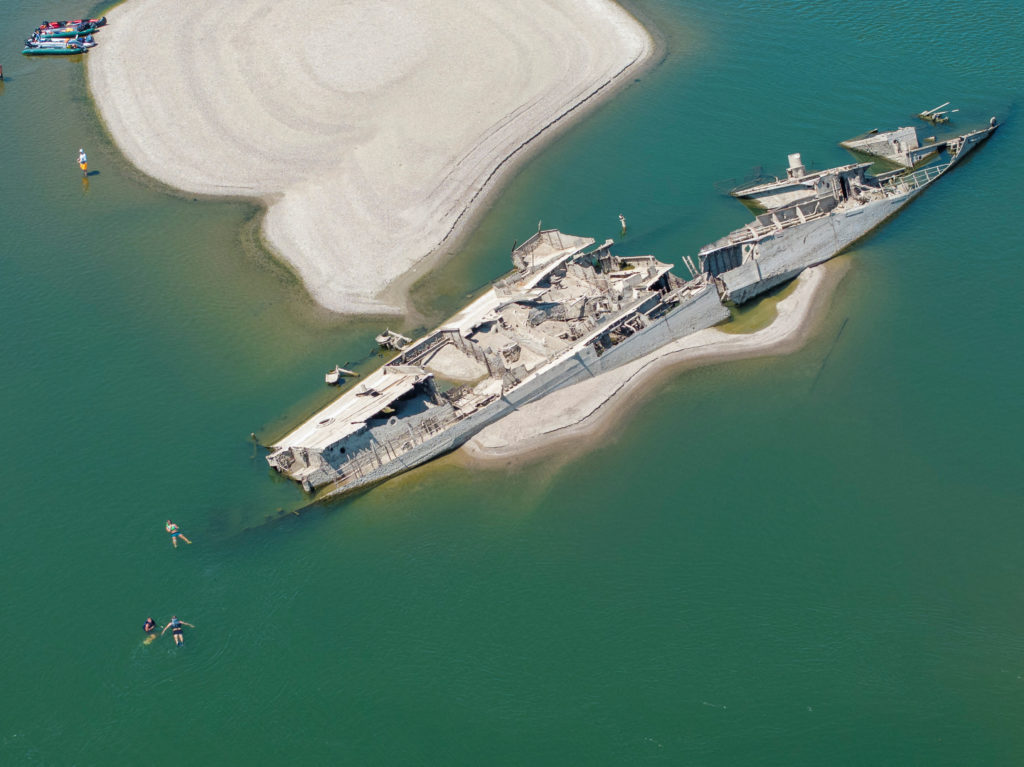
- Up to 200 German warships were scuttled near Prahovo in September 1944 to slow the Soviet advance.
- Nazi Germany surrendered in May 1945.
- Some ships were removed from the river by Communist Yugoslav authorities, but most remained because of the explosives they carried.
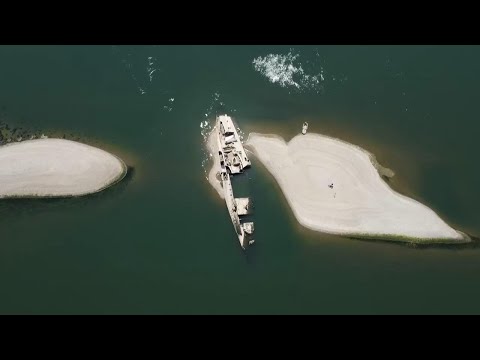
- Drought exposed wrecks on the Danube near Prahovo; the low water levels have made hulks visible and contributed to disruption of river traffic.
- Authorities are trying to keep traffic flowing on the Danube as the dropping water levels create dangerous conditions.
- The Serbian government, with European Union financial support has long been trying to address the wrecks.
- Power plants near shutdown due to record low water levels; governments across Central and Eastern Europe are taking steps to conserve electricity.
Record low Danube water levels have revealed the wrecks of dozens of WWII German battleships near Prahovo, some still armed, underscoring how drought reshapes life on Europe’s second-longest river. The exposure forces authorities to weigh navigation safety, energy needs and historic restoration as traffic and power demand rise.
Up to 200 German warships were scuttled in September 1944 near Prahovo to slow the Soviet advance in the Balkans, historians say. The ships belonged to Nazi Germany's Black Sea fleet and were deliberately sunk as retreat and Soviet pressure grew.
The Serbian government, with European Union financial support, has long sought to address the wrecks, though many remain because of explosives inside and only some were removed by Communist Yugoslav authorities.
The Danube's record low water levels have also forced power plants to the brink of shutting down, a sign of broader energy stress as governments across Central and Eastern Europe are taking steps to conserve electricity.
Authorities are trying to keep Danube traffic flowing, since the river passes through 10 nations, even as shallower water creates dangerous conditions for shipping and navigation.
Krsta Brandic, a Prahovo resident, warned that the low water levels have almost stopped ship traffic: ‘As you can see, the (big) ships can’t pass anymore.’ This, along with visible wrecks and rusting hulls, signals how climate and conflict-era legacies intersect in the region.
Experts have linked the unusually hot weather to global warming and other factors, highlighting cross-border challenges to keep the Danube navigable and the electricity grid stable in a drought-stricken Europe.
“The wrecks, some still laden with explosives, belong to Nazi Germany's Black Sea fleet scuttled in September 1944 to slow the Soviet advance. Serbian authorities, with EU support, have long tried to remove them, but most remain due to the danger they pose.”




 The Globe and Mail



