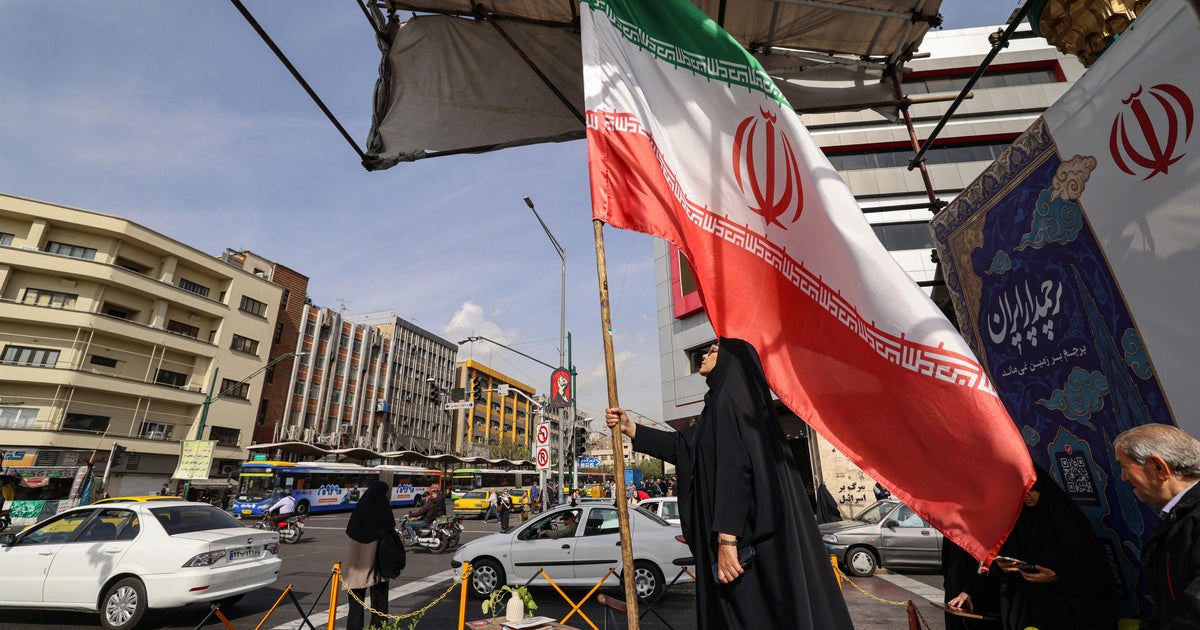
- Three consecutive days of indirect, closed-door negotiations led by Qatar have yielded no apparent breakthrough, with Iran saying Monday that "the ball is in the U.S. court."
- President Trump has kept his intentions on Iran ambiguous, saying Saturday that the U.S. still has targets to "take care of," and then that the war will soon be over "one way or the other; either they'll make a deal, or we'll just end it."
- Mr. Trump told reporters he had a "very good talk" Sunday with Israeli Prime Minister Benjamin Netanyahu, discussing the Iran war. Sources quoted said the president wants to let negotiations play out, while Netanyahu is pushing to resume strikes on Iran.
- Iran's vice president said on Monday that exchanges with the U.S. via mediators indicated Washington's recognition of Tehran's "victory" in the Middle East war, Iranian state media reported.
- Oil prices sank around seven percent on Monday, the eve of crucial midterm elections in the U.S., as signals that Tehran and Washington were renewing dialogue boosted hopes of ending the Middle East war.
- Iran's top diplomat said Monday that negotiations with the U.S., via mediators, aimed at reaching an agreement to end the war have been "proceeding very intensively," but he added that "everything depends on Washington's political rationality," according to Iran's state news agency IRNA.
- Closed-door negotiations have taken place via mediators, primarily Qatar and Pakistan, and Iranian officials said earlier Monday that it would be up to the U.S. side to make a move and end the monthslong standoff sparked by the joint U.S. and Israeli strikes on Feb. 28.
- Iranian Foreign Minister Abbas Araghchi said Saturday that Tehran had presented Qatari mediators with a proposal to shorten the implementation period of a potential deal with the U.S. to just two days from seven.
Qatar's mediation efforts in the ongoing Iran-U.S. negotiations have not yielded any significant progress, with Iranian officials stating that the responsibility now lies with Washington. Iran's Foreign Minister Abbas Araghchi emphasized that negotiations are ongoing but depend on U.S. political decisions.
Iran's vice president claimed that communications through mediators indicate a recognition of Tehran's "victory" in the Middle East conflict. He stated, "Our enemy failed to achieve any of its objectives in the last two wars", reflecting Iran's confidence amid the standoff.4
President Trump has maintained a vague stance on U.S. intentions, suggesting military options remain on the table. He remarked that the war could conclude "one way or the other", either through a deal or military action. Trump's discussions with Israeli Prime Minister Netanyahu indicate a push for renewed strikes on Iran, complicating the diplomatic landscape.
Oil prices reacted to the uncertainty, dropping nearly 7% as hopes for a diplomatic resolution fluctuated. The price for Brent crude fell to $105.03, reflecting market volatility amid the ongoing conflict and negotiations.
As the situation evolves, the focus remains on whether the U.S. will respond to Iran's conditions and the implications for regional stability.
“Iranian Foreign Minister Abbas Araghchi said Tehran has presented Qatari mediators a proposal reducing the implementation period of a potential deal to two days, and he reiterated conditions for reopening the Strait of Hormuz. Brent crude fell 7.4% to $105.03 on Monday, as oil markets welcomed signs of renewed U.S.-Iran dialogue.”
 CBS News




