- Okanagan Valley has faced drought for three years, with Okanagan Lake receiving only a third of its normal recharge this spring.
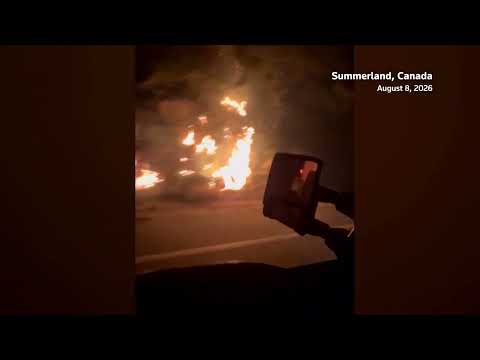
- A wildfire quickly consumed large tracts of the Okanagan Valley this weekend, forcing thousands to flee.
- Experts like John Vaillant and Dr. Mike Flannigan describe the fires as part of a larger hemispheric crisis worsened by climate change.
- Statistics show the top six years for area burned in B.C. have been since 2017, with more area burned in that nine-year period than between 1950 and 2016.
- Insured losses from wildfires hit a record $9.4-billion in 2024 when Jasper burned, and $6.5-billion in 2016 when Fort McMurray was destroyed.
- Fire ecologist Robert W. Gray says without regular prescribed burns, wildfires will keep igniting in scarred areas.
- Severe drought and heat waves are hemispheric, and the evacuated B.C. towns of Summerland and Peachland are the latest to experience conditions that produce fast-expanding infernos.
- Dr. Mike Flannigan, professor of wildland fire at Thompson Rivers University, says the universal recipe for wildfires is dry vegetation, ignition, and hot, dry, windy weather, all of which converged in the Okanagan.
- Statistics show that the top six years for area burned in B.C. have been since 2017, and more area burned in that nine-year period than between 1950 and 2016, with Dr. Flannigan attributing this to climate change.
Wildfires in British Columbia's Okanagan Valley have become a stark reminder of the escalating wildfire crisis linked to climate change and prolonged drought. The Bald Range wildfire has scorched over 135 square kilometres, leading to the evacuation of 20,000 residents and a state of emergency declaration by the provincial government.123910
Experts like John Vaillant emphasize that this fire is part of a larger pattern affecting regions across Canada, the U.S., and Europe. He notes, "the blaze is one piece of a much larger crisis that this year has enveloped large parts of Canada, the United States, Spain, France and Greece, and is worsening."
The Okanagan Valley, known for its vineyards and orchards, has faced drought conditions for three consecutive years, with Okanagan Lake receiving only a third of its normal snowmelt and rainfall this spring. Dr. Mike Flannigan, a wildland fire professor, states, "There’s a universal recipe for wildfires... Dry vegetation for fuel; lightning or a human-caused source of ignition; and hot, dry, windy weather."8
Statistics reveal that the top six years for area burned in British Columbia have occurred since 2017, with more area burned in that period than from 1950 to 2016. Dr. Flannigan attributes this increase directly to climate change, stating, "The warmer we get the more fire we see."4
Without regular prescribed burns to manage fuel loads, experts warn that wildfires will continue to threaten the region, highlighting the urgent need for effective fire management strategies.6
“The Okanagan Valley has faced drought for three years, with Okanagan Lake receiving only a third of its normal recharge this spring. Insured losses from wildfires hit a record $9.4-billion in 2024 when Jasper burned, and $6.5-billion in 2016 when Fort McMurray was destroyed.”


 The Globe and Mail






