- Peggy Flanagan, Minnesota’s lieutenant governor, won the Democratic primary for US Senate, defeating Angie Craig by 20 points in a race centered on immigration enforcement and progressive anger.
- Flanagan will now face Michele Tafoya, a Republican former National Football League sideline reporter, in the November general election.
- Operation Metro Surge, a Trump administration crackdown, led to deaths and deportations in Minnesota, significantly shaping the Senate primary race.
- Angie Craig voted for the Laken Riley Act, which mandated immigration detention for undocumented immigrants accused of local crimes, but later expressed regret after the act was linked to the deaths of two residents.
- Flanagan campaigned on a progressive platform, attacking Craig's immigration vote and positioning herself as a candidate who could be trusted to stand up to Trump.
Peggy Flanagan, Minnesota's lieutenant governor, secured a decisive victory in the Democratic primary for the U.S. Senate, defeating Angie Craig by 20 percentage points. The race was heavily influenced by anti-ICE sentiment following the Trump administration's immigration policies, which resulted in significant local turmoil, including the deaths of two residents.1245678
Flanagan's campaign focused on a progressive agenda, contrasting sharply with Craig's past support for the Laken Riley Act, which mandated detention for undocumented immigrants accused of local crimes. Craig's regret over her vote did little to sway voters, as Flanagan capitalized on the backlash against the act, which was linked to the deaths of Renee Good and Alex Pretti during a crackdown.
Flanagan, who is a citizen of the White Earth Nation, aims to become the first Native American woman in the Senate. She has garnered support from prominent progressives like Elizabeth Warren and Bernie Sanders, who praised her grassroots campaign. “The many just won,” Flanagan declared after her victory, emphasizing her commitment to fighting corporate influence in politics.
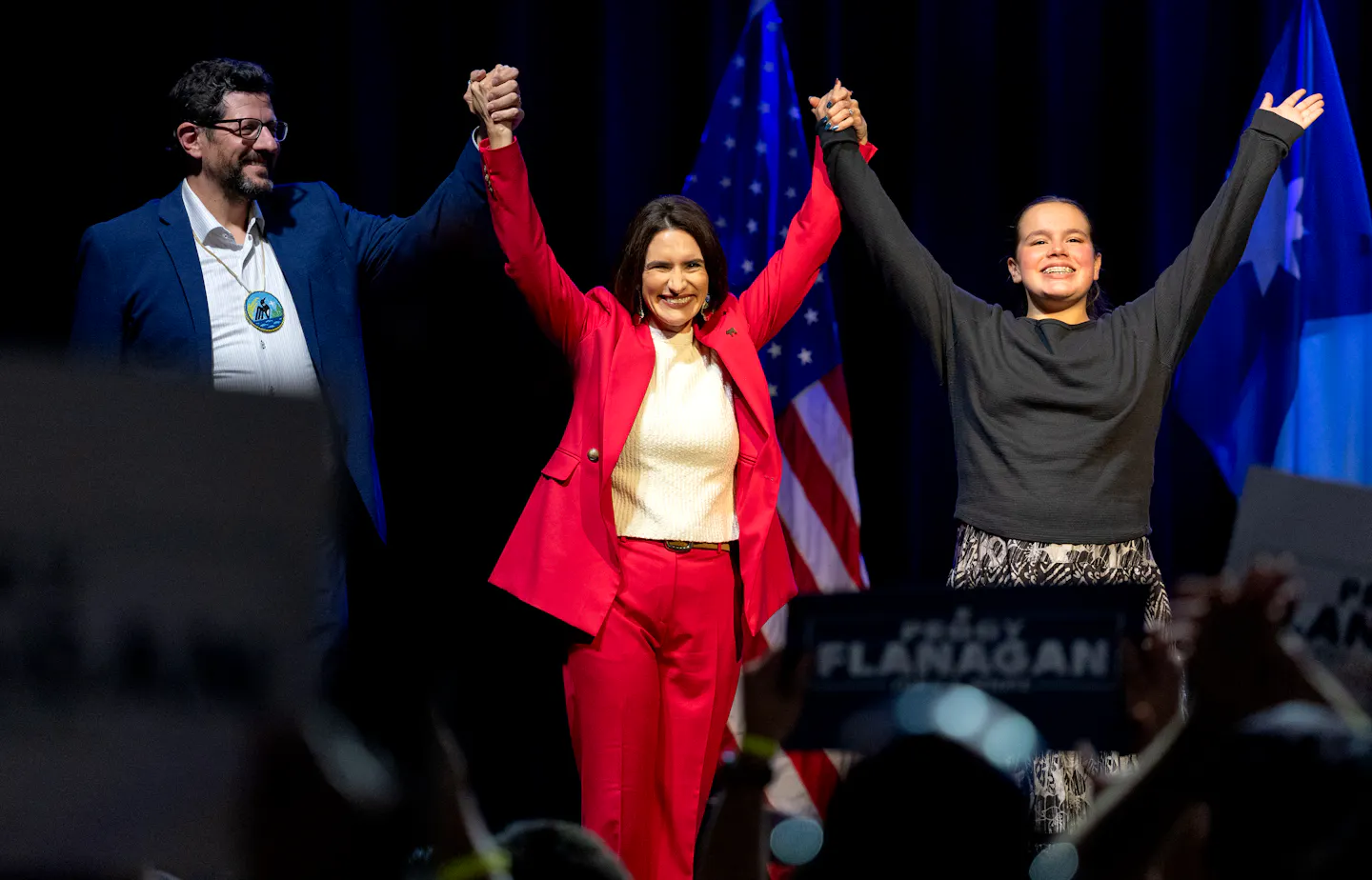
In November, Flanagan will face Michele Tafoya, a former NFL sideline reporter and Republican candidate. Minnesota has not elected a Republican to statewide office since 2006, setting the stage for a historic election.3
The primary results reflect a broader trend of progressive candidates challenging the Democratic establishment, as seen in recent victories in Michigan and other states. Flanagan's win signals a shift in voter priorities, particularly regarding immigration and corporate influence in politics.
“Flanagan's victory by 20 points signals a progressive wave, following Abdul El-Sayed's win in Michigan. She would become the first Native American woman in the Senate if she defeats Tafoya, who won the GOP primary.”



 The Guardian
 AP News