
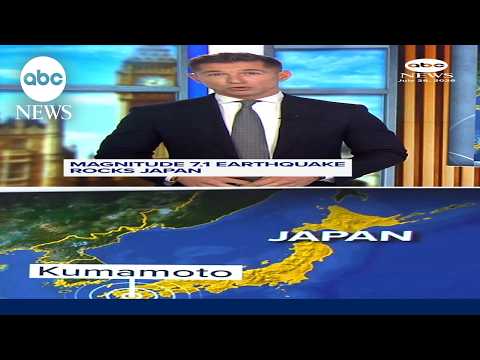
- A 6.8 magnitude earthquake struck southern Japan, killing at least five people and injuring hundreds.
- Rescue teams are searching for nine missing individuals amid over 60 recorded aftershocks.
- The Japanese military has mobilized 3,600 personnel for disaster relief operations and sent 20 aircraft to assess the damage from the air.
- About 300,000 people have been instructed to go to evacuation centres, the disaster management agency said.
- Nearly 50,000 households were without power late on Tuesday, along with 140,000 without water.
- Despite the earthquake’s intensity, relatively few buildings collapsed, reducing the number of fatalities and injuries, a testament to Japan’s strict construction standards.
- A government official told reporters that Aeon Kumamoto reported a gas leak, though the cause had not yet been determined.
- JR Kyushu, the regional railway company suspended services on Tuesday, including its high-speed bullet trains.
A 6.8 magnitude earthquake struck Kumamoto prefecture on Tuesday at 4:27 PM, registering a maximum of 7 on the Japanese shindo intensity scale. The quake has resulted in at least five fatalities and left nine people missing, with hundreds injured.1
The disaster has prompted the evacuation of approximately 300,000 residents, as reported by the disaster management agency. Power outages affected nearly 50,000 households, while 140,000 were without water. The Japanese military has mobilized 3,600 personnel and dispatched 20 aircraft for damage assessment and relief operations.35
Despite the earthquake's intensity, Japan's strict construction standards have minimized building collapses, contributing to a lower number of casualties. However, the region has experienced over 60 aftershocks, with magnitudes ranging from 1 to 4. JR Kyushu, the regional railway company, suspended services, including high-speed bullet trains, in response to the quake.8
A government official reported a gas leak at Aeon Kumamoto, although the cause remains undetermined. The situation continues to develop as authorities assess the full extent of the damage and coordinate relief efforts.7
“Nearly 50,000 households are without power and 140,000 without water following the earthquake. The Japanese military has mobilized 3,600 personnel for disaster relief operations, while over 60 aftershocks have been recorded, highlighting ongoing challenges in the region.”




 The Guardian




