
 aol.com
- Concerns have been raised over the potential environmental impact of dredging a harbour's seabed as part of a redevelopment scheme.
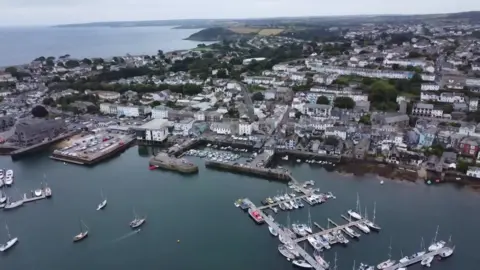
- The £150m project at Falmouth Docks would involve dredging large areas of sediment from the Cornish town's harbour to allow cruise ships to use it.
- Cornwall Wildlife Trust (CWT) said testing carried out ahead of the work might not be detailed enough to identify all contaminated sediment while campaigners said dredging could release pollutants.
- Cornwall Council's Strategic Planning Committee is due to consider the application on 20 August.
- CWT said the proposed dredging area covered about 232,500 sq metres (2,502,609 sq ft), equivalent to around 32 football pitches, but only 21 sediment core samples had been analysed.
- It said three quarters of the samples contained pollutants including mercury, lead, zinc, copper and tributyl tin at levels it claimed could be unsafe for disposal at sea.
- Dan Barrios-O'Neill, the head of marine conservation at CWT, said the trust was not against the plans but the redevelopment must be done carefully to protect the environment.
- "Sediment sampling carried out in preparation for the project appears inadequate, lacking the resolution needed to reliably determine which areas are dangerously contaminated and which are safe for disposal at sea," he said.
- The Stop the Dredge campaign, which opposes the proposals in their current form, said concern was growing among local residents and businesses.
- Campaign representative Eve Godfrey-Styles said the group had more than 90 members, including students, business owners and fishermen.
- "They're all coming together because they are really concerned about this dredge impacting their livelihood," Godfrey-Styles said.
- Marine filmmaker Giosue Reale, who dives regularly in the waters around Falmouth, said he was worried about the potential impact of the plans.
- "I'm just concerned both for my health as someone that goes into the water all the time and for the animals that live here," he said.
- The plans have support from the port and dock operators, who said dredging is essential to secure the future of Falmouth's maritime industry.
- Chief executive of Falmouth Harbour, Miles Carden, said it had been previously dredged for hundreds of years.
- "We need to do that for modern vessels and to receive modern vessel. That's going to be vital for the future around the marine economy in Cornwall," he added.
- The firm behind the redevelopment said any work would be carried out under strict environmental controls.
- Drystan Jones, Balaena's director of port development, said it was "so important" to repair the facilities for future generations.
- "Our aim is to do that in a very sensitive way and work with the community, to make sure there is a lasting positive legacy here, with amazing opportunities for future generations with rewarding careers in a number of sectors," he said.
- The Marine Management Organisation is overseeing the environmental assessment of the scheme and said it "recognises the environmental concerns raised about the proposed Falmouth Docks redevelopment."
Concerns are escalating regarding the £150 million dredging project at Falmouth Harbour, which aims to facilitate larger cruise ships and enhance local economic activity. However, environmental advocates warn that the project could disturb contaminated sediment, posing risks to marine life and local ecosystems.1
The Cornwall Wildlife Trust (CWT) has highlighted that the proposed dredging area spans approximately 232,500 sq metres (equivalent to around 32 football pitches), yet only 21 sediment core samples have been analyzed. Alarmingly, three-quarters of these samples contained pollutants such as mercury, lead, zinc, copper, and tributyl tin, which may be unsafe for disposal at sea.5
Dan Barrios-O'Neill, head of marine conservation at CWT, stated, “The redevelopment must be done carefully to protect the environment.” The Stop the Dredge campaign has echoed these sentiments, expressing growing concern among local residents and businesses about the potential environmental impact of the dredging.79
Balaena, the site owner, has committed to working with the community to ensure the modernization of the docks is conducted sensitively. The Cornwall Council's Strategic Planning Committee is set to review the application on 20 August, as stakeholders await a decision that could significantly impact the local economy, projected to generate about £13 million in economic benefits while doubling cargo and freight capacity at the docks.4
“Cornwall Wildlife Trust says only 21 sediment core samples were analysed for a 232,500 sq metre area, with three quarters containing pollutants like mercury and lead. The application is due before Cornwall Council's Strategic Planning Committee on 20 August.”





