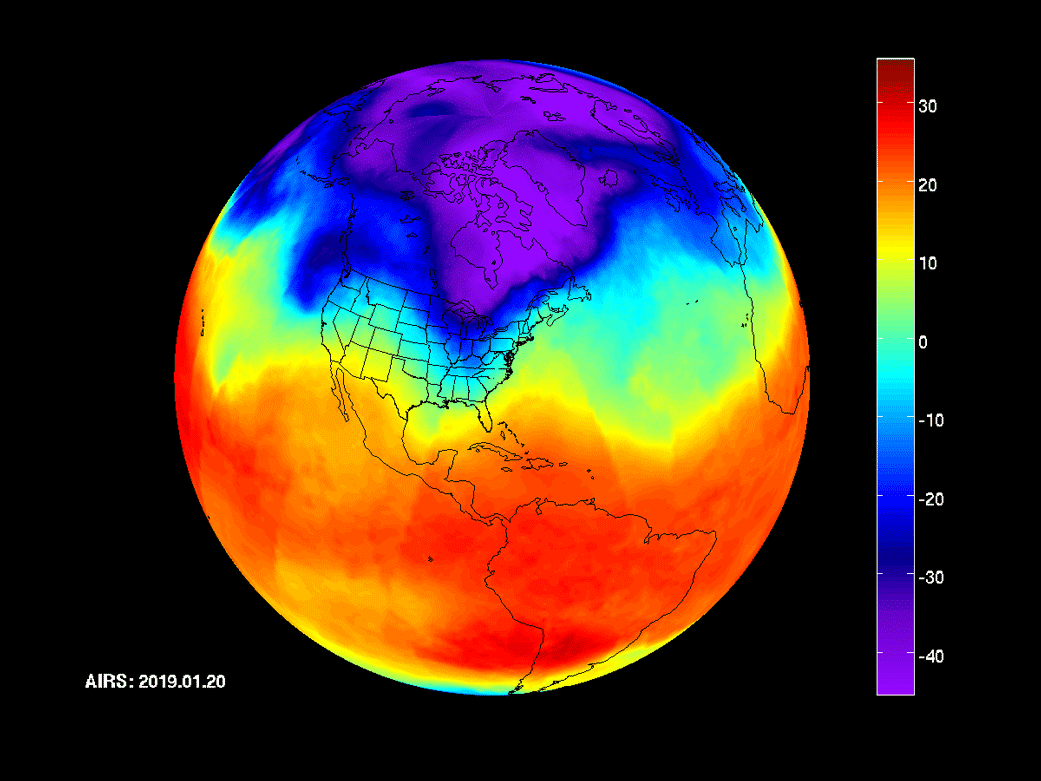
- An unprecedented Arctic collapse is occurring, marking what may be the earliest point in the year on record for such a disruption.
- Experts like Judah Cohen describe the situation as a 'big event', stating that 'everybody's hair is on fire' in the climate community.
- A potential polar vortex split could bring cooler temperatures across North America in the coming weeks, but the timing and location remain uncertain.
- Polar vortex disruptions typically occur deep into winter, making the recent sudden stratospheric warming in November unusual; the previous earliest was November 28, 1968.
- The current event could be classified as a 'minor' or 'major' sudden stratospheric warming; Cohen notes that if it is minor, 'everybody will forget about it', but if major, 'it’ll go in the record books.'
Climate experts are observing an unprecedented disruption of the polar vortex, occurring earlier than any previous record, which could lead to significant changes in winter weather across North America. This disruption, termed sudden stratospheric warming, typically happens later in the winter season.3
According to Andrea Lopez Lang, an associate professor at the University of Wisconsin–Madison, the polar vortex usually forms in late summer and peaks in December and January. However, this year’s disruption is occurring in November, which is highly unusual. Judah Cohen, a climatologist at MIT, explains that the polar vortex's tight rotation usually keeps cold air trapped, but disruptions can push this cold air into other regions, including North America and Europe.24
“As a weather fan, this is a big event because it’s so unprecedented,” Cohen stated, highlighting the excitement within the meteorological community. The exact timing and impact of this disruption remain uncertain, with Lopez Lang noting, “Where everything sets up is still in question.”
Cohen further elaborates that this event could either be a minor disruption that fades from memory or a major event that could be recorded in history. The implications of this early disruption could lead to cooler temperatures across the continent in the coming weeks, but meteorologists are still assessing the situation.
“Judah Cohen calls it 'a big event because it's so unprecedented,' noting 'everybody's hair is on fire in the climate or meteorologist community.' The disruption may be minor or major, with the previous earliest record set on November 28, 1968.”