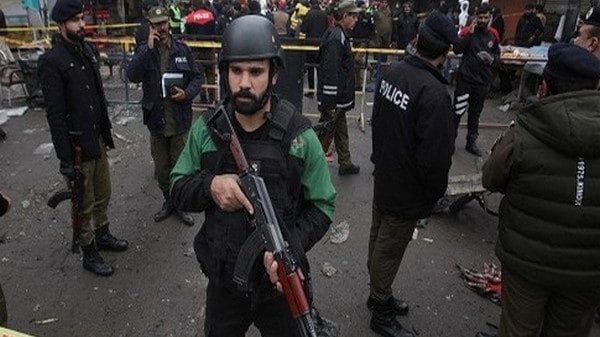
- At least 14 people were killed and nearly two dozen others injured after Pakistani security forces allegedly opened fire on protesters in Rawalakot on Monday evening, eyewitnesses associated with the Awami Huqooq Long March claimed.
- Violence erupted in Pakistan-Occupied Kashmir as the outlawed JAAC activists clashed with security forces during a long march on the day the region went to the polls.
- The JAAC alleged that indiscriminate firing by security personnel killed at least 14 of its members.
- Authorities in POK and the JAAC have offered sharply conflicting accounts of how the violence unfolded on Monday.
- The police chief of POK, Captain (retd.) Liaquat Ali Mallik, stated that the administration was unable to confirm any casualty claims brought forward by the JAAC, because no bodies had been received by any private or government hospital in the occupied region.
- The JAAC has been protesting since June over what it calls an unfair electoral system in Pakistan-Occupied Kashmir, with its primary demand being the allocation of resources to refugees from Kashmir.
- Monday's clashes between JAAC activists and security forces near Rawalakot took place on the day of the first phase of elections to the legislative assembly of Pakistan Occupied Kashmir, which consists of 53 seats.
- The elections are being carried out in three phases between July 27 and August 10, and are taking place under a heavy security deployment of at least 18,000 security personnel.
At least 14 people were killed and 24 injured in Rawalakot, Pakistan-Occupied Kashmir, after security forces allegedly opened fire on protesters during an election day march on July 27. Eyewitnesses from the Awami Huqooq Long March reported the violence, claiming it was unprovoked.1
Aslam, a protest leader, stated, “Today, the forces from Pakistan opened fire on our innocent youths. As a result, 14 of our young people have been martyred.” Among the deceased was Usman Nazir, the younger brother of the movement’s founder, Omar Nazir Kashmiri. Aslam urged overseas Kashmiris to raise awareness of the situation, alleging that authorities were committing atrocities against protesters.
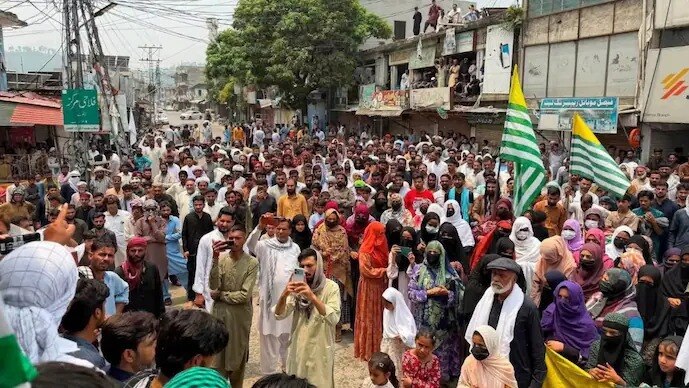
The Joint Awami Action Committee (JAAC) claimed that the police opened fire on what they described as a peaceful march. However, the police chief of POK, Captain (retd.) Liaquat Ali Mallik, stated that the administration could not confirm any casualty claims, as no bodies had been received by hospitals in the region.5
The violence erupted during the first phase of elections for the legislative assembly of Pakistan-Occupied Kashmir, which consists of 53 seats. The elections are being conducted in three phases between July 27 and August 10, under heavy security with at least 18,000 personnel deployed. The Ministry of External Affairs described the elections as a “cosmetic exercise” and attributed the ongoing protests to economic exploitation and denial of fundamental rights in the region.2
“The Joint Awami Action Committee (JAAC) claims that security forces opened fire on peaceful protesters, leading to the casualties. Meanwhile, the police chief of POK stated that no bodies have been received by hospitals, raising questions about the reported deaths amid conflicting accounts from authorities.”





