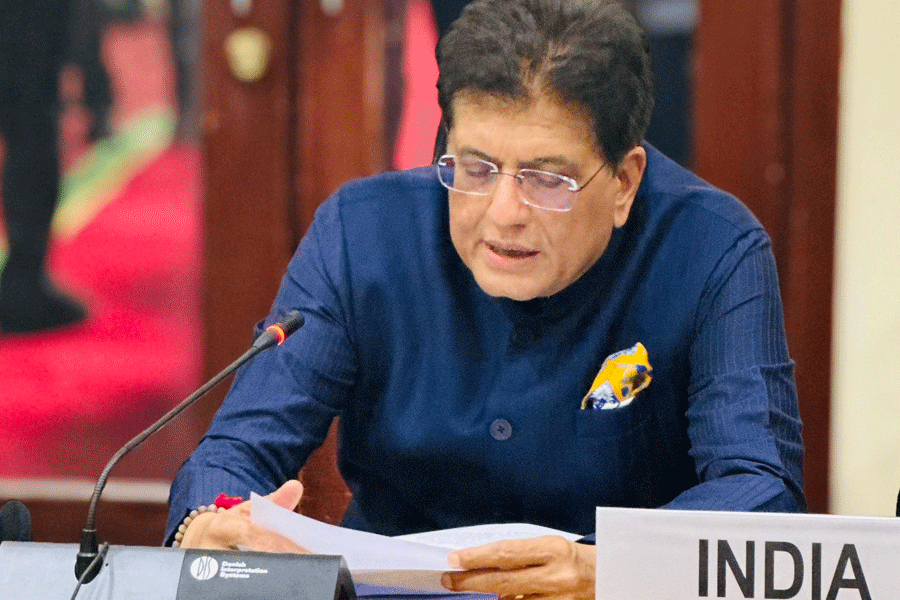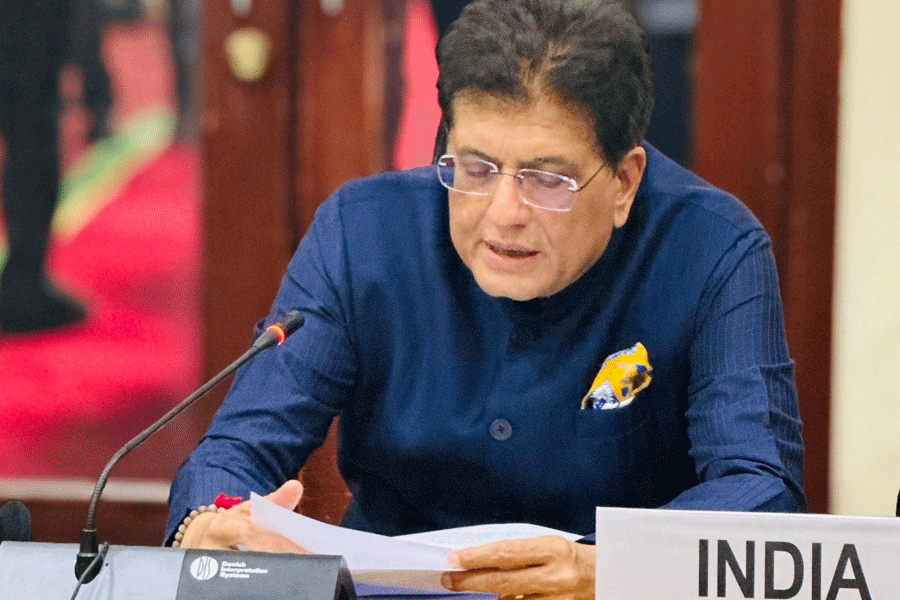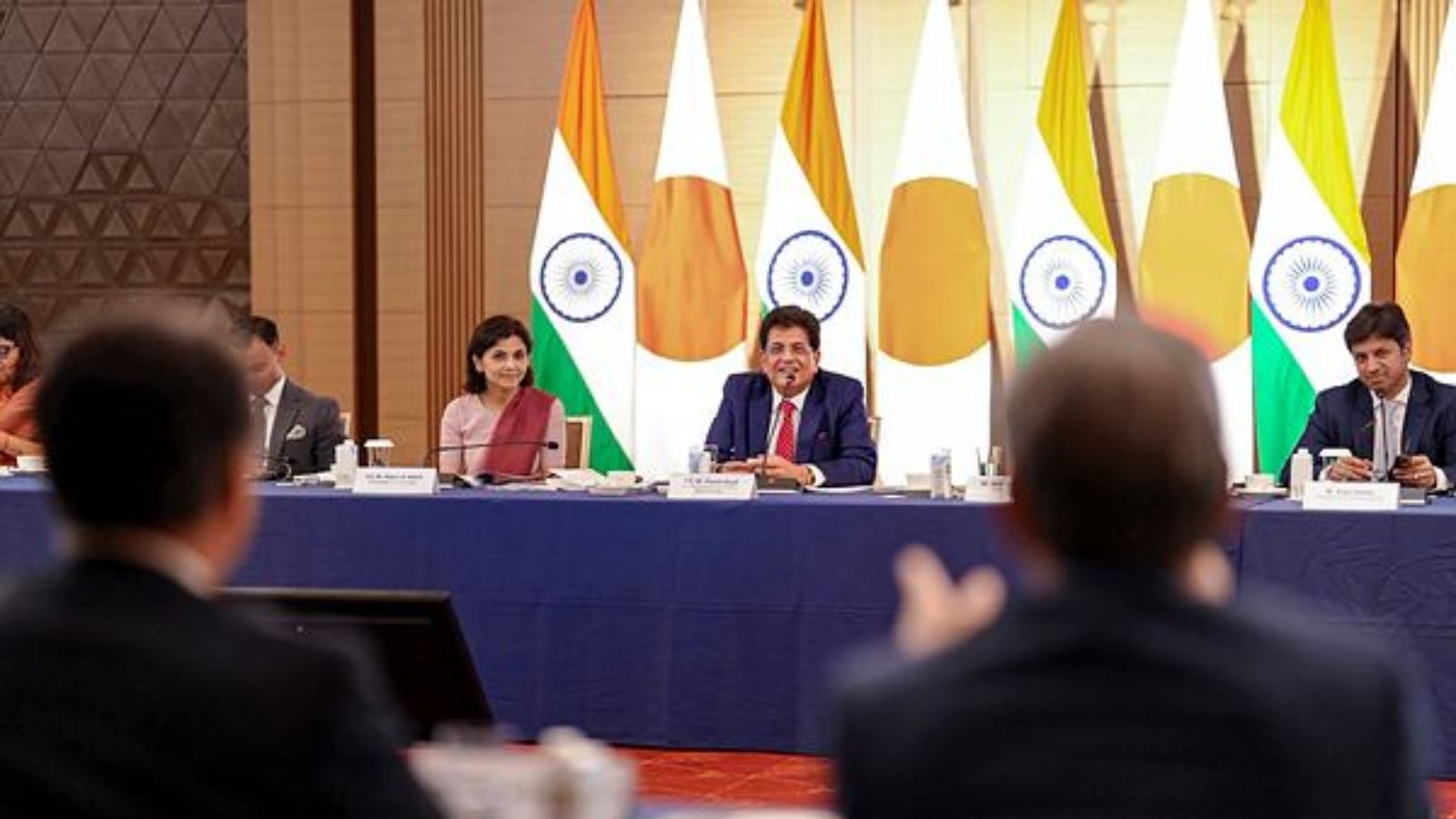
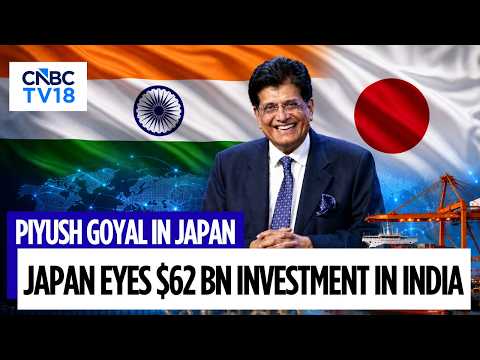
- India is set to review its trade agreement with Japan signed in 2011 to fix the widening trade gap and streamline committed investment worth 10 trillion yen (over $62 billion) in the next 10 years.
- A delegation of over 220 stakeholders from Indian industry, led by Commerce and Industry Minister Piyush Goyal, is in Japan from 24th to 27th August to deepen collaboration.
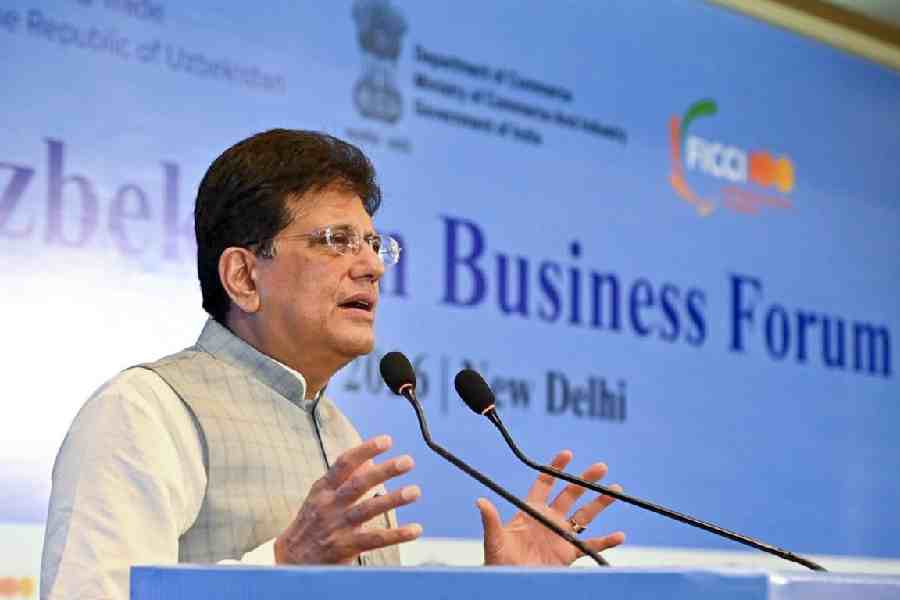
- Goyal pitched India as the fastest-growing large nation and poised to become a $30 trillion economy by 2047.
- India will amend regulations and introduce new rules within two months to address concerns raised by semiconductor and automotive component manufacturers, as stated by commerce and industry minister Piyush Goyal on August 24.
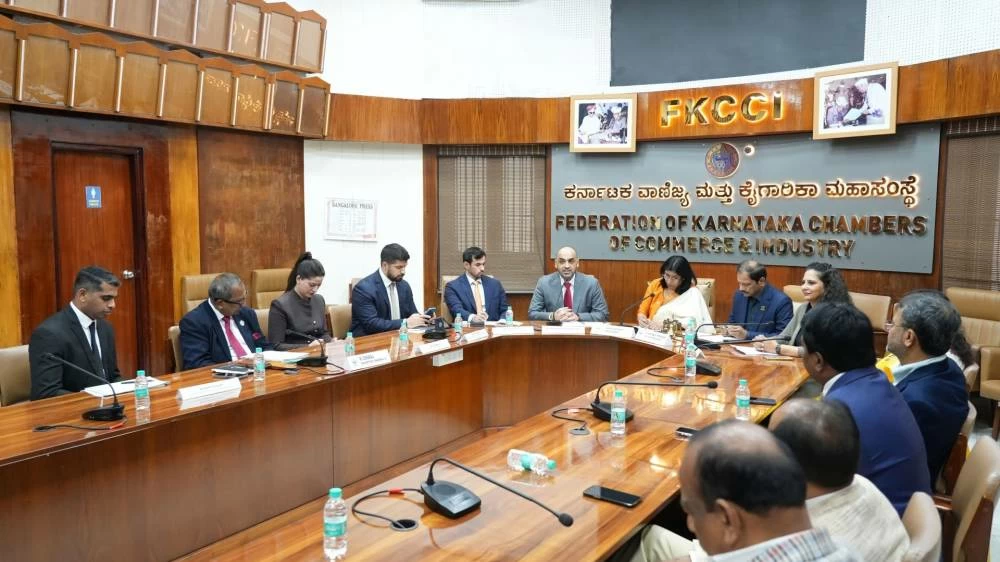
- Goyal met two companies seeking to bring semiconductor and automotive-component manufacturing to India, and their concerns were resolved during discussions.
- Goyal highlighted that India has free trade agreements (FTAs) or preferential market access in markets worth $17 trillion.
- Goyal urged Japanese companies to deepen localisation, citing cost competitiveness and engineering talent, and offered government support for innovation funding.
- The delegation's four-day visit (24–27 August) spans Tokyo, Nagoya, and Osaka and is aimed at deepening trade and investment ties under the India-Japan Special Strategic and Global Partnership.
Piyush Goyal is leading a historic delegation of over 220 stakeholders to Japan from August 24 to 27, aiming to strengthen trade ties and review the 2011 trade agreement. The visit seeks to address a widening trade gap and attract ¥10 trillion (over $62 billion) in investments over the next decade.24
During a roundtable, Goyal emphasized India's potential as the fastest-growing large economy, projecting it could reach a $30 trillion economy by 2047. He highlighted India's free trade agreements covering markets worth $17 trillion and urged Japanese firms to localize production to enhance cost competitiveness.6
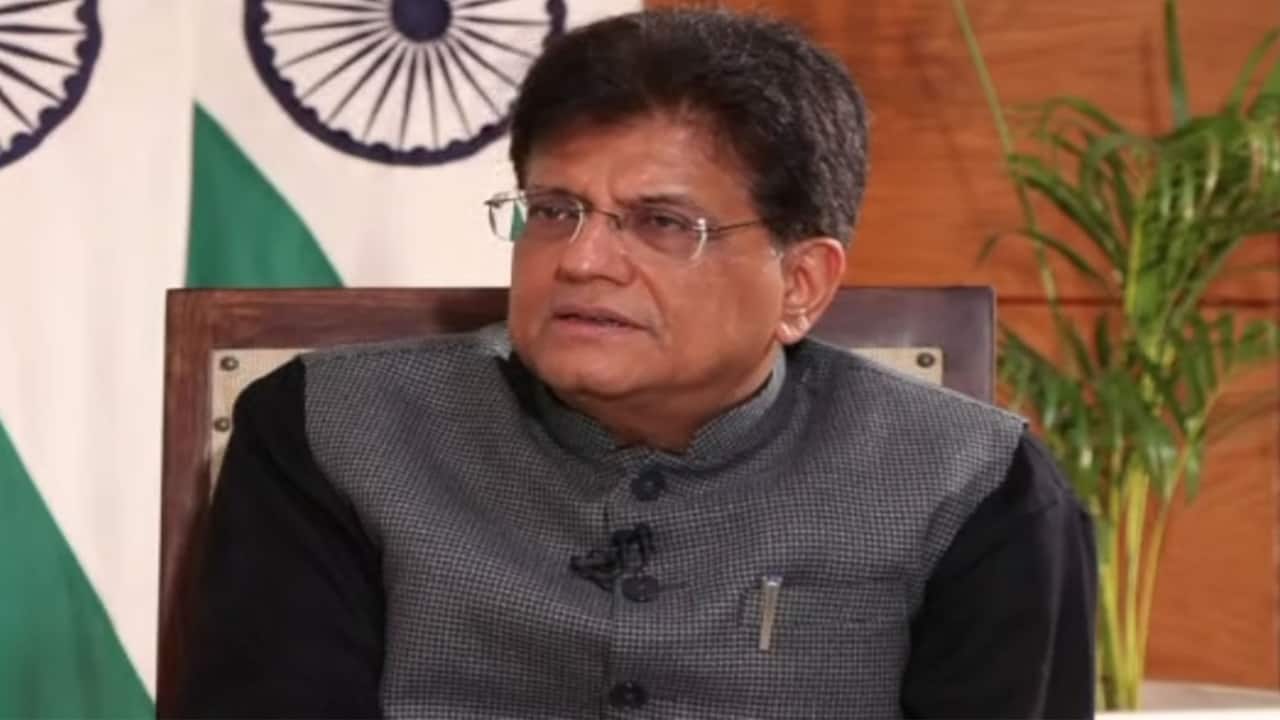
Goyal assured that India would amend regulations within two months to facilitate semiconductor and automotive component manufacturing, addressing concerns raised by industry leaders. He stated, “I have assured them within the next two months India will amend the regulations and bring in new rules to accommodate their requests.”
The delegation's itinerary includes visits to Tokyo, Nagoya, and Osaka, focusing on deepening collaboration under the India-Japan Special Strategic and Global Partnership. Goyal's remarks reflect India's ambition to position itself as a standalone investment destination, stating, “India is not a plus one country, India stands on its own feet as a trusted partner.”8
“Goyal pitched India as a standalone investment destination, not a 'plus one' to China, citing 7.7% FY26 growth and a $30 trillion economy by 2047. He also cited Suzuki's India market cap at 1.6 times its parent, urging Japanese firms to deepen localisation.”




 The Indian Express