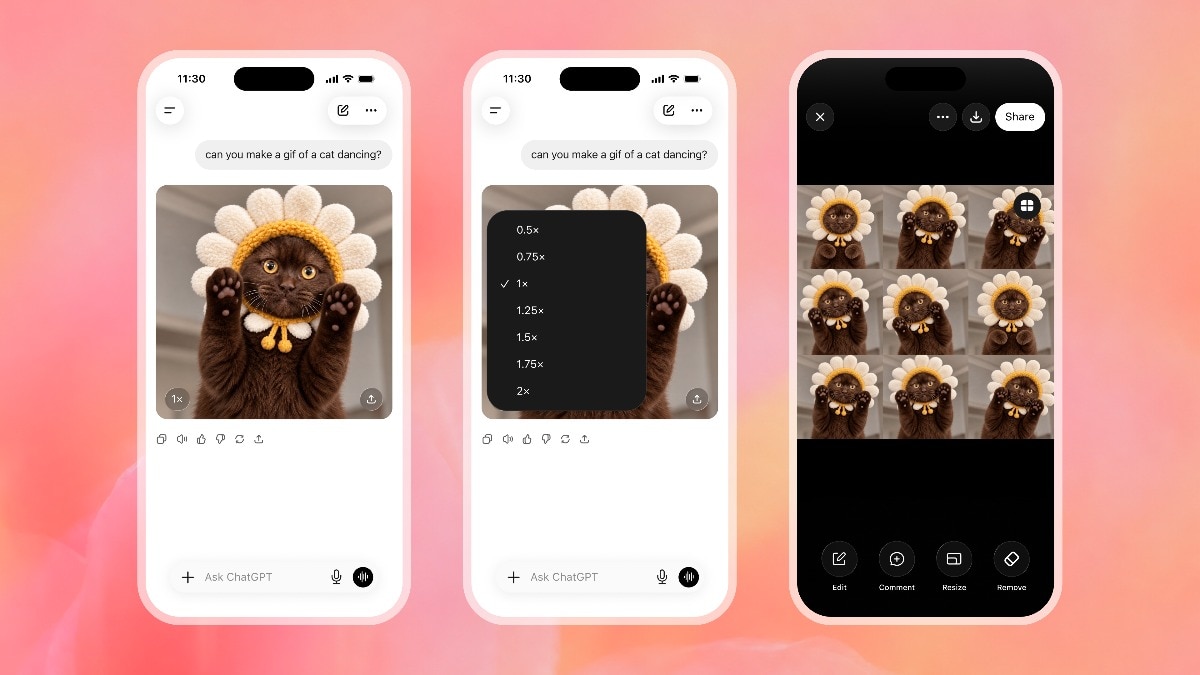
- OpenAI launches Images 2.6 with GIF animation, which can add motion to existing visual ideas, such as animating a brand mascot or creating character movements for a storyboard.
- Images 2.6 adds image markup, allowing users to mark the exact area they want changed, and includes SVG exports for use across websites, applications, and print.
- The update introduces a complexity parameter that lets developers control how much planning the model uses, distinguishing between image quality and complexity.
- Developers can access two API variants: GPT-Image-2.6 Flare and GPT-Image-2.6 Sunburst.
- The model is available globally in ChatGPT and Codex across all subscription tiers on desktop, mobile, and web.
- API pricing is $8 per million image input tokens and $30 per million output tokens.
OpenAI's Images 2.6 introduces significant advancements in image generation, including GIF-style animations and enhanced editing capabilities. The model generates images 50% faster than its predecessor, catering to diverse applications in social media, marketing, and product design.
The update features two API variants: GPT-Image-2.6 Flare, optimized for speed and layout quality, and GPT-Image-2.6 Sunburst, which focuses on high-quality generation. Flare can produce images in as little as six seconds at low-quality settings, making it ideal for professional assets.
Additionally, Images 2.6 introduces image markup, allowing users to specify areas for changes directly, and supports SVG exports for versatile use across platforms. The model also includes a complexity parameter to control the level of detail in image creation, enhancing user experience.
OpenAI reports that users create 4 billion images weekly, translating to over half a billion daily. The model is accessible globally through ChatGPT and Codex, with pricing for API usage set at $8 per million input tokens and $30 per million output tokens.
“The update introduces GPT-Image-2.6 Flare and Sunburst API variants, priced at $8 per million image input tokens and $30 per million output tokens. Developers can also use a complexity parameter to control planning, with Flare generating images in as little as six seconds at low-quality settings.”