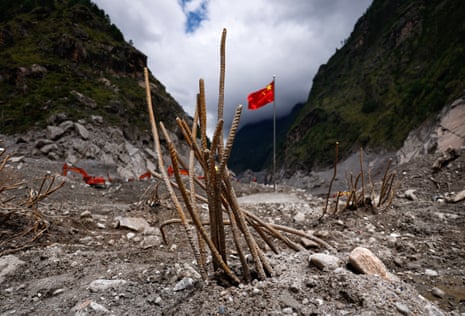
- Flood disaster strikes the Nepal-Tibet border region, leading to significant casualties and missing persons.
- Chinese authorities have launched the 'Clean Internet 2026' campaign, targeting unofficial accounts of the floods as 'rumours'.
- Police in Tibet reported 10 cases under the campaign, with claims of over 1,000 missing persons; the official death toll is 43.
- WeChat has restricted posts about the floods, deleting content for 'politically sensitive content'.
- Tibetan families, like Tsering Phuntsok, express grief and uncertainty about missing relatives on both sides of the border.
- The 'Clean Internet 2026' campaign is increasingly used to target what authorities call 'rumours', which include unofficial information about the disaster.
- Human rights and Tibetan advocacy groups have accused the Chinese government of concealing the true scale of the death toll.
Families in Tibet are grieving for flood victims as the Chinese government intensifies its 'Clean Internet 2026' campaign, which suppresses unofficial accounts of the disaster.26
The campaign, aimed at controlling narratives, has criminalized claims of a higher death toll than the official count of 43.
In the aftermath of the floods, social media platforms like WeChat have restricted posts, with users reporting that their content was deleted for containing “politically sensitive content”.4
“The campaign serves a dual purpose,” says Tencho Gyatso from the International Campaign for Tibet. “Tackling genuine problems like fraud and misinformation while tightening control over public narratives.”
Despite a surge in interest on social media immediately after the floods, comments were swiftly removed, indicating a systematic effort to suppress independent accounts.

On August 30, police reported 10 cases under the Clean Internet campaign related to “rumours” about the disaster, with claims that over 1,000 people had been swept away.3
Human rights groups have accused the government of concealing the true scale of the disaster, as a user from Jiangxi claimed the number of missing had risen to 826 and faced “administrative punishment” for sharing this information.7
A former state media journalist noted that the government’s control extends beyond suppression to the omission of critical information, leaving families without answers about their loved ones.
“Official news coverage devotes enormous space to proving that the state is working hard, but gives very little information answering the most basic questions,” they said.
“Tsering Phuntsok, a 46-year-old Tibetan in exile, has missing relatives on both sides of the border, but those in Tibet are not on official lists, leaving him without information. Police in Tibet reported 10 cases under the campaign, with claims of over 1,000 missing, while the official death toll stands at 43.”
 The Guardian